
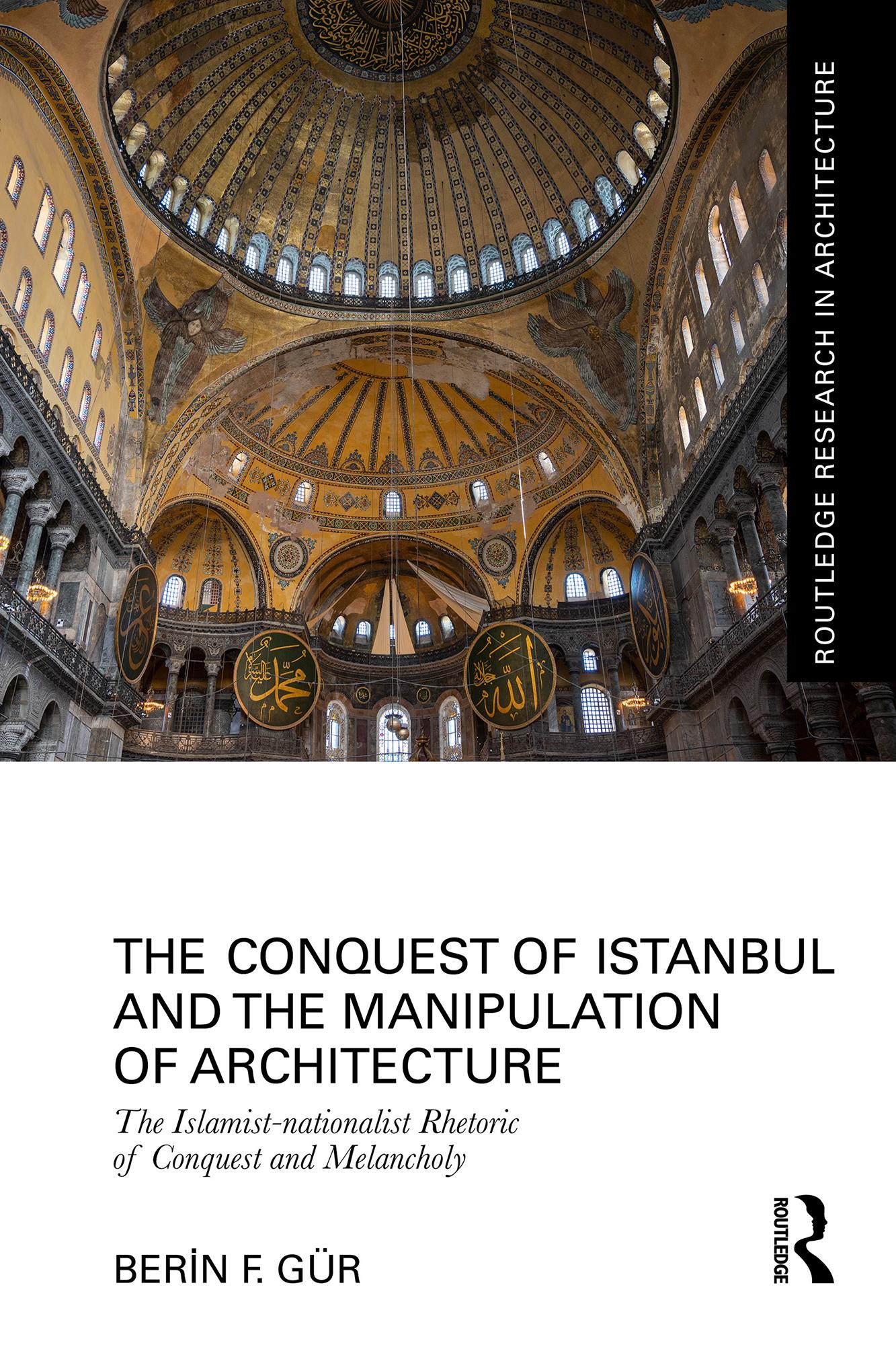
This book explores the contemporary memory of the Ottoman conquest of Constantinople (now Istanbul) in 1453. It focuses on how the conquest is remembered by Islamist-nationalist imagination in Turkey today and how architecture plays a role in shaping this memory, underscoring its susceptibility to political manipulation.
Discussing Islamist-nationalist rhetoric of Istanbul’s conquest through the conceptual framework of melancholy—a significant theme in the history of ideas—the argument posits that this narrative is a politically driven endeavor fueled by paranoia, producing melancholy over the conquest of Istanbul. This book redefines melancholy as ‘a politically manipulated project’, which anchors the imagery of conquest to spatial and architectural symbols of mourning while creating imaginary lost objects. Architecture becomes the book’s subject as the bearer of clues to searching for lost objects and as a spatial-political tool of conquest rhetoric, such as the Hagia Sophia in Istanbul and the Panorama 1453 History Museum. As various groups with differing ideologies and identities continue to feel the impact of the conquest, this book also examines the ‘other’ side of the event—specifically, how the Greeks commemorate the fall of Constantinople, recognizing it as a dark memory from their perspective.
This book targets diverse audiences in cultural studies, social sciences, arts, and humanities—including architecture, history, anthropology, and political studies—interested in Southeast Europe and Islamic societies.
Betaal eenvoudig met kaart, Klarna, Apple Pay of Google Pay. Niet tevreden? Je hebt altijd 14 dagen bedenktijd. Lees meer in onze voorwaarden. Heb je vragen, mail ons dan via hello@memmo.org.
Memmo maakt studeren makkelijker – waar je ook bent ter wereld. Wij brengen je cursusboeken en slimme studietools samen op één plek: samenvattingen, quizzen, podcasts en flashcards. En Ted, je studievriend die antwoord geeft op alles wat je je afvraagt. Meer dan 50.000 studenten studeren hier al – gebouwd om je sneller te laten leren en minder stress te geven.