
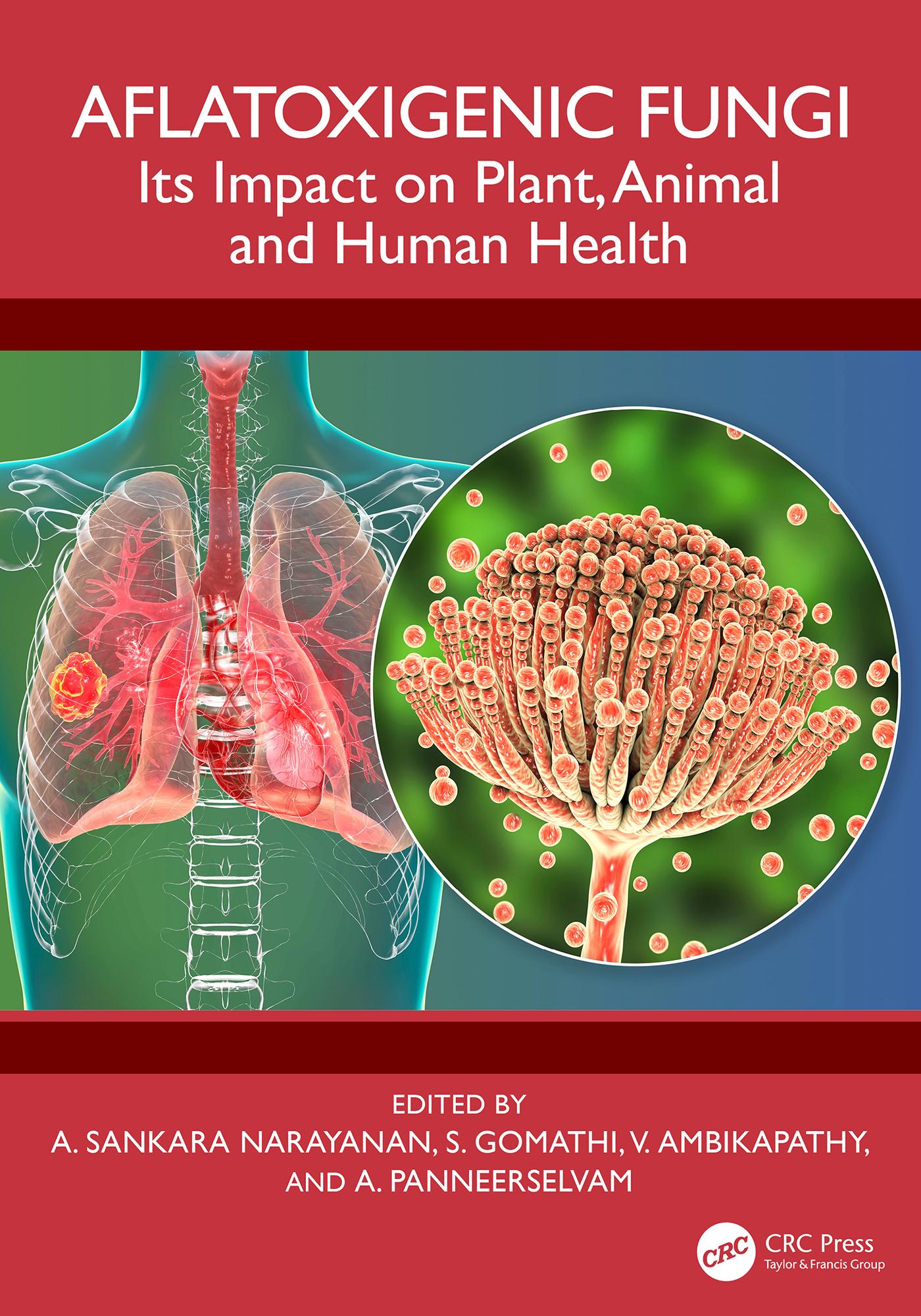
Aflatoxigenic fungi, primarily belonging to the Aspergillus genus (A. flavus, A. parasiticus), are responsible for producing aflatoxins—highly toxic and carcinogenic secondary metabolites. These fungi pose significant risks to plant health, animal health, and human well-being due to their widespread contamination of food and feed. Aflatoxigenic fungi impact plants by causing diseases, and yield loss leads to economic loss and contamination. In connection with animals, aflatoxigenic fungi create toxicity in livestock, contamination of animal products, mortality, and economic loss. Finally, concerning humans, aflatoxigenic fungi lead to acute toxicity, carcinogenic effects, immune suppression, and nutritional risk.
Features:
- Provides a systemic review of the recent developments in aflatoxigenic fungi on various biotic organisms
- Includes an overview of the impact of aflatoxins on various plants and on the agricultural economy
- Describes the role of aflatoxins in human health, including infants and in cancer
- Contains special emphasis on the control of aflatoxigenic fungi by nanomaterials and plant bioactive components
- Discusses the detection of aflatoxigenic fungi by surface-enhanced Raman spectroscopy (SERS)
Betaal eenvoudig met kaart, Klarna, Apple Pay of Google Pay. Niet tevreden? Je hebt altijd 14 dagen bedenktijd. Lees meer in onze voorwaarden. Heb je vragen, mail ons dan via hello@memmo.org.
Memmo maakt studeren makkelijker – waar je ook bent ter wereld. Wij brengen je cursusboeken en slimme studietools samen op één plek: samenvattingen, quizzen, podcasts en flashcards. En Ted, je studievriend die antwoord geeft op alles wat je je afvraagt. Meer dan 50.000 studenten studeren hier al – gebouwd om je sneller te laten leren en minder stress te geven.