
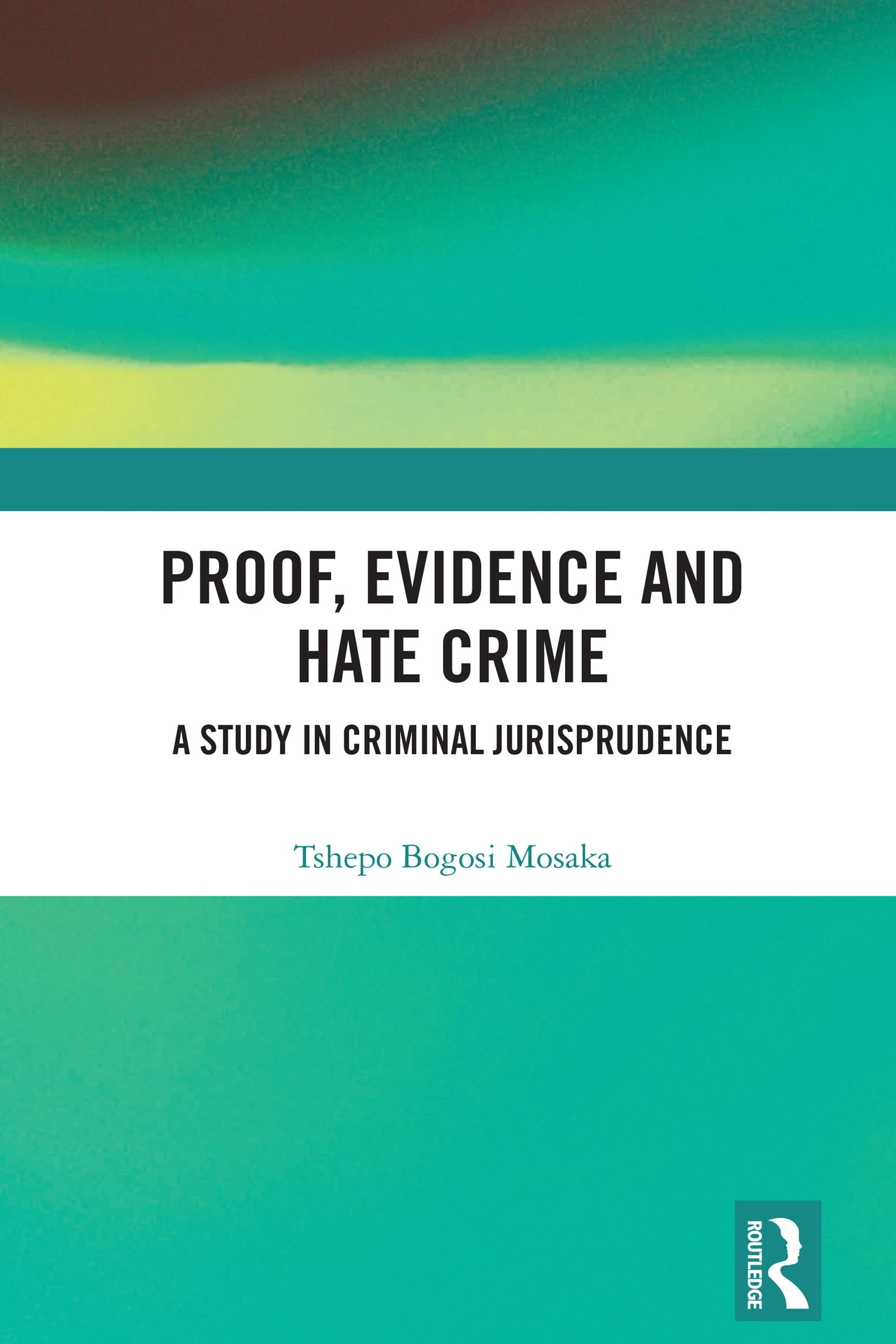
Proof is the property of a disputed fact being established inferentially from an extant fact. This book explicates the structural components of this phenomenon in the context of hate crimes across various jurisdictions around the world. It departs from the orthodox conception of evidence and proof as being a general, value-neutral (or non-normative) and epistemic subject, and offers a relativistic conception of this area of law. The core argument is that proof is both semantically and methodologically determined by three conditions of materiality, process and probativity. This argument is then justified by the context-specific application of this relativistic theory of proof to hate crimes. This theoretical application of proof is sustained throughout the book using multiple examples and illustrations of hate crimes around the world. The discussion, both at the level of proof and hate crimes, while focusing on the grounds of race, religion and ethnicity specifically, is framed in jurisprudential, cross-jurisdictional and interdisciplinary terms. The book will be of interest to academics and researchers working in the areas of criminal law, legal philosophy and procedural law.
Betaal eenvoudig met kaart, Klarna, Apple Pay of Google Pay. Niet tevreden? Je hebt altijd 14 dagen bedenktijd. Lees meer in onze voorwaarden. Heb je vragen, mail ons dan via hello@memmo.org.
Memmo maakt studeren makkelijker – waar je ook bent ter wereld. Wij brengen je cursusboeken en slimme studietools samen op één plek: samenvattingen, quizzen, podcasts en flashcards. En Ted, je studievriend die antwoord geeft op alles wat je je afvraagt. Meer dan 50.000 studenten studeren hier al – gebouwd om je sneller te laten leren en minder stress te geven.