
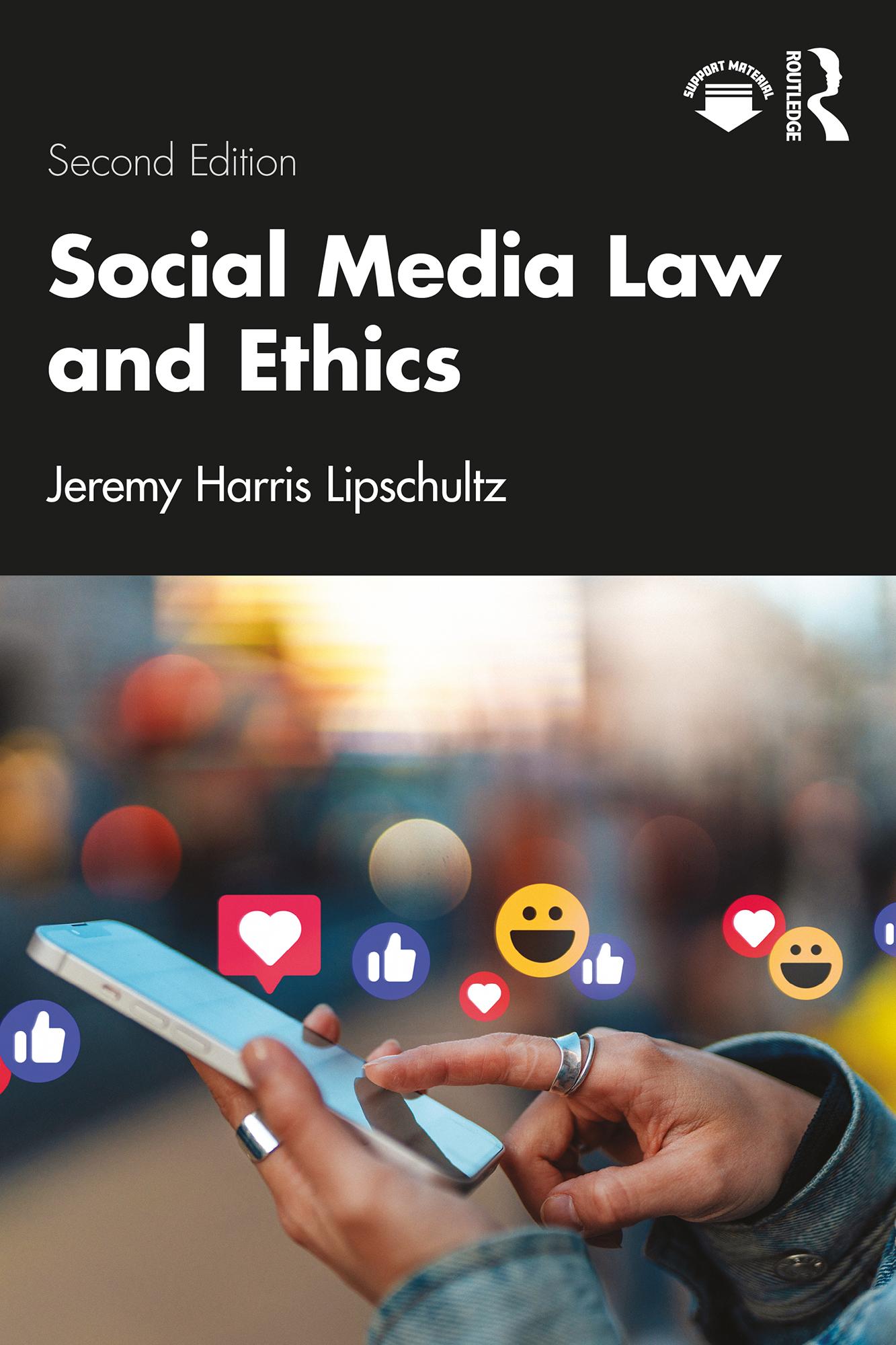
In this textbook, social media professor Jeremy Harris Lipschultz introduces students to the study of social media law and ethics, integrating legal concepts and ethical theories.
This second edition explores freedom of expression, as it applies to students, media industry professionals, content creators and audience members. Key issues and practices covered include copyright law, data privacy, defamation, global law and ethics, generative AI, government censorship, social media platform rules and employer policies. The book also addresses the U.S. government's TikTok law and other recent regulations. Research techniques are also used to suggest future trends in social media law and ethics. Touching on themes and topics of significant contemporary relevance, this accessible textbook can be used in standalone law and ethics courses, as well as emerging social media courses that are disrupting traditional public relations, advertising, marketing and journalism curricula.
Case studies, discussion questions, and online resources help students engage with the practicalities, complexities and ambiguities of this future-oriented area of media law, making this an ideal textbook for students of media law, policy and ethics, mass media, and communication studies.
Betaal eenvoudig met kaart, Klarna, Apple Pay of Google Pay. Niet tevreden? Je hebt altijd 14 dagen bedenktijd. Lees meer in onze voorwaarden. Heb je vragen, mail ons dan via hello@memmo.org.
Memmo maakt studeren makkelijker – waar je ook bent ter wereld. Wij brengen je cursusboeken en slimme studietools samen op één plek: samenvattingen, quizzen, podcasts en flashcards. En Ted, je studievriend die antwoord geeft op alles wat je je afvraagt. Meer dan 50.000 studenten studeren hier al – gebouwd om je sneller te laten leren en minder stress te geven.