
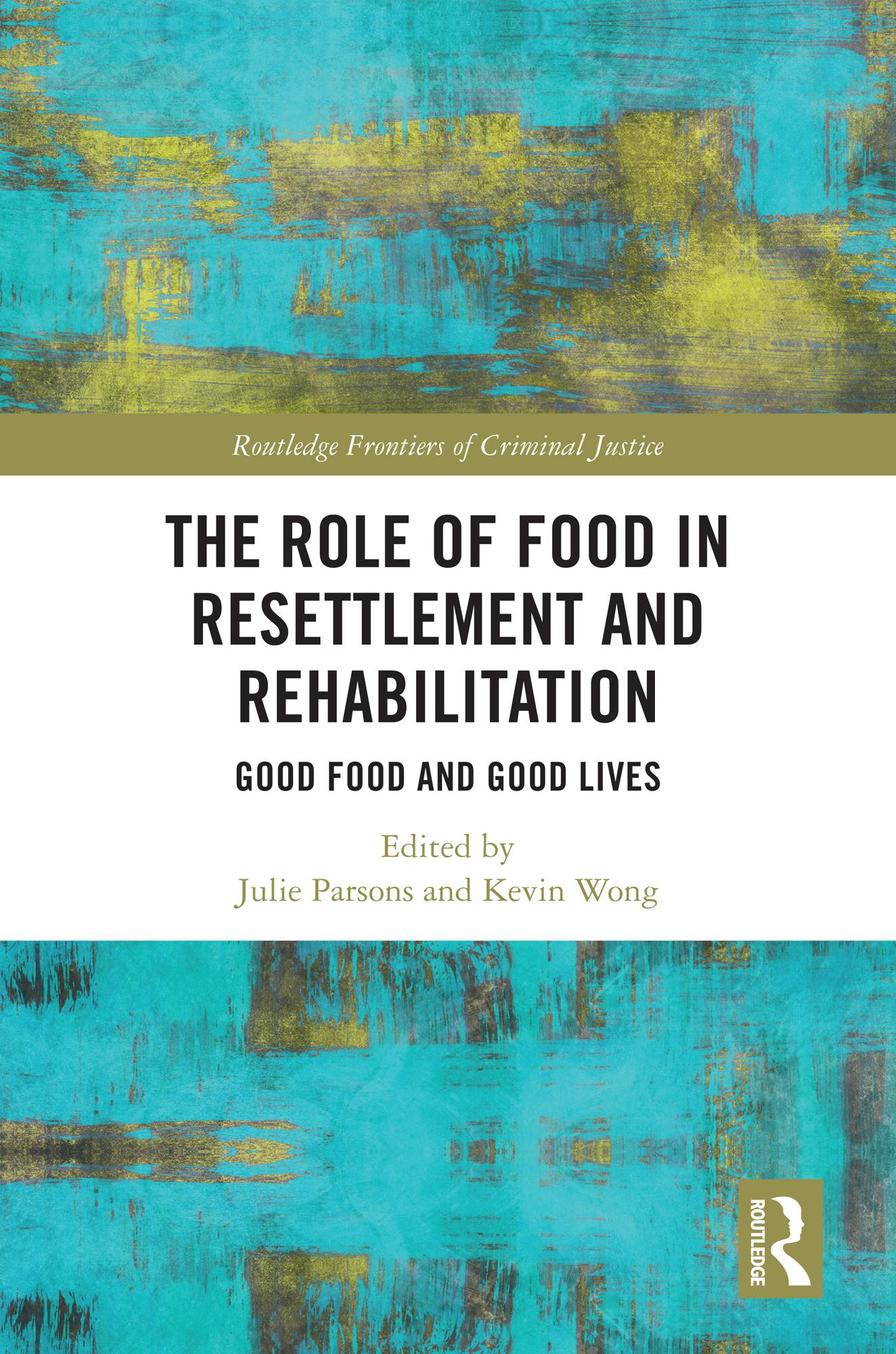
Exploring the role of food in enabling people with convictions to live a “good life”, this book examines the tangible ways in which growing food, cooking, and eating together has the potential to be both transformative and small steps incremental in facilitating desistance journeys for people with convictions.
At its most reductive, food sustains us physically; it’s the fuel which keeps us alive. Of course, emotionally, culturally, and socially it does more than that. This edited book addresses an under-researched area of resettlement and rehabilitation which has real-world application to policy and practice in criminal justice and related areas such as mental health, physical health, employment, and education. Importantly, given the relatability of food growing, cooking, and eating to the wider public, it offers opportunities to connect the desistance journeys and lives of people with convictions to the wider public.
The Role of Food in Resettlement and Rehabilitation will be of great interest to students and scholars of criminology, sociology, social work, and food studies. It is also important reading for government policymakers in criminal justice and health care, social policy, and criminal justice practitioners, including prison governors, social workers, and providers of services for people with convictions in custody and community.
Betaal eenvoudig met kaart, Klarna, Apple Pay of Google Pay. Niet tevreden? Je hebt altijd 14 dagen bedenktijd. Lees meer in onze voorwaarden. Heb je vragen, mail ons dan via hello@memmo.org.
Memmo maakt studeren makkelijker – waar je ook bent ter wereld. Wij brengen je cursusboeken en slimme studietools samen op één plek: samenvattingen, quizzen, podcasts en flashcards. En Ted, je studievriend die antwoord geeft op alles wat je je afvraagt. Meer dan 50.000 studenten studeren hier al – gebouwd om je sneller te laten leren en minder stress te geven.