
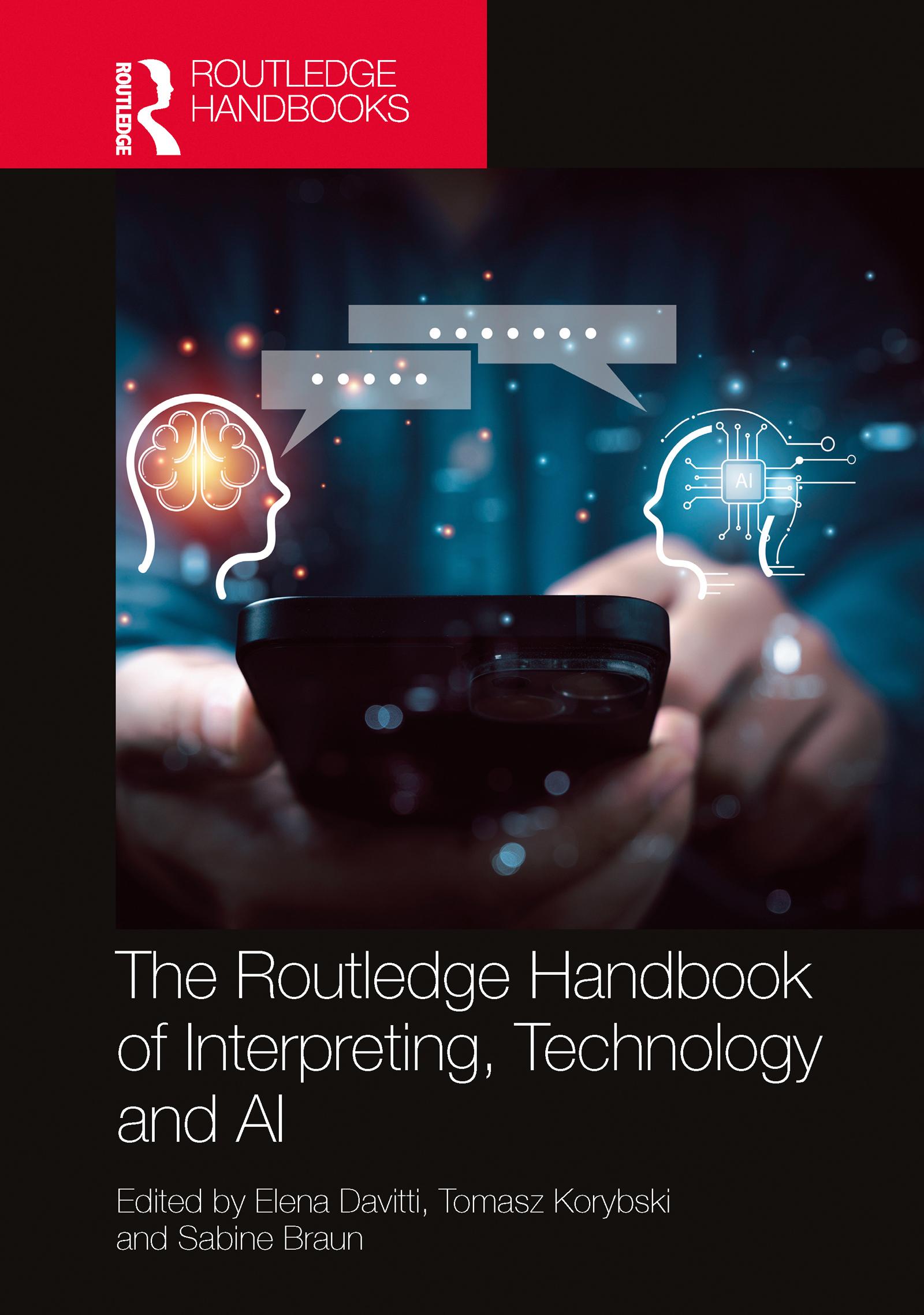
This handbook provides a comprehensive overview of the history, development, use, and study of the evolving relationship between interpreting and technology, addressing the challenges and opportunities brought by advances in AI and digital tools.
Encompassing a variety of methods, systems, and devices applied to interpreting as a field of practice as well as a study discipline, this volume presents a synthesis of current thinking on the topic and an understanding of how technology alters, shapes, and enables the interpreting task. The handbook examines how interpreting has evolved through the integration of both purpose-built and adapted technologies that support, automate, or even replace (human) interpreting tasks and offers insights into their ethical, practical, and socio-economic implications. Addressing both signed and spoken language interpreting technologies, as well as technologies for language access and media accessibility, the book draws together expertise from varied areas of study and illustrates overlapping aspects of research.
Authored by a range of practicing interpreters and academics from across five continents, this is the essential guide to interpreting and technology for both advanced students and researchers of interpreting and professional interpreters.
Betaal eenvoudig met kaart, Klarna, Apple Pay of Google Pay. Niet tevreden? Je hebt altijd 14 dagen bedenktijd. Lees meer in onze voorwaarden. Heb je vragen, mail ons dan via hello@memmo.org.
Memmo maakt studeren makkelijker – waar je ook bent ter wereld. Wij brengen je cursusboeken en slimme studietools samen op één plek: samenvattingen, quizzen, podcasts en flashcards. En Ted, je studievriend die antwoord geeft op alles wat je je afvraagt. Meer dan 50.000 studenten studeren hier al – gebouwd om je sneller te laten leren en minder stress te geven.