
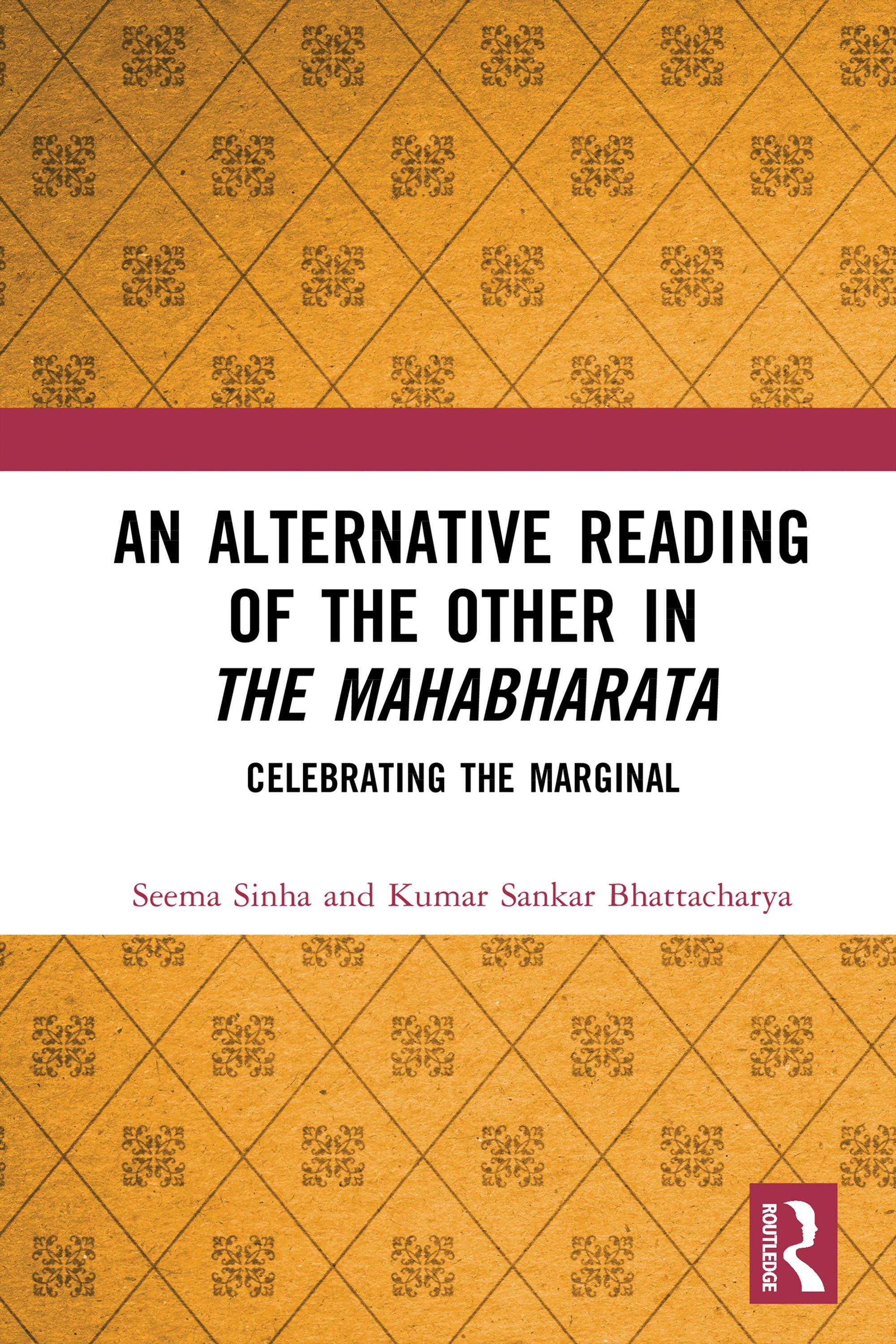
This book studies gender, sexuality, and representation in The Mahabharata. Drawing on Feminist theory, Queer theory and Deconstructivist theory, it revisits the epic as a saga of agency, empowerment, and subversion, and examines how it gives the gendered marginal — the women and the queer — a voice.
The authors argue that in a fluid text like The Mahabharata, there is ample scope for contradiction and conformation, as well as conflict and resolution, which gives the marginal an opportunity to document resistance. They analyse the stories of Draupadi, Kunti, Renuka, Ulupi, and Hidimba within an anti-patriarchal, non-normative, post-modern theoretical framework. They also examine liminal figures like Shikhandi, Yuvanashwa, Sudyumna and Bhangashwan, who are uniquely placed in conversation involving queer space, marginalization, and resistance.
An important addition to the study of Indian epics, this book will be indispensable for scholars and researchers of cultural studies, subaltern studies, Indian literature, English literature, gender studies, sexuality studies, queer studies, women’s studies, exclusion studies, and postcolonial studies.
Betaal eenvoudig met kaart, Klarna, Apple Pay of Google Pay. Niet tevreden? Je hebt altijd 14 dagen bedenktijd. Lees meer in onze voorwaarden. Heb je vragen, mail ons dan via hello@memmo.org.
Memmo maakt studeren makkelijker – waar je ook bent ter wereld. Wij brengen je cursusboeken en slimme studietools samen op één plek: samenvattingen, quizzen, podcasts en flashcards. En Ted, je studievriend die antwoord geeft op alles wat je je afvraagt. Meer dan 50.000 studenten studeren hier al – gebouwd om je sneller te laten leren en minder stress te geven.