
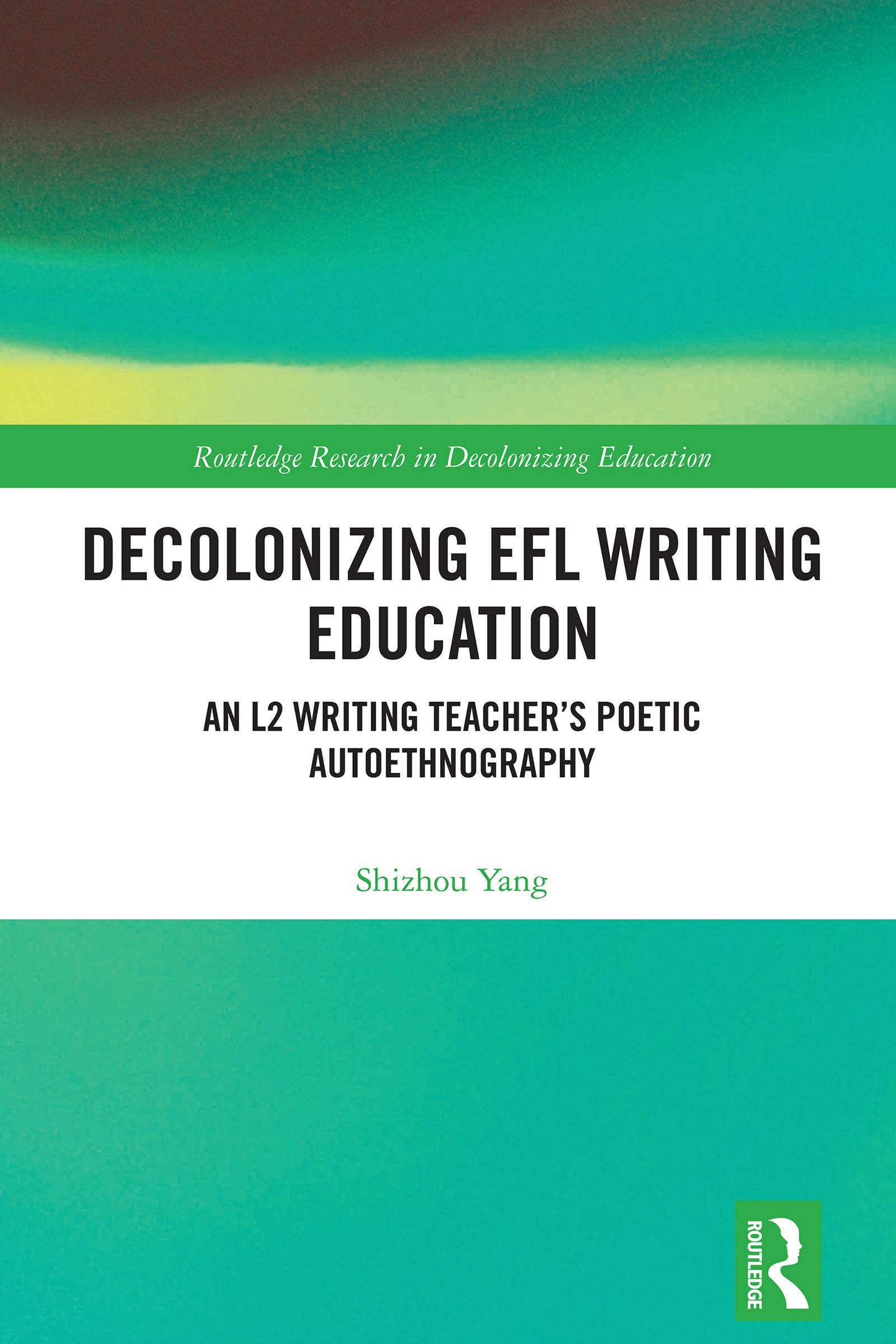
Arguably the first book-length exploration of decolonizing English as a Foreign Language (EFL) writing education, this novel volume uses poetic autoethnography to provide a situated, dynamic, and complex view of multilingual writers through their second language (L2) academic writing and creative writing.
Responding to contemporary calls to decolonize L2 writing as a field and diversify academic writing for multilingual students, this book is the first of its kind to explore the decolonization of EFL writing education from a Global Southern context. Chapters critically and creatively consider issues of educational technologies, translanguaging, academic writing, epistemology, and pedagogy from two writing courses from a Global South and classroom writing ecology perspective. Using poetic autoethnography alongside data from authentic writing classrooms in Thailand, the book posits that emergent translanguaging literature can be cultivated for decolonization purposes, critiquing and providing decolonial options in such areas as monolingual ideology, freewriting, student identity, and mind.
Empowering EFL writing teachers to raise students’ critical awareness of issues such as writing, culture, and coloniality, this book will be of key interest to researchers, scholars, and postgraduate students in the fields of applied linguistics, Teaching English to Speakers of Other Languages (TESOL), L2 writing, multilingual education, and language policy and planning.
Betaal eenvoudig met kaart, Klarna, Apple Pay of Google Pay. Niet tevreden? Je hebt altijd 14 dagen bedenktijd. Lees meer in onze voorwaarden. Heb je vragen, mail ons dan via hello@memmo.org.
Memmo maakt studeren makkelijker – waar je ook bent ter wereld. Wij brengen je cursusboeken en slimme studietools samen op één plek: samenvattingen, quizzen, podcasts en flashcards. En Ted, je studievriend die antwoord geeft op alles wat je je afvraagt. Meer dan 50.000 studenten studeren hier al – gebouwd om je sneller te laten leren en minder stress te geven.