
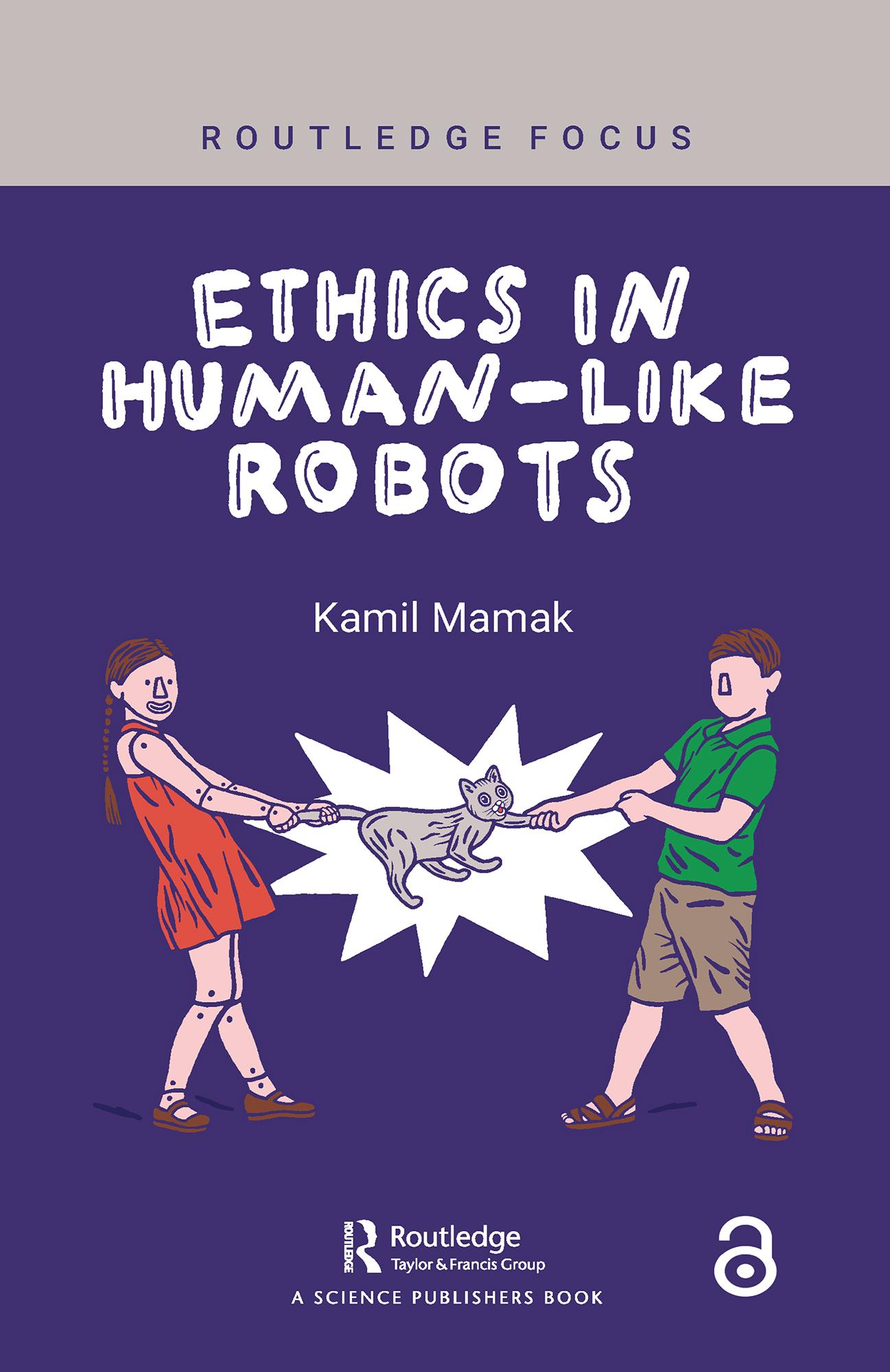
The idea of creating artificial humans can be found at the beginning of the human culture. Ancient myths contain the stories of artificial humans brought to life by gods. The word robot originates from a play that was about artificial humans made from artificial flesh that aims to serve real humans. With advancements in robotics, the materialization of this idea is more real than ever before. We are witnessing attempts to create humanoid robots that might be deployed in many spheres of our life - policing, healthcare, and even for love and sex.
The book focuses on the ethical issues of human likeness of robots and human tendency to anthropomorphize. It is built on the assumption that design choices are not neutral, and they need to be discussed to align robots with human values. With robots operating in the physical world, they bring ideas and risks that should be addressed before widespread deployment. The book reviews specific issues and provides suggestions and recommendations for improving robots to serve humans better. It draws on literature from Human-Robot Interactions, ethics of AI and robotics, and the philosophy of technology.
The Open Access version of this book, available at http://www.taylorfrancis.com, has been made available under a Creative Commons Attribution-NonCommercial-NoDerivatives (CC-BY-NC-ND) 4.0 International license.
Betaal eenvoudig met kaart, Klarna, Apple Pay of Google Pay. Niet tevreden? Je hebt altijd 14 dagen bedenktijd. Lees meer in onze voorwaarden. Heb je vragen, mail ons dan via hello@memmo.org.
Memmo maakt studeren makkelijker – waar je ook bent ter wereld. Wij brengen je cursusboeken en slimme studietools samen op één plek: samenvattingen, quizzen, podcasts en flashcards. En Ted, je studievriend die antwoord geeft op alles wat je je afvraagt. Meer dan 50.000 studenten studeren hier al – gebouwd om je sneller te laten leren en minder stress te geven.