
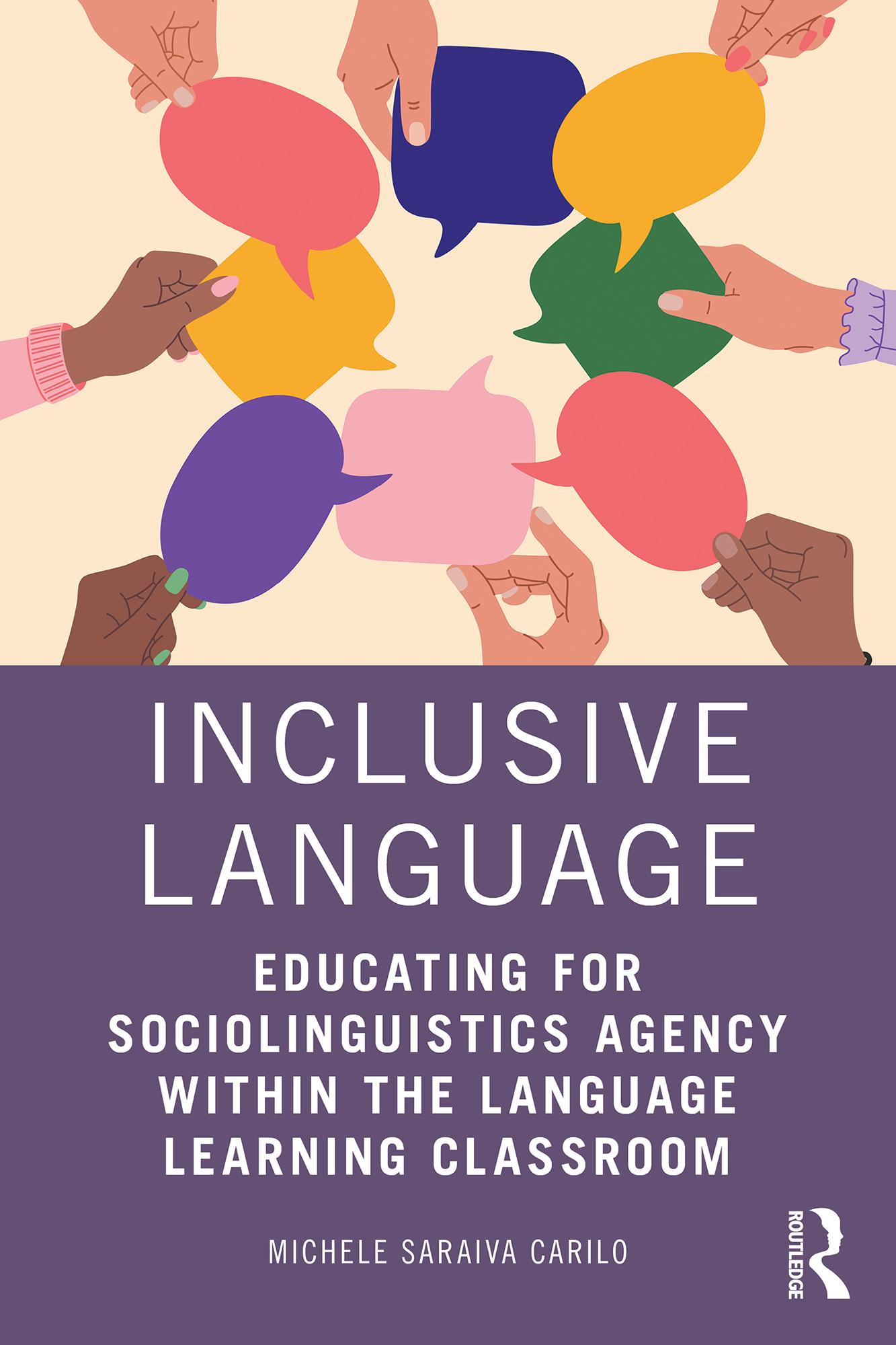
Inclusive Language: Educating for Sociolinguistics Agency within the Language Learning Classroom analyses standardised and non-standardised uses of language that can be considered acts of sociolinguistic revolution from across a range of social media platforms.
Using examples from French, Italian, Portuguese and Spanish, the book explores how linguistic inclusiveness related to race, ethnicity, religion, gender, the LGBTQIA+ community, and people with disabilities is a bottom-up phenomenon led mainly by members of marginalised socio-cultural groups, disseminated widely throughout social media, and integrated (or disregarded) consciously in language classrooms. Inclusive Language challenges the extreme prescriptivism of the languages analysed and contributes to the advancement of inclusive language within the language learning classroom by proposing frameworks such as critical digital ethnography for curriculum development and enactment, guidelines for syllabus and material design, as well as teaching strategies based on critical and intercultural pedagogies.
The book is a valuable resource for language educators and students at undergraduate and graduate level education courses with a particular interest in language teaching.
Betaal eenvoudig met kaart, Klarna, Apple Pay of Google Pay. Niet tevreden? Je hebt altijd 14 dagen bedenktijd. Lees meer in onze voorwaarden. Heb je vragen, mail ons dan via hello@memmo.org.
Memmo maakt studeren makkelijker – waar je ook bent ter wereld. Wij brengen je cursusboeken en slimme studietools samen op één plek: samenvattingen, quizzen, podcasts en flashcards. En Ted, je studievriend die antwoord geeft op alles wat je je afvraagt. Meer dan 50.000 studenten studeren hier al – gebouwd om je sneller te laten leren en minder stress te geven.