
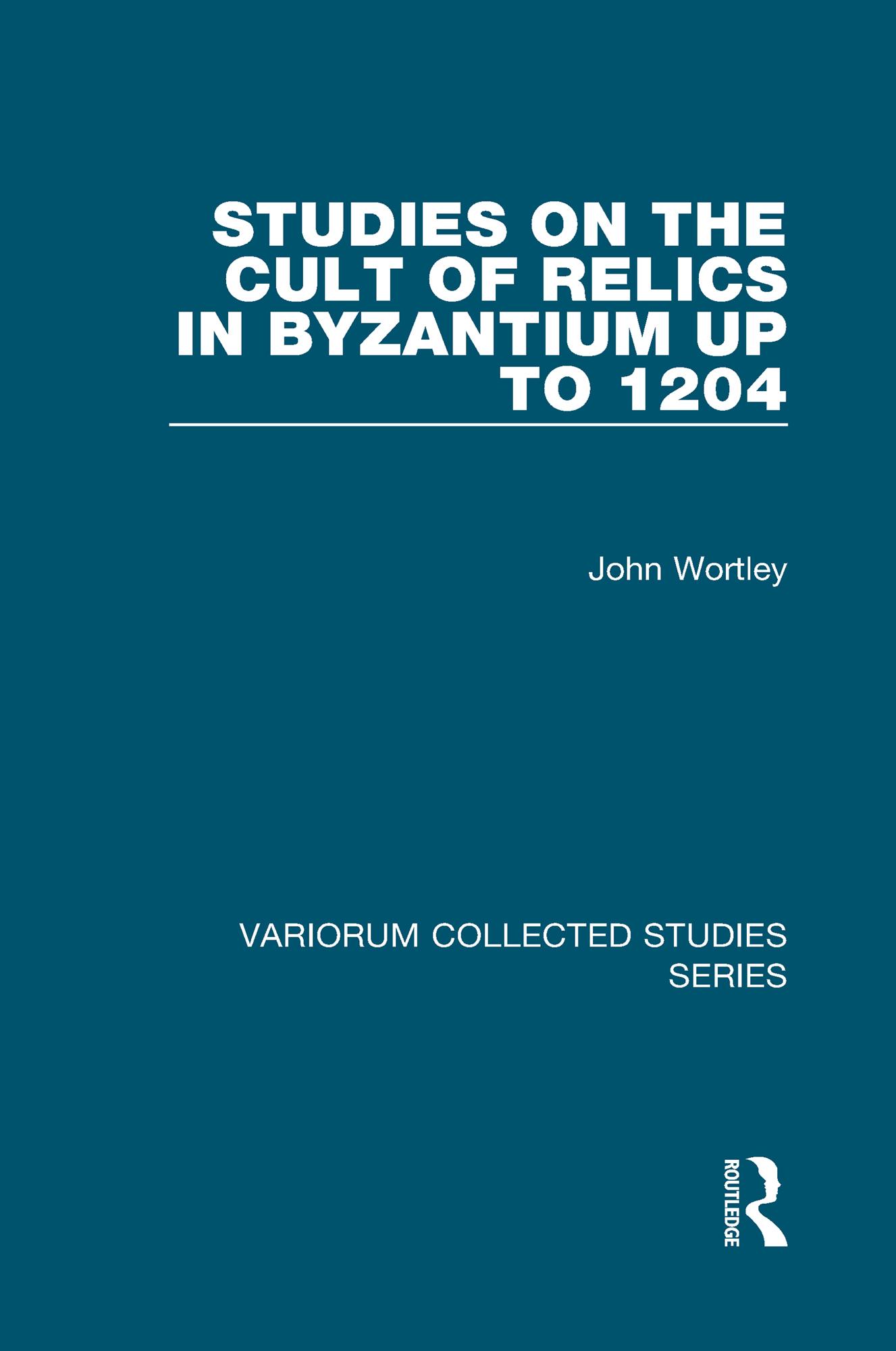
Constantinople was well known in its heyday for the enormous collection of relics housed in its churches: bones, even whole bodies and intimate possessions of holy men and women. Almost all these objects had been imported from various parts of the Roman Empire between the late 4th to the 10th centuries. They had been acquired because they were believed to have miraculous powers to ward off enemies, to heal sicknesses and to ensure that the capital was indeed the "God-guarded" (Theophylaktos) city it believed itself to be. These studies examine the means by which relics were acquired, the ways in which they were used and some of the reasons why for so long they were believed to be effective. The role of relics in the development of the cult of the Mother of God (Theotokos) is discussed as well as the curious relationship between relics and icons. The so-called 'deviation' of the Fourth Crusade and the subsequent sacking of Constantinople in 1204 may also in part be explained by an unbridled yearning to possess her relics; they were certainly pillaged and disseminated to the west, thus concluding an era of relic-history at Byzantium and initiating a different one in the west.
Pagina's: 300
Categorie: Religion & Teologi
e-ISBN: 9781040241752
Verzendgewicht: 1.2 kg
Verzending binnen: 1-2 dagen
Betaal eenvoudig met kaart, Klarna, Apple Pay of Google Pay. Niet tevreden? Je hebt altijd 14 dagen bedenktijd. Lees meer in onze voorwaarden. Heb je vragen, mail ons dan via hello@memmo.org.
Memmo maakt studeren makkelijker – waar je ook bent ter wereld. Wij brengen je cursusboeken en slimme studietools samen op één plek: samenvattingen, quizzen, podcasts en flashcards. En Ted, je studievriend die antwoord geeft op alles wat je je afvraagt. Meer dan 50.000 studenten studeren hier al – gebouwd om je sneller te laten leren en minder stress te geven.
Misschien vind je dit ook leuk
Koop het boek0