
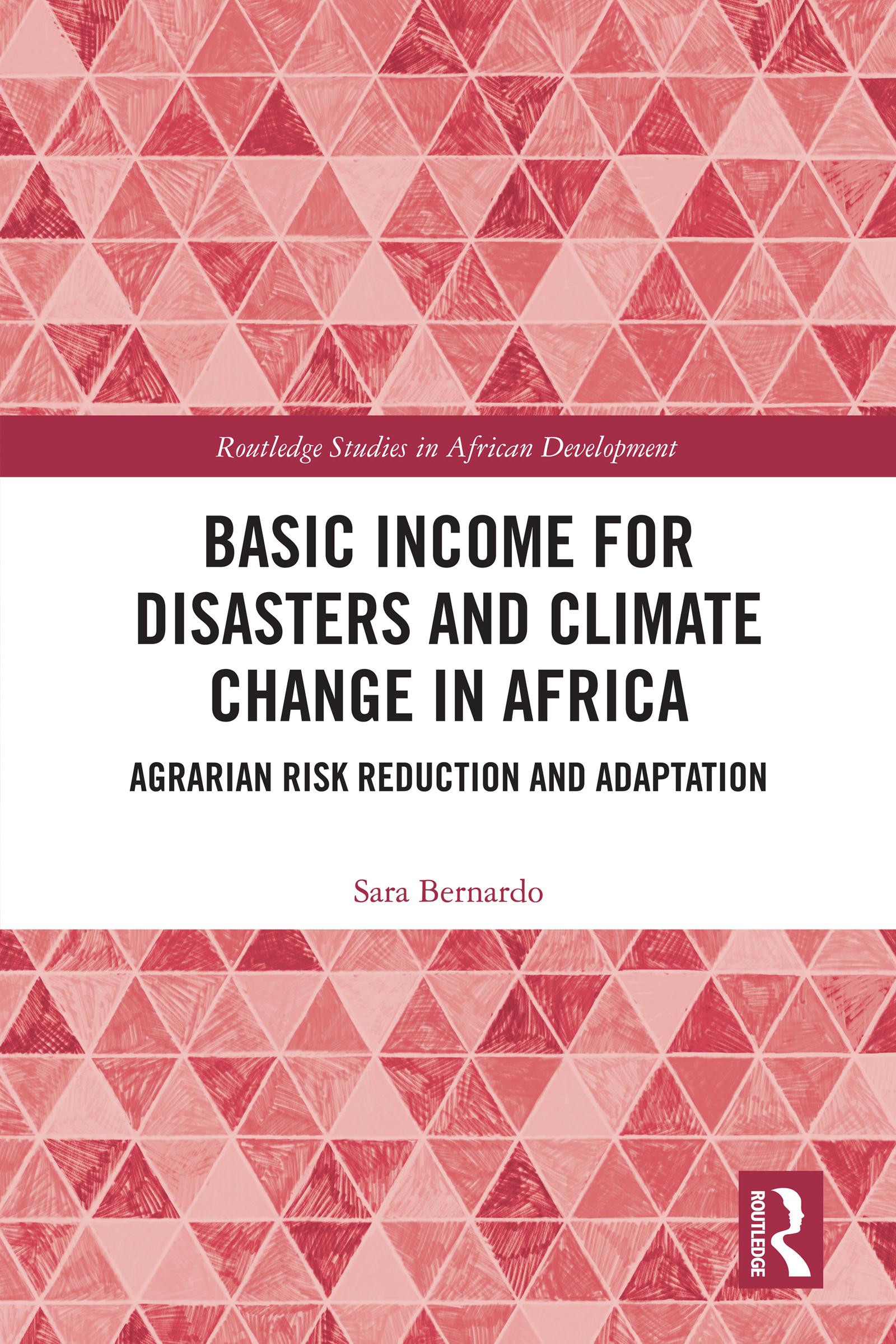
This book considers how basic income could be used as a mechanism for disaster risk reduction and climate change adaptation in African agrarian societies.
African agrarian societies are among those most severely impacted by disasters due to insufficient financial and technological resources to prepare for and respond to crises. This book argues that hazards and environmental disasters are increasingly not isolated occurrences, and the vulnerability of communities is cumulative event after event, with capacities to cope and adapt weakened progressively. With pre- and post-disaster operating as a single continuous process, basic income could provide communities with a stable flow of money, leaving them better able to adapt and respond to crises. To illustrate the theoretical framework, the book uses Mozambique, and more specifically the district of Búzi, as an instrumental case study.
This innovative book will be of interest to readers across the fields of global development, African studies and humanitarian and disaster studies.
Betaal eenvoudig met kaart, Klarna, Apple Pay of Google Pay. Niet tevreden? Je hebt altijd 14 dagen bedenktijd. Lees meer in onze voorwaarden. Heb je vragen, mail ons dan via hello@memmo.org.
Memmo maakt studeren makkelijker – waar je ook bent ter wereld. Wij brengen je cursusboeken en slimme studietools samen op één plek: samenvattingen, quizzen, podcasts en flashcards. En Ted, je studievriend die antwoord geeft op alles wat je je afvraagt. Meer dan 50.000 studenten studeren hier al – gebouwd om je sneller te laten leren en minder stress te geven.