
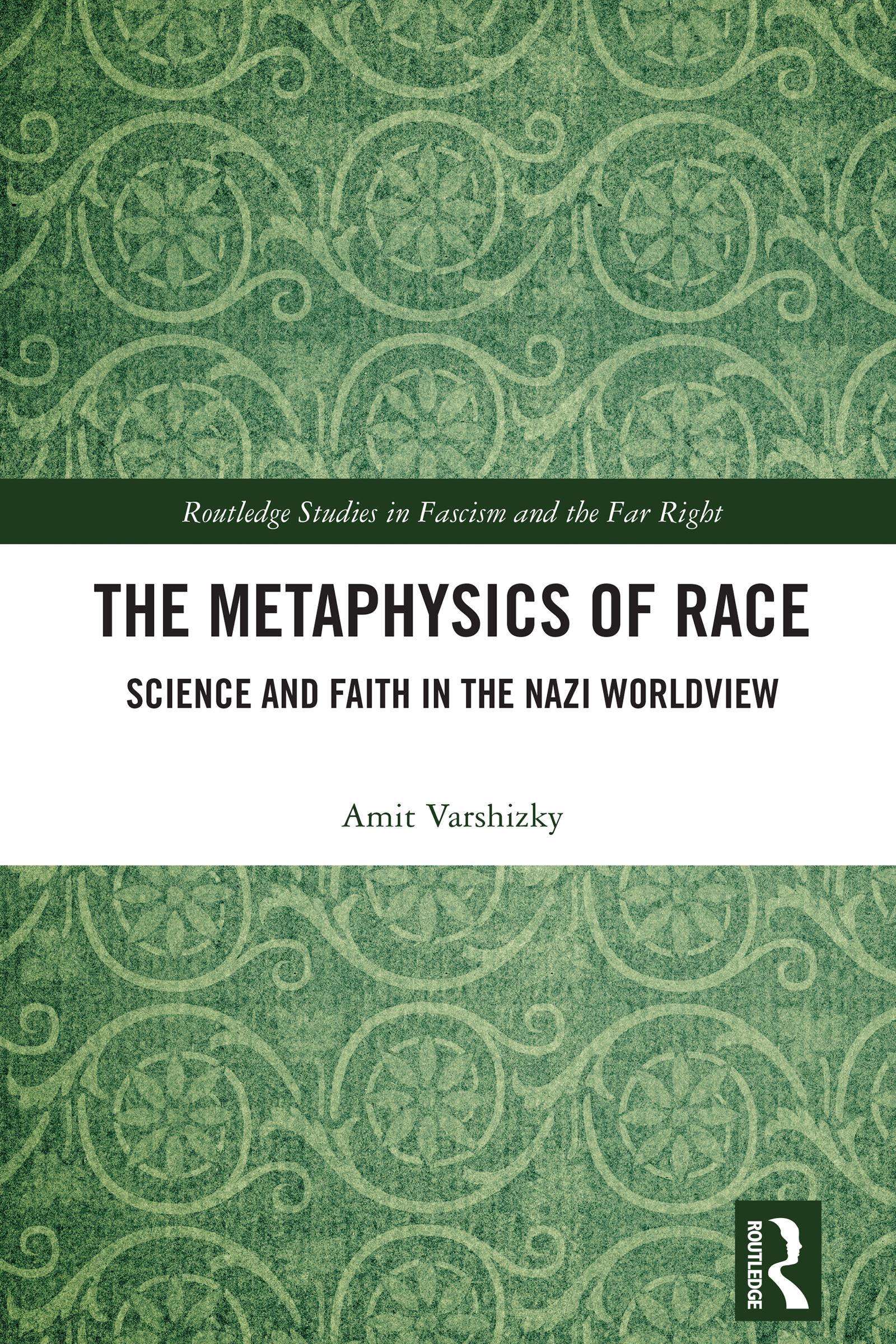
This book seeks to reframe debates on the conflicting scientific and spiritual traditions that underpinned the Nazi worldview, showing how despite the multitude of tensions and rivals among its adherents, it provided a coherent conceptual grid and possessed its own philosophical consistency.
Drawing on a large variety of works, the volume offers insights into the intellectual climate that allowed the radical ideology of National Socialism to take hold. It examines the emergence of nuanced conceptions of race in interwar Germany and the pursuit of a new ethical and existential fulcrum in biology. Accordingly, the volume calls for a re-examination of the place of genetics in Nazi racial thought, drawing attention to the multi-register voices within the framework of interwar racial theory. Varshizky explores the ways in which these ideas provided new justifications for the Nazi revolutionary enterprise and blurred the distinction between fact and value, knowledge and faith, the secular and the sacred, and how they allowed Nazi thinkers to bounce across these epistemological divisions.
This volume will be of interest to scholars of Nazi Germany and World War II, intellectual and cultural history, the history of science, and the philosophy of religion.
Betaal eenvoudig met kaart, Klarna, Apple Pay of Google Pay. Niet tevreden? Je hebt altijd 14 dagen bedenktijd. Lees meer in onze voorwaarden. Heb je vragen, mail ons dan via hello@memmo.org.
Memmo maakt studeren makkelijker – waar je ook bent ter wereld. Wij brengen je cursusboeken en slimme studietools samen op één plek: samenvattingen, quizzen, podcasts en flashcards. En Ted, je studievriend die antwoord geeft op alles wat je je afvraagt. Meer dan 50.000 studenten studeren hier al – gebouwd om je sneller te laten leren en minder stress te geven.