
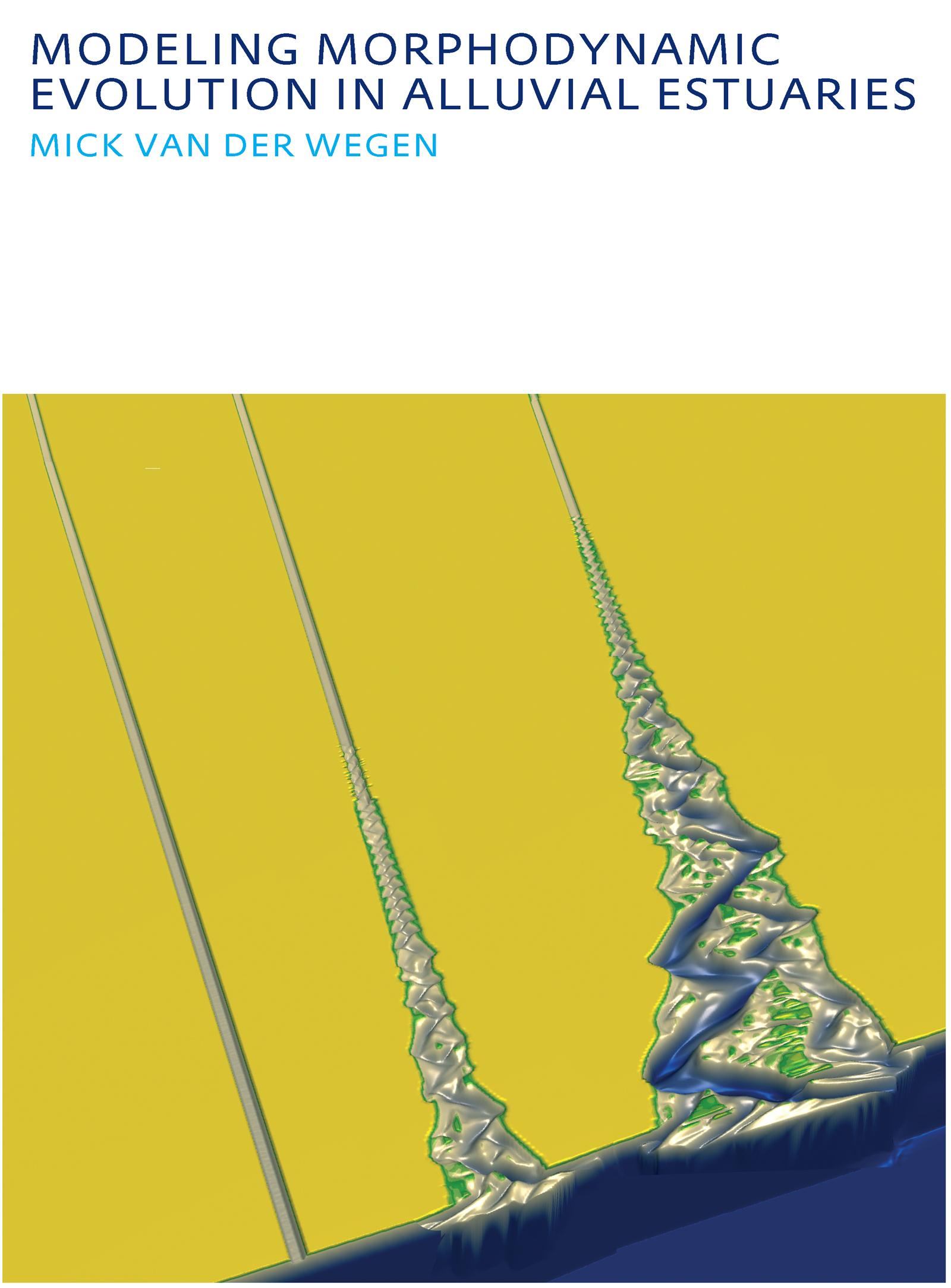
The main objective of this research is to investigate the governing processes and characteristics that drive morphodynamic evolution in alluvial estuaries by application of a process-based numerical model (Delft3D). It is of utmost importance to understand estuarine processes so that impact of human interference (like dredging and land reclamation) and long-term changes (like sea level rise) can be evaluated.
The research addresses a number of cases ranging from an rectangular basins to real estuaries like the Western Scheldt in the Netherlands or San Pablo Bay in California. The more schematized approach allow to study morphodynamic evolution over several millennia under constant forcing and answers more fundamental questions related to conditions of equilibrium and related time scales. The more realistic cases give insight into the skill of the approach in predicting decadal morphodynamic developments. More processes are included to mimic realistic conditions and model results are compared to bathymetric measurements over the last century.
The research shows that the modeling approach is good capable of describing stable morphodynamic calculations over a timescale of millennia with patterns similar to patterns observed in reality. Additionally, the approach shows that it is possible to predict decadal morphodynamic developments in real estuaries with significant skill.
Betaal eenvoudig met kaart, Klarna, Apple Pay of Google Pay. Niet tevreden? Je hebt altijd 14 dagen bedenktijd. Lees meer in onze voorwaarden. Heb je vragen, mail ons dan via hello@memmo.org.
Memmo maakt studeren makkelijker – waar je ook bent ter wereld. Wij brengen je cursusboeken en slimme studietools samen op één plek: samenvattingen, quizzen, podcasts en flashcards. En Ted, je studievriend die antwoord geeft op alles wat je je afvraagt. Meer dan 50.000 studenten studeren hier al – gebouwd om je sneller te laten leren en minder stress te geven.