
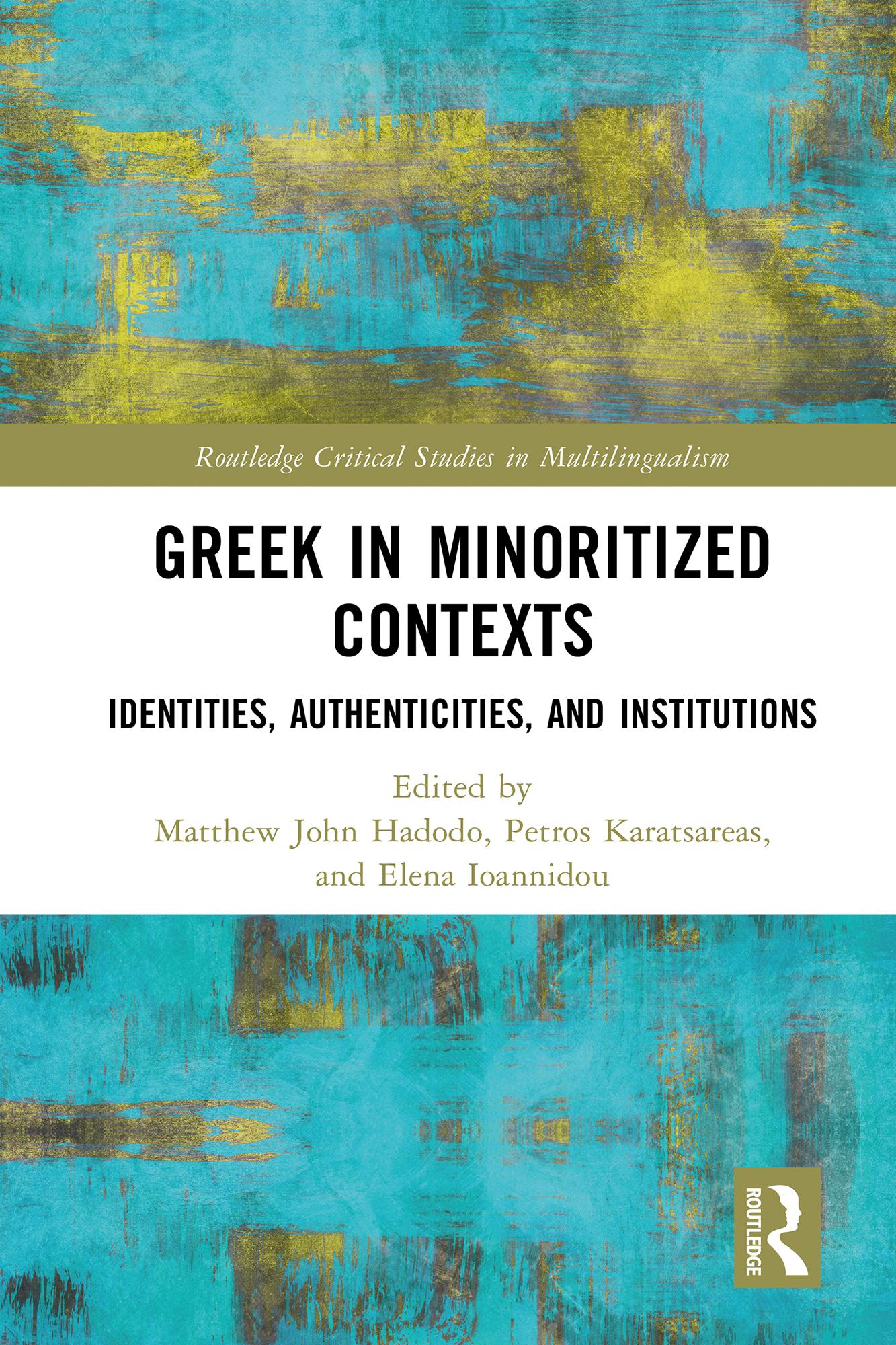
This volume examines constructions of Greekness and Greek-speakerhood in geographical and sociohistorical contexts where Greek speakers are minoritised, and Greek is not hegemonic.
Authors explore the sociolinguistic outcomes that arise from minoritisation, distant and more recent history, migration, and the proliferation of digital technologies for communication in the 21st century. Set against the backdrops of Albania, Australia, Canada, Cyprus, Sweden, Turkey, and the UK, the volume chapters consider the manifestations, conceptualisations, and negotiations of linguistic authenticity; the construction of identities; and the impact of institutions such as Greek language schools as well as families on local sociolinguistic landscapes and dynamics. Particular attention is given to the confrontations between competing language forms, practices, and repertoires resulting from the contact between standardised and non-standardised varieties of Greek as well as to communities that are distant from the influence of institutions where Standard Greek or other local Greek norms prevail.
The book is of interest to academic specialists and graduate students in sociolinguistics, applied linguistics, bi-/multilingualism, diaspora studies, linguistic anthropology, linguistic ethnography, social interaction, language contact, and language and culture – with a special focus on Greek.
Betaal eenvoudig met kaart, Klarna, Apple Pay of Google Pay. Niet tevreden? Je hebt altijd 14 dagen bedenktijd. Lees meer in onze voorwaarden. Heb je vragen, mail ons dan via hello@memmo.org.
Memmo maakt studeren makkelijker – waar je ook bent ter wereld. Wij brengen je cursusboeken en slimme studietools samen op één plek: samenvattingen, quizzen, podcasts en flashcards. En Ted, je studievriend die antwoord geeft op alles wat je je afvraagt. Meer dan 50.000 studenten studeren hier al – gebouwd om je sneller te laten leren en minder stress te geven.