
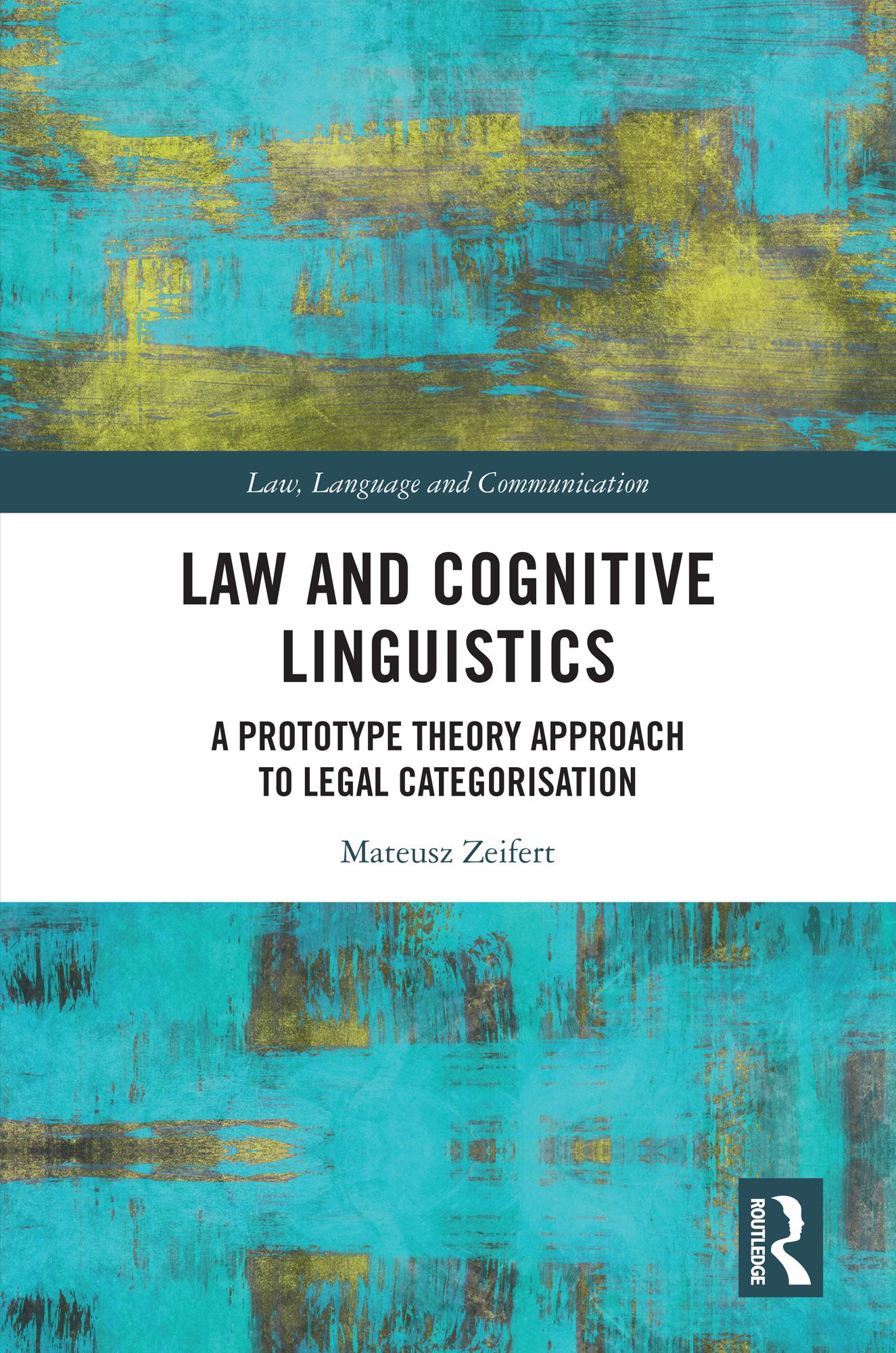
This book advances the prototype theory of categorisation within a legal context. The work adopts a multidisciplinary approach and draws on insights from cognitive psychology, cognitive linguistics, and analytic philosophy to discuss semantic problems present in law. Designed as a bridge between cognitive linguistics and legal theory, it argues that categorisation is a crucial cognitive operation for the application of law and that theories of categorisation are relevant to legal theory. It makes the case that the prototype approach is better suited than more formal approaches usually utilised in jurisprudence to explaining many familiar linguistic problems found in law, such as vagueness, polysemy, the flexibility of meaning, the generality of language, context dependence of meaning, linguistic indeterminacy, and so on. The book focuses on problems of semantic analysis in law, both in concrete cases, that is, particular cases before courts, and, at the theoretical level, on methods of statutory interpretation. It will be a valuable resource for academics and researchers working in the areas of Law and Language, Legal Theory, Legal Philosophy, and Legal Linguistics.
Betaal eenvoudig met kaart, Klarna, Apple Pay of Google Pay. Niet tevreden? Je hebt altijd 14 dagen bedenktijd. Lees meer in onze voorwaarden. Heb je vragen, mail ons dan via hello@memmo.org.
Memmo maakt studeren makkelijker – waar je ook bent ter wereld. Wij brengen je cursusboeken en slimme studietools samen op één plek: samenvattingen, quizzen, podcasts en flashcards. En Ted, je studievriend die antwoord geeft op alles wat je je afvraagt. Meer dan 50.000 studenten studeren hier al – gebouwd om je sneller te laten leren en minder stress te geven.