
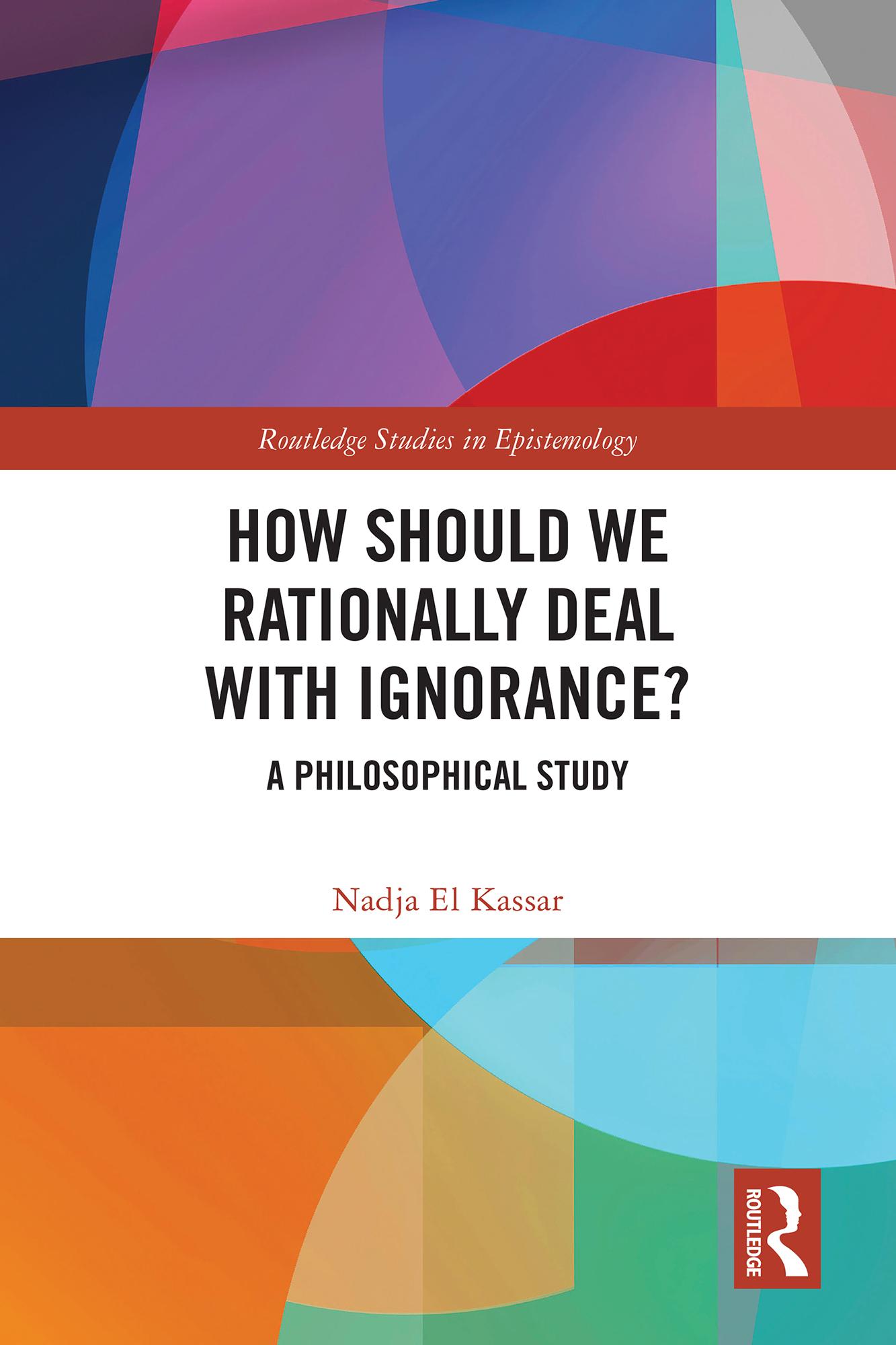
This book addresses two questions that are highly relevant for epistemology and for society: What is ignorance and how should we rationally deal with it? It proposes a new way of thinking about ignorance based on contemporary and historical philosophical theories.
In the first part of the book, the author shows that epistemological definitions of ignorance are quite heterogeneous and often address different phenomena under the label "ignorance." She then develops an integrated conception of ignorance that recognizes doxastic, attitudinal, and structural constituents of ignorance. Based on this new conception, she carves out suggestions for dealing with ignorance from the history of philosophy that have largely been overlooked: virtue-theoretic approaches based on Aristotle and Socrates, consequentialist approaches derived from James, and deontological approaches based on Locke, Clifford, and Kant. None of these approaches individually provide a satisfying approach to the task of rationally dealing with ignorance, and so the author develops an alternative maxim-based answer that extends Kant’s maxims of the sensus communis to the issue of ignorance. The last part of the book applies this maxim-based answer to different contexts in medicine and democracies.
How Should We Rationally Deal with Ignorance? will appeal to scholars and advanced students working in epistemology, political philosophy, feminist philosophy, and the social sciences.
Betaal eenvoudig met kaart, Klarna, Apple Pay of Google Pay. Niet tevreden? Je hebt altijd 14 dagen bedenktijd. Lees meer in onze voorwaarden. Heb je vragen, mail ons dan via hello@memmo.org.
Memmo maakt studeren makkelijker – waar je ook bent ter wereld. Wij brengen je cursusboeken en slimme studietools samen op één plek: samenvattingen, quizzen, podcasts en flashcards. En Ted, je studievriend die antwoord geeft op alles wat je je afvraagt. Meer dan 50.000 studenten studeren hier al – gebouwd om je sneller te laten leren en minder stress te geven.