
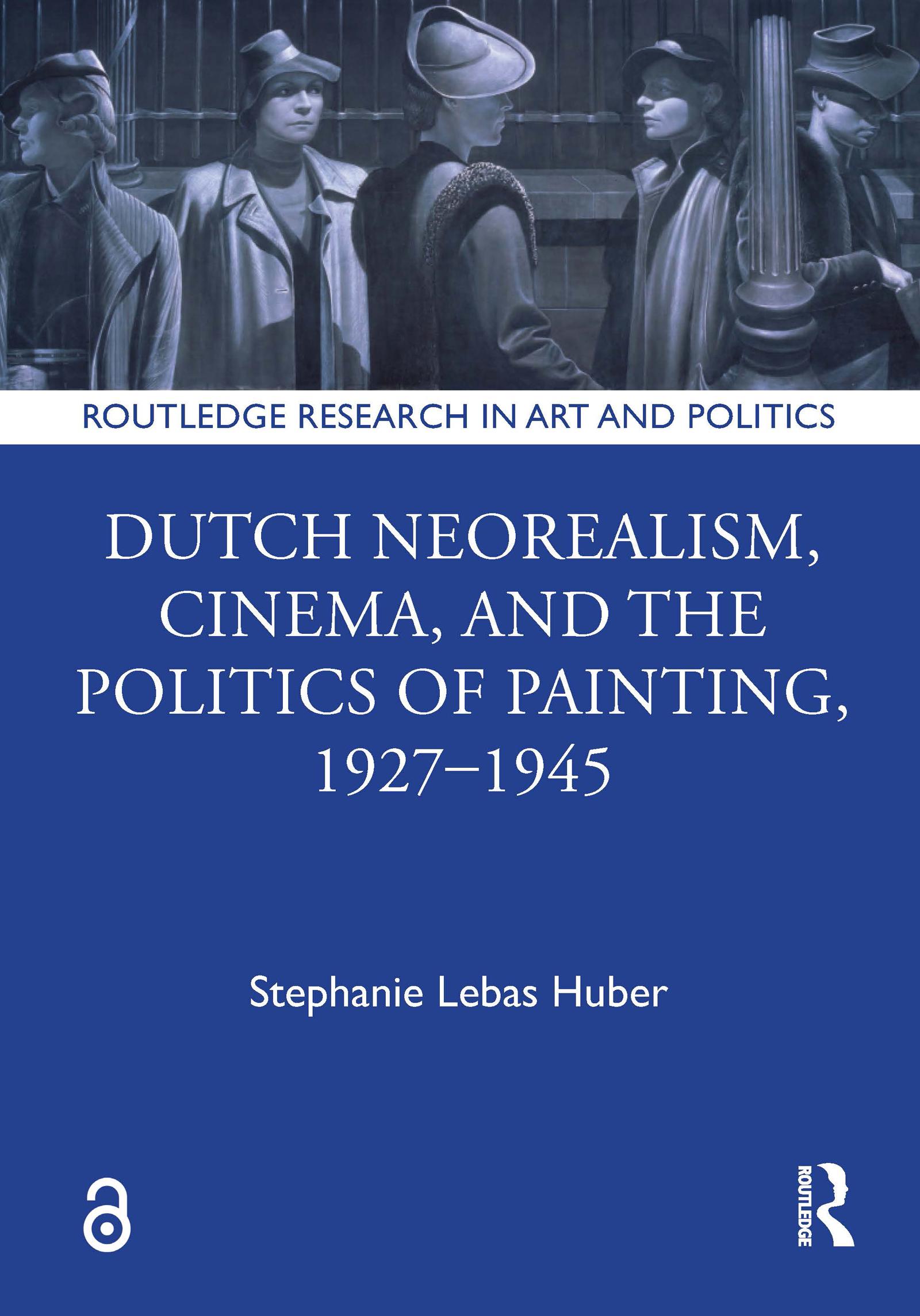
This study offers a radically new perspective on Dutch Neorealism, one that emphasizes the role of film as an apparatus, the effects of which, when emulated in painting, can reproduce the affective experience of film-watching.
More of a tendency than a tightly defined style or "ism," Neorealism is the Dutch variant of Magic Realism, an uncanny mode of figurative painting identified with Neue Sachlichkeit in Germany and Novecento in Italy. Best represented by the Dutch artists Pyke Koch, Carel Willink, Charley Toorop, Raoul Hynckes, Dick Ket, and Wim Schuhmacher, Neorealism—as demonstrated in this book—depicted societal disintegration and allegories of looming disaster in reaction to the rise of totalitarian regimes and, eventually, the Nazi Occupation of The Netherlands. The degree to which these artists exhibited either revolutionary or reactionary sentiments—usually corresponding with their political affiliation—is one of the central problematics explored in this text.
The book will be of interest to scholars working in art history, World War II history, and film studies.
The Open Access version of this book, available at www.taylorfrancis.com, has been made available under a Creative Commons [Attribution-Non Commercial-No Derivatives (CC-BY-NC-ND)] 4.0 license.
Betaal eenvoudig met kaart, Klarna, Apple Pay of Google Pay. Niet tevreden? Je hebt altijd 14 dagen bedenktijd. Lees meer in onze voorwaarden. Heb je vragen, mail ons dan via hello@memmo.org.
Memmo maakt studeren makkelijker – waar je ook bent ter wereld. Wij brengen je cursusboeken en slimme studietools samen op één plek: samenvattingen, quizzen, podcasts en flashcards. En Ted, je studievriend die antwoord geeft op alles wat je je afvraagt. Meer dan 50.000 studenten studeren hier al – gebouwd om je sneller te laten leren en minder stress te geven.