
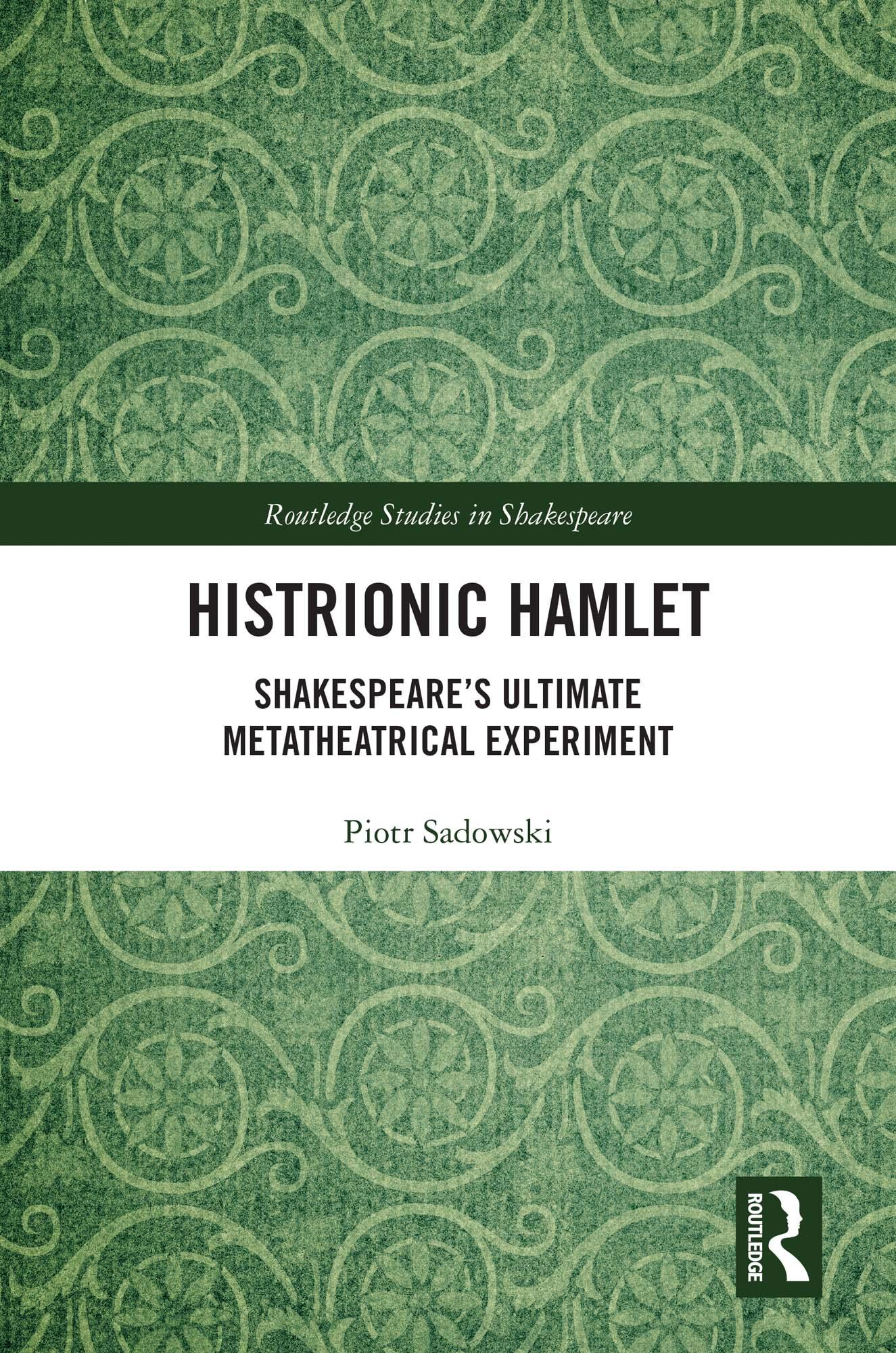
According to psychological research on acting, the histrionic personality consists of a compulsive tendency to play-act, exaggerate emotions, succumb to illusions, to seek attention through speech, body language, and costume, to be seductive and impulsive. An original intervention in the critical history of Shakespeare’s most famous play, Histrionic Hamlet argues that the Danish Prince is a stage representation of just such a personality—a born actor and a drama queen rather than a politician—incongruously thrown in the middle of ruthless high-stakes power struggle requiring pragmatic rather than theatrical skills. Uniquely among other English revenge tragedies, in Hamlet a histrionic protagonist striking a series of gratuitous, baffling, self-indulgent, and counterproductive poses is called upon to carry out a challenging and brutal political task, which he spectacularly and tragically mismanages. Unable to perform on a theatrical stage as a professional actor, the Clown Prince bitterly play-acts anyway, turning all situations into opportunities of pretend play rather than effective political action. In consequence, he wastes tactical advantages over his enemies, endangers himself, and jeopardizes his revenge plan, if ever there was one. Histrionic Hamlet should be of interest to students of Shakespeare, theater practitioners, and anyone interested in human dysfunctional and maladaptive behavior.
Betaal eenvoudig met kaart, Klarna, Apple Pay of Google Pay. Niet tevreden? Je hebt altijd 14 dagen bedenktijd. Lees meer in onze voorwaarden. Heb je vragen, mail ons dan via hello@memmo.org.
Memmo maakt studeren makkelijker – waar je ook bent ter wereld. Wij brengen je cursusboeken en slimme studietools samen op één plek: samenvattingen, quizzen, podcasts en flashcards. En Ted, je studievriend die antwoord geeft op alles wat je je afvraagt. Meer dan 50.000 studenten studeren hier al – gebouwd om je sneller te laten leren en minder stress te geven.