
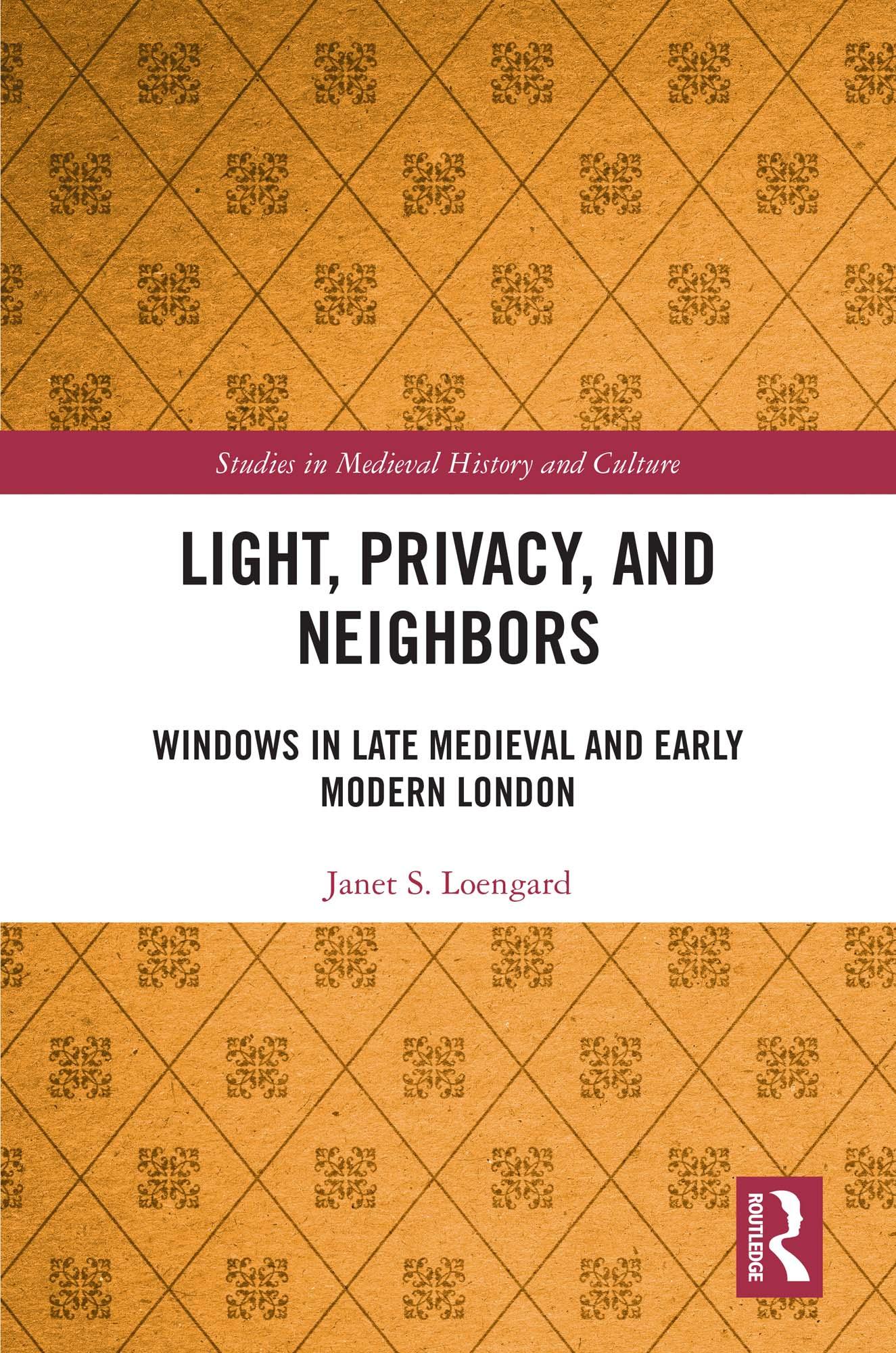
Density of housing in late medieval and early modern London could make access to light and privacy incompatible, provoking neighbor disputes. This book examines the Custom of London on light, which reflected centuries-old ideas about the right to have, or prevent neighbors from having, windows.
The volume explores the background of the Custom and its enforcement by legal action in the Mayor’s Court and by less formal action in the Court of Aldermen, discussing the effect of decisions on the architecture and appearance of the City. It investigates the reasons behind householders’ strongly held feelings about windows, with the need for light and the status evidenced by glazed windows balanced by an insistence on privacy, fear of intruders or accidents, and expense. Over time amendments were made in practice and the Custom survived the Great Fire of 1666, reflecting the continuity of long-held ideas about property rights and acceptable behavior.
With both legal and social themes, the book will be of interest to historians, architects, city planners, lawyers curious about the background for modern law on physical privacy, and anyone fascinated by the history of London.
Betaal eenvoudig met kaart, Klarna, Apple Pay of Google Pay. Niet tevreden? Je hebt altijd 14 dagen bedenktijd. Lees meer in onze voorwaarden. Heb je vragen, mail ons dan via hello@memmo.org.
Memmo maakt studeren makkelijker – waar je ook bent ter wereld. Wij brengen je cursusboeken en slimme studietools samen op één plek: samenvattingen, quizzen, podcasts en flashcards. En Ted, je studievriend die antwoord geeft op alles wat je je afvraagt. Meer dan 50.000 studenten studeren hier al – gebouwd om je sneller te laten leren en minder stress te geven.