
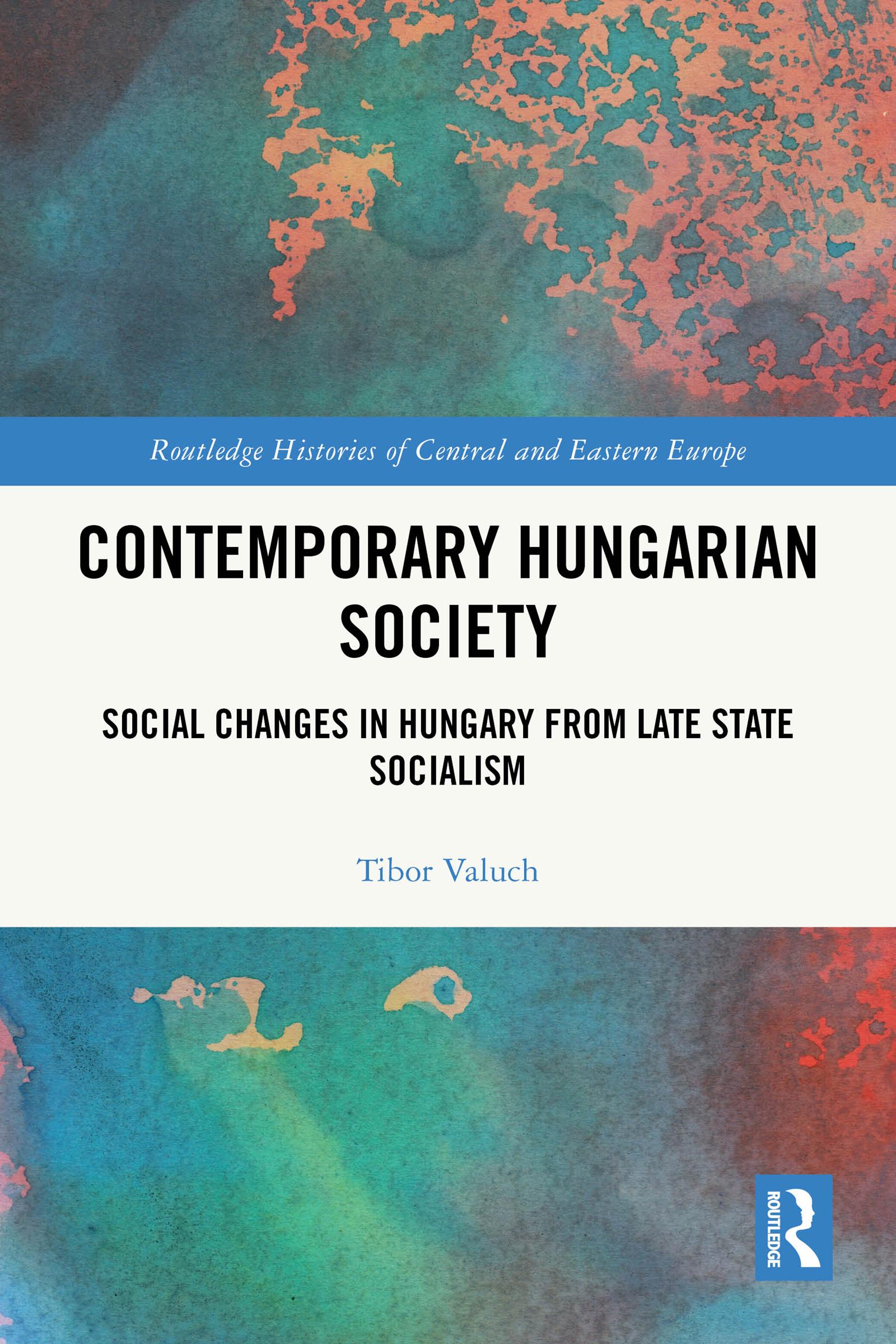
This book examines social change in Hungary, commencing with the period of late-stage socialism, the country’s immediate post-communist transition, its subsequent consolidation, and the emergence of authoritarian leadership since 2010. The volume seeks to employ a longitudinal and comparative perspective and provides comparison to other central and East European states that emerged from state socialism.
The Hungarian regime change of 1989–1990 led to previously unimaginable social and economic transition. In recent decades, regime change and socioeconomic transition in Central and Eastern Europe have produced a library of literature, and transition studies has periodically become a discipline in its own right. The author uses an interdisciplinary approach – drawing from social history, sociology, statistics, and contemporary history – in order to understand and analyse social change in all its complexity.
The book will be of interest to undergraduate and postgraduate students, social scientists, historians, experts, and those interested in Hungarian and Central and Eastern European history and social change.
Betaal eenvoudig met kaart, Klarna, Apple Pay of Google Pay. Niet tevreden? Je hebt altijd 14 dagen bedenktijd. Lees meer in onze voorwaarden. Heb je vragen, mail ons dan via hello@memmo.org.
Memmo maakt studeren makkelijker – waar je ook bent ter wereld. Wij brengen je cursusboeken en slimme studietools samen op één plek: samenvattingen, quizzen, podcasts en flashcards. En Ted, je studievriend die antwoord geeft op alles wat je je afvraagt. Meer dan 50.000 studenten studeren hier al – gebouwd om je sneller te laten leren en minder stress te geven.