
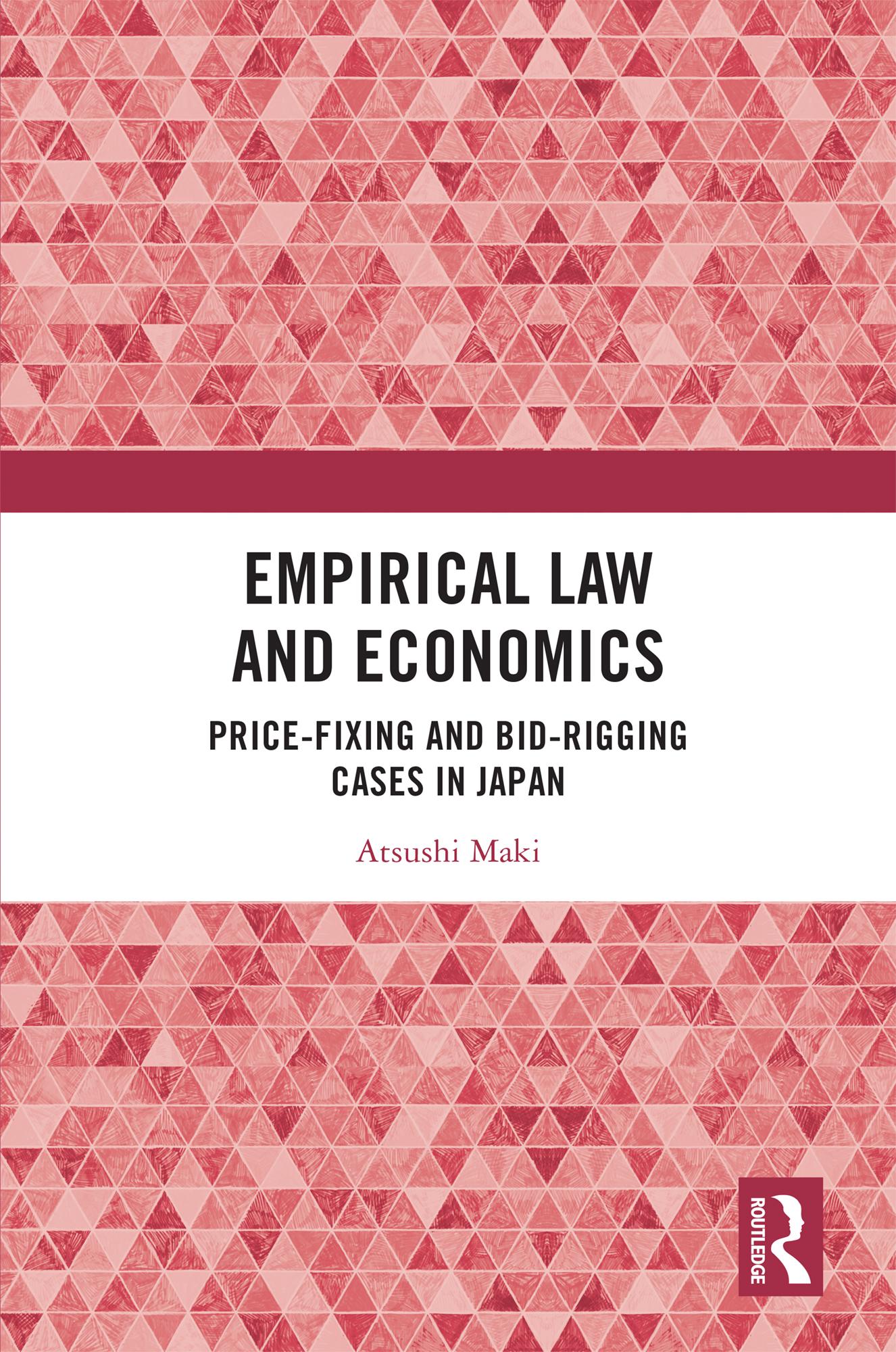
Maki provides an empirical analysis of law and economics by reevaluating Myrdal's value premises and Weber's separation of analysis and policy.
In modern civil society, individuals and businesses conduct economic activities through markets. The mainstream economic theory is the general equilibrium theory, which assumes a perfectly competitive market. The upshot is that transactions through competitive markets maximize the economic welfare of society, with policies such as deregulation and privatization being implemented with the backing of the law. However, in the real economy, legal transactions do not always take place, and this book analyzes price-fixing and bid-rigging cases. These cases show that there is a gap between competition philosophy and legislation. Using the real economy as data, this book conducts an empirical analysis of law and economics and illustrates issues related to the ideals of economics and the proper application of law. Accumulating empirical results will provide the means to form a healthy civil society.
A useful reference for graduate students and researchers in economics and legal research, and an interesting read for those who consider economics to be an empirical science.
Betaal eenvoudig met kaart, Klarna, Apple Pay of Google Pay. Niet tevreden? Je hebt altijd 14 dagen bedenktijd. Lees meer in onze voorwaarden. Heb je vragen, mail ons dan via hello@memmo.org.
Memmo maakt studeren makkelijker – waar je ook bent ter wereld. Wij brengen je cursusboeken en slimme studietools samen op één plek: samenvattingen, quizzen, podcasts en flashcards. En Ted, je studievriend die antwoord geeft op alles wat je je afvraagt. Meer dan 50.000 studenten studeren hier al – gebouwd om je sneller te laten leren en minder stress te geven.