
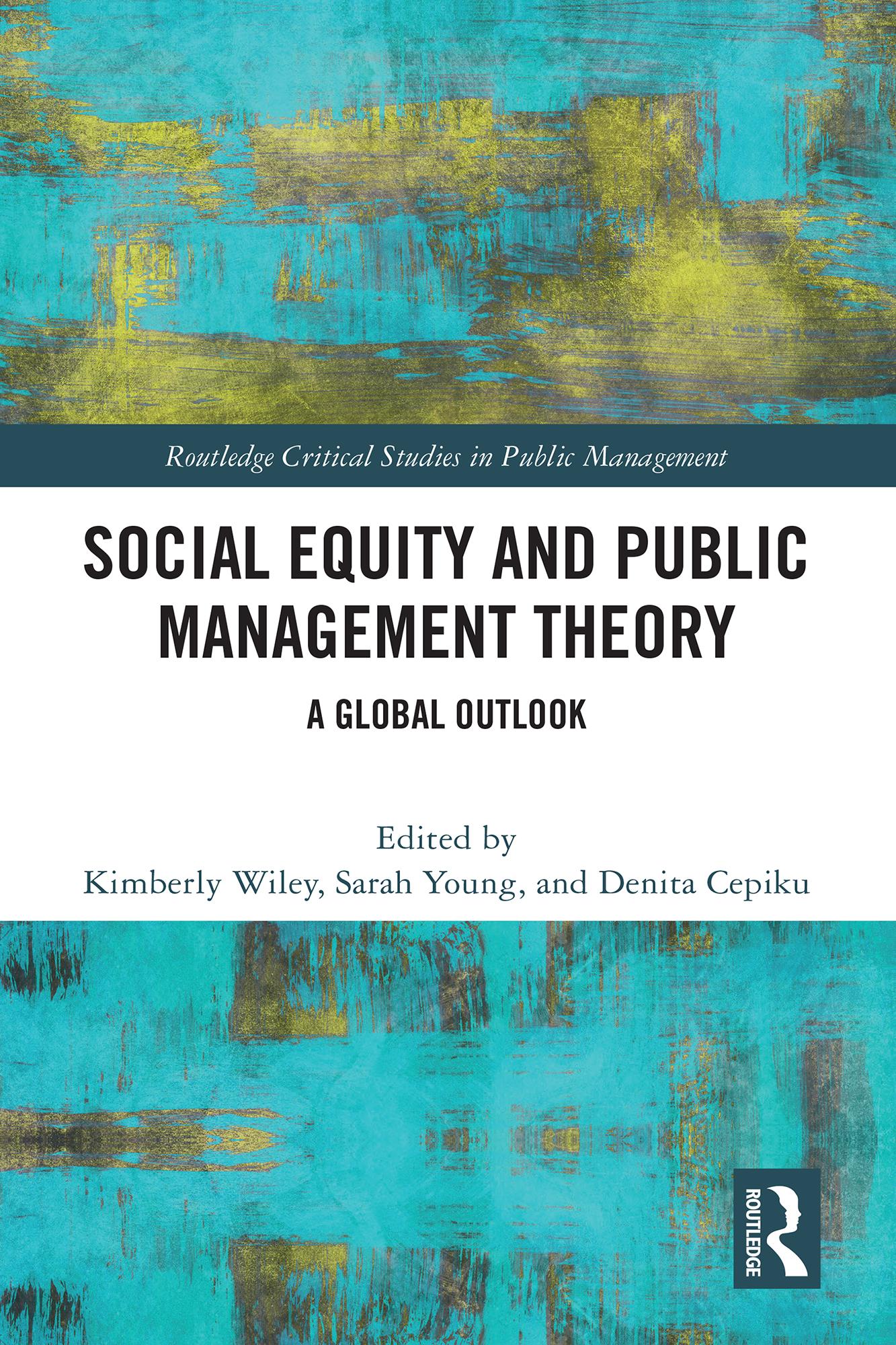
Social equity is a pillar of public service. Thus, social equity should be a central concern in public management in practice and scholarship. However, widespread incorporation and reflection of social equity practices in government and the anticipated public benefits still seem like an elusive goal. The ability to analytically assess social equity is the first step toward prescribing social equity reforms.
This book highlights international research that leverages public management theory to build reasonable social equity measures and applications. Composed to provide insight into the intersections of public management and social equity from multiple lenses, each chapter presents the empirical context in which the study takes place, including global region, government structure, and cultural insights related to the analysis. The chapters conclude with takeaways for public managers to consider in program and policy implementation, as well as with innovations for future public administration, public management, and social equity scholarship. Within these takeaways, methodological insights offer tools for scholars to incorporate in their measurement and analysis of social equity in the con-text of public management.
The research highlighted in the text includes studies from across countries in North and South America, Europe, Southeast Asia, and Australia. This is the first book that connects public management theory and practice with social equity reforms.
Betaal eenvoudig met kaart, Klarna, Apple Pay of Google Pay. Niet tevreden? Je hebt altijd 14 dagen bedenktijd. Lees meer in onze voorwaarden. Heb je vragen, mail ons dan via hello@memmo.org.
Memmo maakt studeren makkelijker – waar je ook bent ter wereld. Wij brengen je cursusboeken en slimme studietools samen op één plek: samenvattingen, quizzen, podcasts en flashcards. En Ted, je studievriend die antwoord geeft op alles wat je je afvraagt. Meer dan 50.000 studenten studeren hier al – gebouwd om je sneller te laten leren en minder stress te geven.