
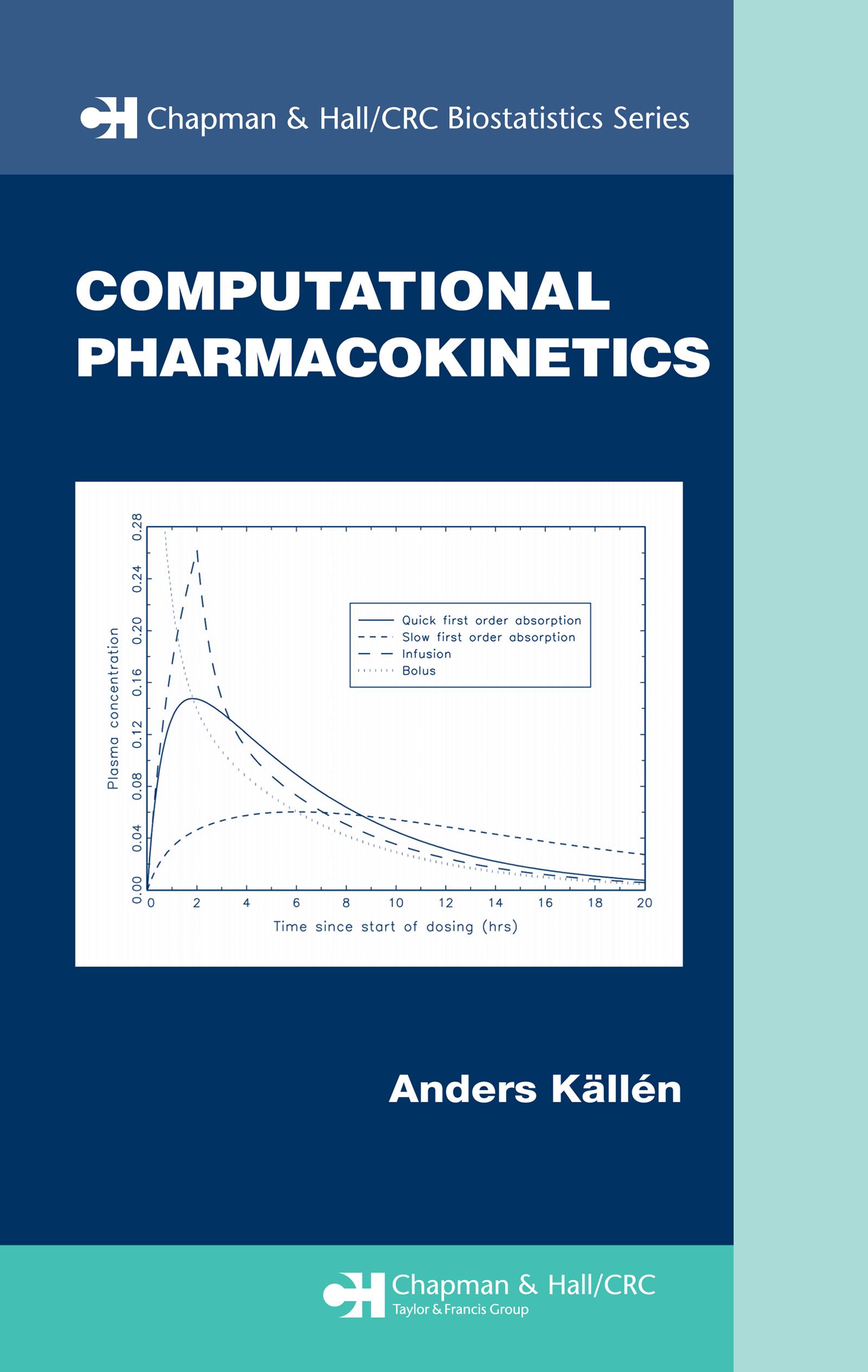
Being that pharmacokinetics (PK) is the study of how the body handles various substances, it is not surprising that PK plays an important role in the early development of new drugs. However, the clinical research community widely believes that mathematics in some way blurs the true meaning of PK. Demonstrating that quite the opposite is true, Computational Pharmacokinetics outlines the fundamental concepts and models of PK from a mathematical perspective based on clinically relevant parameters.
After an introductory chapter, the book presents a noncompartmental approach to PK and discusses the numerical analysis of PK data, including a description of an absorption process through numerical deconvolution. The author then builds a simple physiological model to better understand PK volumes and compares this model to other methods. The book also introduces compartmental models, discusses their limitations, and creates a general-purpose type of model. The final chapter looks at the relationship between drug concentration and effect, known as PK/pharmacodynamics (PD) modeling.
With both a solid discussion of theory and the use of practical examples, this book will enable readers to thoroughly grasp the computational factors of PK modeling.
Betaal eenvoudig met kaart, Klarna, Apple Pay of Google Pay. Niet tevreden? Je hebt altijd 14 dagen bedenktijd. Lees meer in onze voorwaarden. Heb je vragen, mail ons dan via hello@memmo.org.
Memmo maakt studeren makkelijker – waar je ook bent ter wereld. Wij brengen je cursusboeken en slimme studietools samen op één plek: samenvattingen, quizzen, podcasts en flashcards. En Ted, je studievriend die antwoord geeft op alles wat je je afvraagt. Meer dan 50.000 studenten studeren hier al – gebouwd om je sneller te laten leren en minder stress te geven.