
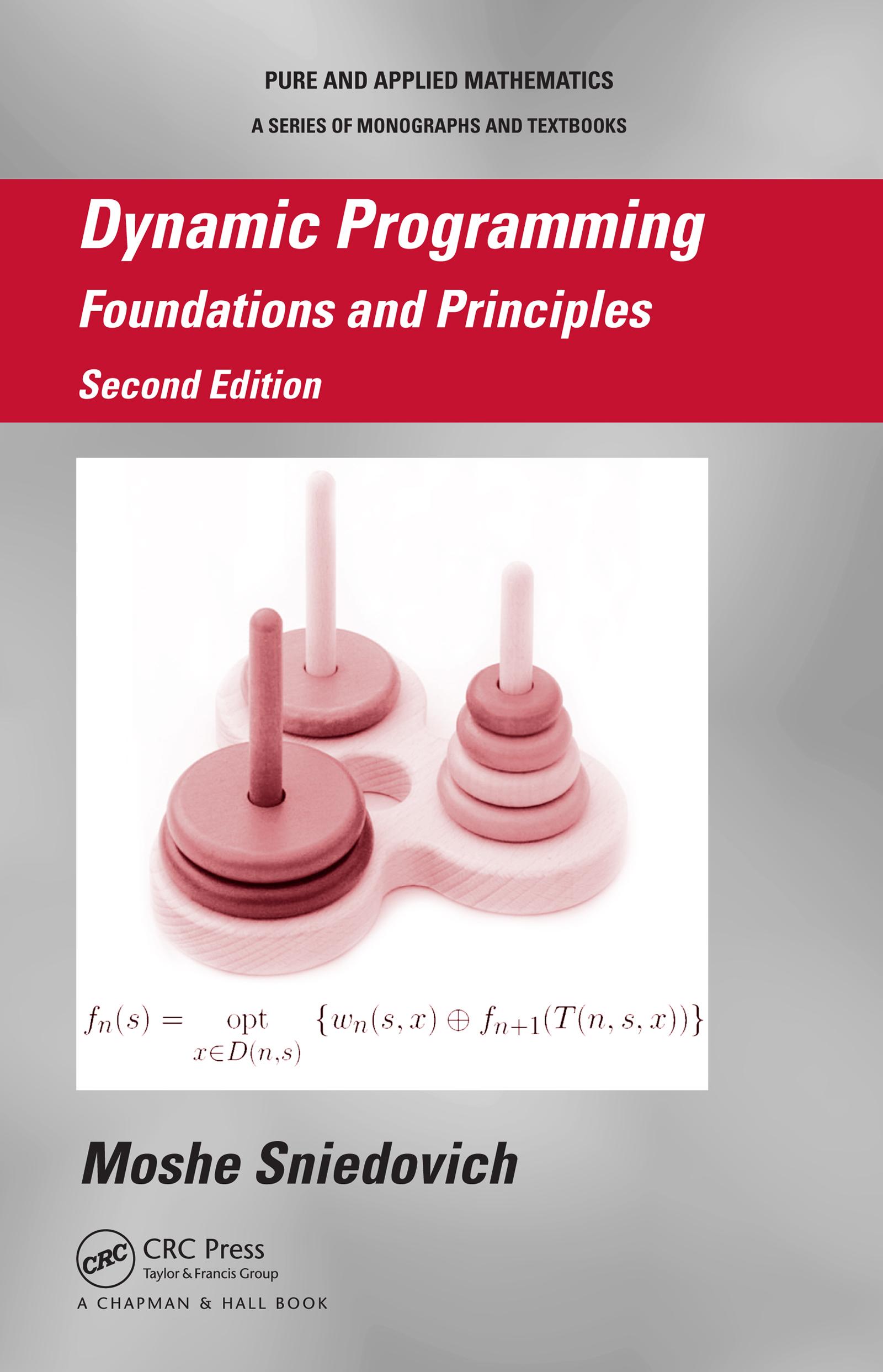
Incorporating a number of the author’s recent ideas and examples, Dynamic Programming: Foundations and Principles, Second Edition presents a comprehensive and rigorous treatment of dynamic programming. The author emphasizes the crucial role that modeling plays in understanding this area. He also shows how Dijkstra’s algorithm is an excellent example of a dynamic programming algorithm, despite the impression given by the computer science literature.
New to the Second Edition
- Expanded discussions of sequential decision models and the role of the state variable in modeling
- A new chapter on forward dynamic programming models
- A new chapter on the Push method that gives a dynamic programming perspective on Dijkstra’s algorithm for the shortest path problem
- A new appendix on the Corridor method
Taking into account recent developments in dynamic programming, this edition continues to provide a systematic, formal outline of Bellman’s approach to dynamic programming. It looks at dynamic programming as a problem-solving methodology, identifying its constituent components and explaining its theoretical basis for tackling problems.
Betaal eenvoudig met kaart, Klarna, Apple Pay of Google Pay. Niet tevreden? Je hebt altijd 14 dagen bedenktijd. Lees meer in onze voorwaarden. Heb je vragen, mail ons dan via hello@memmo.org.
Memmo maakt studeren makkelijker – waar je ook bent ter wereld. Wij brengen je cursusboeken en slimme studietools samen op één plek: samenvattingen, quizzen, podcasts en flashcards. En Ted, je studievriend die antwoord geeft op alles wat je je afvraagt. Meer dan 50.000 studenten studeren hier al – gebouwd om je sneller te laten leren en minder stress te geven.