
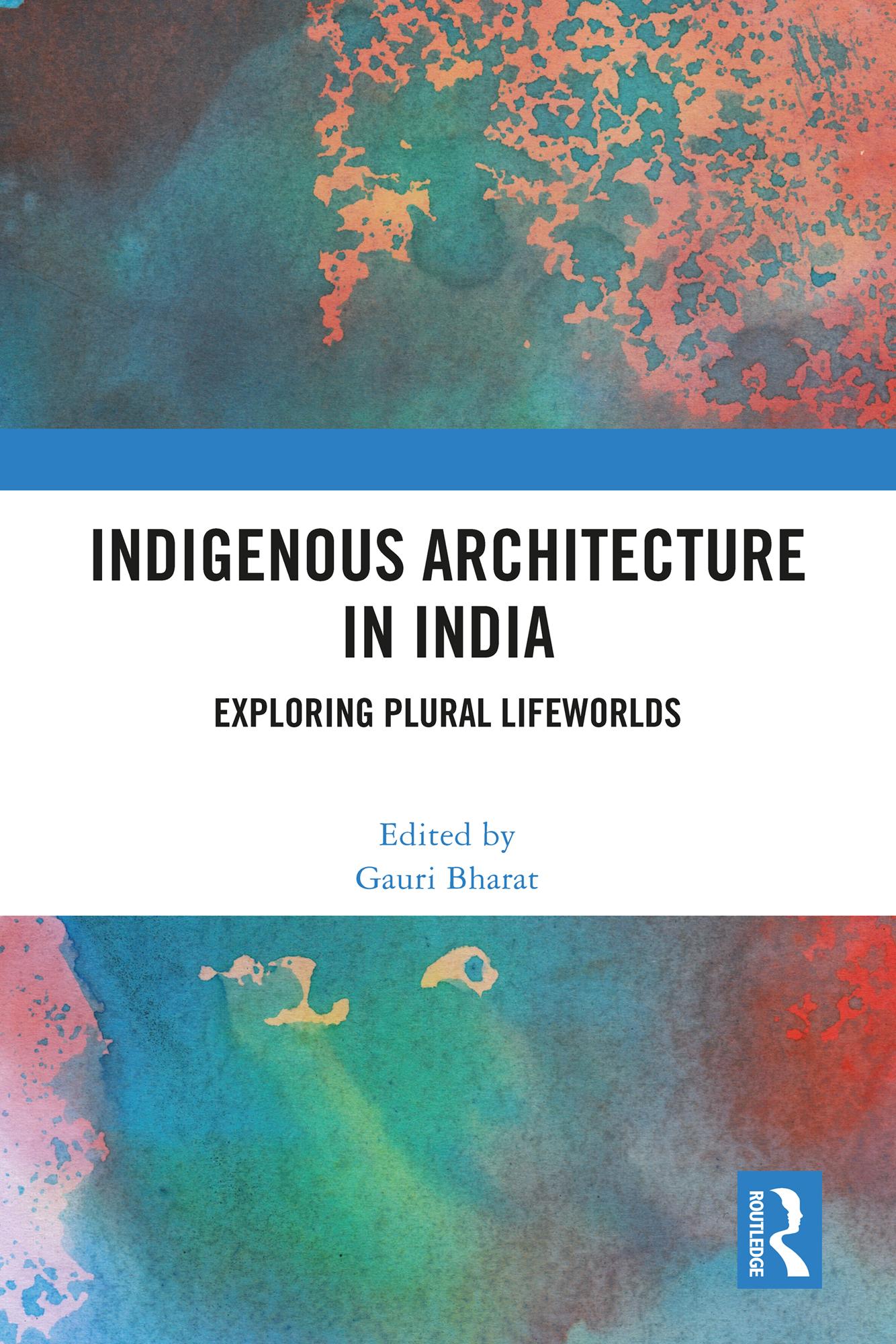
This volume focuses on socio- spatial practices of indigenous communities in India. It explores the interrelation between the built environments and lifeworlds, i.e. practices, patterns, and structures of everyday life. The chapters deal with different ideas and definitions of indigeneity, while also addressing the complex equations between the production and perception of built forms, indigenous technologies, on the one hand, and social, environmental and political contexts, questions of aesthetics, identity, and self-representation on the other.
From Adivasi art and sacred sites to craft villages and nomadic pastoralists in western India, from indigenous bangle makers in urban north India to terracotta crafts people on the south, each chapter focuses on different communities and the contours of their contemporary lifeworlds. The contributions actively attempt to foreground the logic and perspectives of the communities themselves as the epistemological centre of the architectural and material discourses on indigeneity.
This book will be useful for students, teachers, and researchers of architecture, urban design, urban studies, urban development and planning, anthropology, sociology, and museum studies. It will also be of interest to urban planners and designers, policy planners, local government authorities, and professionals engaged in the discipline.
Betaal eenvoudig met kaart, Klarna, Apple Pay of Google Pay. Niet tevreden? Je hebt altijd 14 dagen bedenktijd. Lees meer in onze voorwaarden. Heb je vragen, mail ons dan via hello@memmo.org.
Memmo maakt studeren makkelijker – waar je ook bent ter wereld. Wij brengen je cursusboeken en slimme studietools samen op één plek: samenvattingen, quizzen, podcasts en flashcards. En Ted, je studievriend die antwoord geeft op alles wat je je afvraagt. Meer dan 50.000 studenten studeren hier al – gebouwd om je sneller te laten leren en minder stress te geven.