
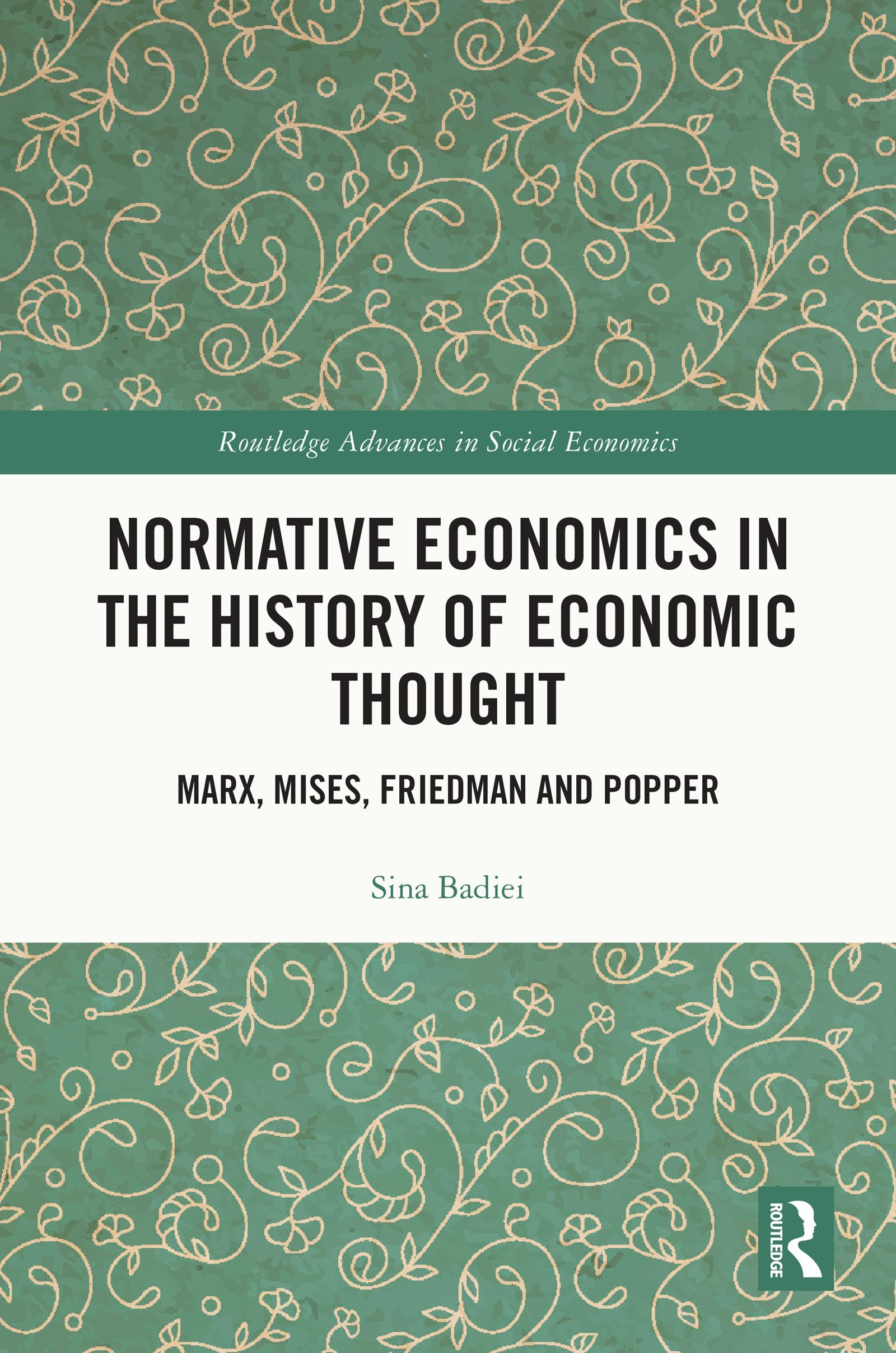
This book examines the role of normative economics in the writings of Karl Marx, Ludwig von Mises, Milton Friedman and Karl Popper.
The book shows that while distinguishing positive from normative economics can be helpful, this distinction should not minimize the importance of normative economics or reject the possibility of offering objective evaluations of social phenomena and policies in normative economics. The book offers a critical assessment of the attempts by Marx, Mises and Friedman to reduce scientific economics to the positive analysis of social phenomena alone. Through a meticulous analysis of their work, the book shows that their positive theories fail to justify their evaluations of economic phenomena and policies. The book then draws on the writings of Popper to maintain that we should place normative economics at the center of economics. The book argues that normative economics can choose the norms underlying its evaluations of social situations and policies objectively and relies on some of Popper’s ideas to offer some criteria that can facilitate the selection of these norms.
The book will be of interest to economists, historians of economic thought, philosophers of economics and political theorists and philosophers.
Betaal eenvoudig met kaart, Klarna, Apple Pay of Google Pay. Niet tevreden? Je hebt altijd 14 dagen bedenktijd. Lees meer in onze voorwaarden. Heb je vragen, mail ons dan via hello@memmo.org.
Memmo maakt studeren makkelijker – waar je ook bent ter wereld. Wij brengen je cursusboeken en slimme studietools samen op één plek: samenvattingen, quizzen, podcasts en flashcards. En Ted, je studievriend die antwoord geeft op alles wat je je afvraagt. Meer dan 50.000 studenten studeren hier al – gebouwd om je sneller te laten leren en minder stress te geven.