
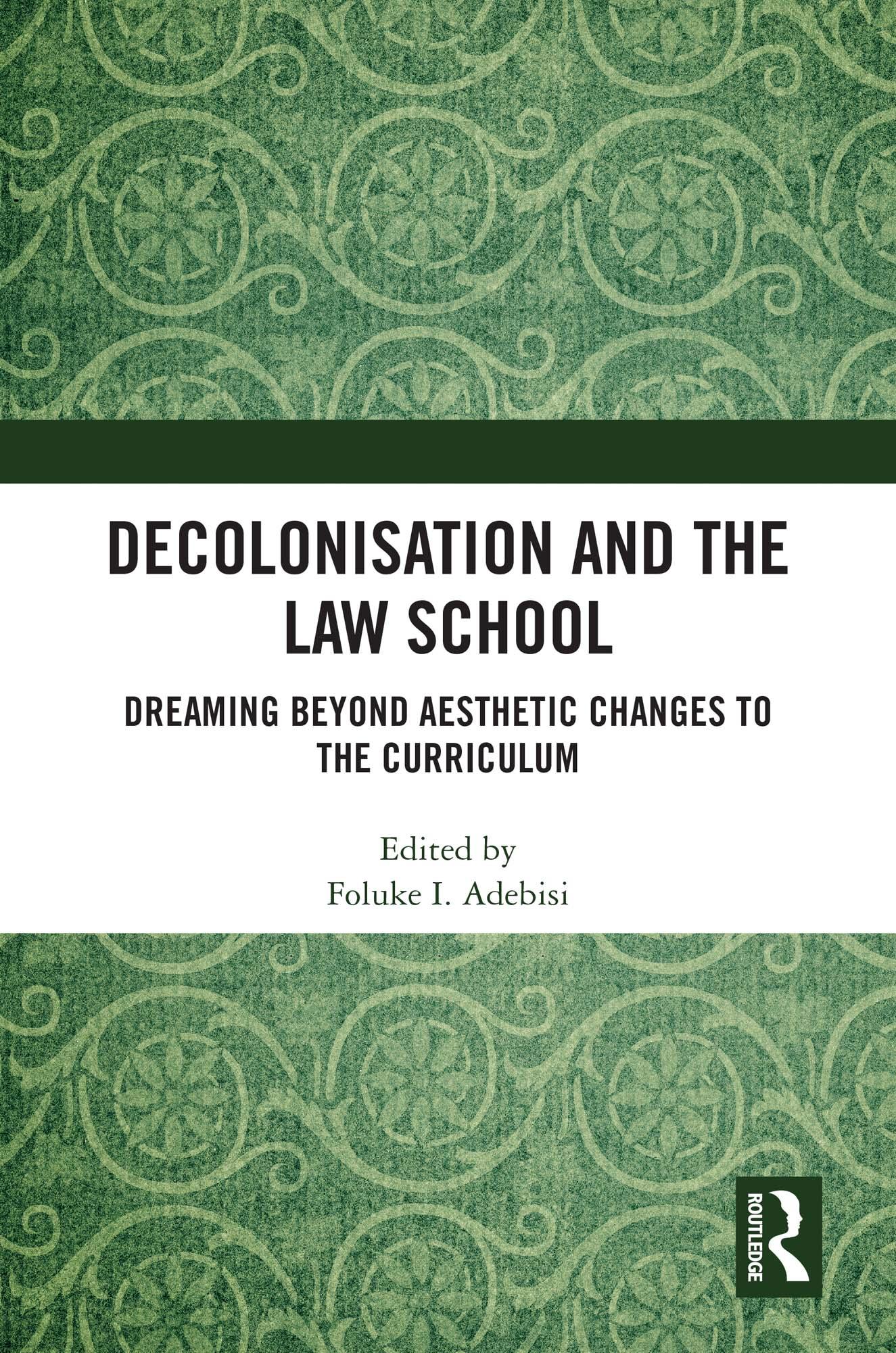
This book explores strategies, approaches, tools, challenges, and reflections that animate the conversation around decolonisation in UK law schools. It investigates how we can have, within the UK law school, difficult conversations about the ways in which history has influenced what the law is, how law is taught, what law is taught, who the law works for, and who the law does not work for.
The conversation about decolonisation of the university and curricula continues to raise questions for knowledge production and transmission in educational institutions. Decolonisation also raises questions about the impact of the preceding issues on people within and outside these educational institutions. The decolonisation debate is an opportunity for legal academics to reflect on the origins of their own individual academic practices in research as well as the content of their curriculum. This volume examines the preceding issues as they relate to academic practices and legal pedagogy in UK law schools. The authors examine how legal scholars can achieve aims of decolonisation within the practical aims of teaching of law, as well as the limitations and possible challenges of these endeavours.
This volume will be of interest to legal scholars, legal educators, law students as well as legal practitioners who are engaged in questions of how decolonisation relates to law – broadly understood. It was originally published as a special issue of The Law Teacher.
Betaal eenvoudig met kaart, Klarna, Apple Pay of Google Pay. Niet tevreden? Je hebt altijd 14 dagen bedenktijd. Lees meer in onze voorwaarden. Heb je vragen, mail ons dan via hello@memmo.org.
Memmo maakt studeren makkelijker – waar je ook bent ter wereld. Wij brengen je cursusboeken en slimme studietools samen op één plek: samenvattingen, quizzen, podcasts en flashcards. En Ted, je studievriend die antwoord geeft op alles wat je je afvraagt. Meer dan 50.000 studenten studeren hier al – gebouwd om je sneller te laten leren en minder stress te geven.