
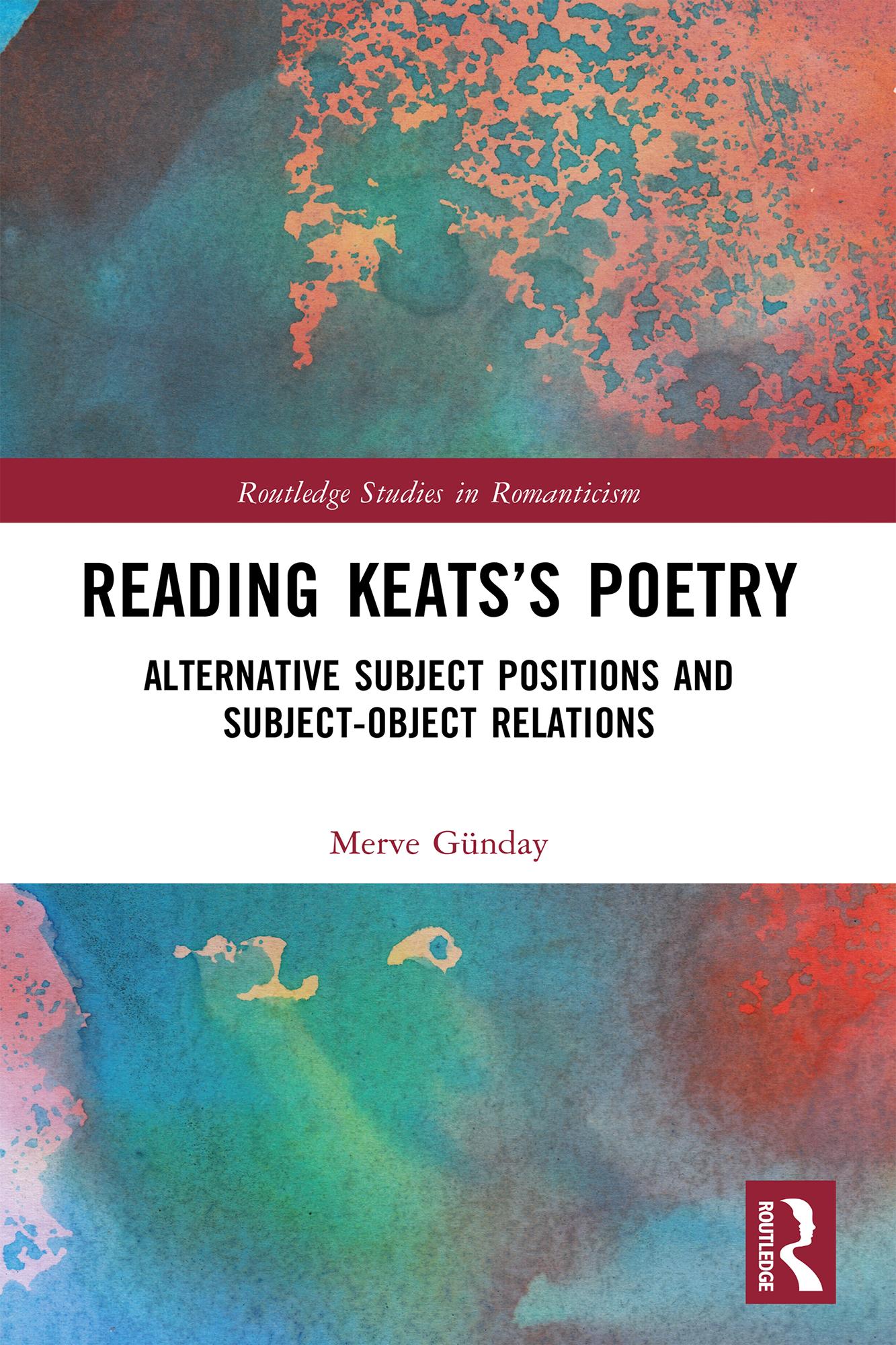
This book claims that Keats’s poetry is a reaction against the discourse of modernity which traumatized the human subject by creating a divide between human and nature, subject and object. It argues that by transcending this divide and acknowledging the agency of both subject and object, Keats makes an ideological statement and offers a new site of existence or relationality to readers. This site also implies a response to the accusations that the Romantics were not interested in the realities of their time. What Keats does is to give an aestheticized response to the hardcore facts of his time. Departing from previous studies due to its emphasis on subjectivity and relationality, the book discusses Keats with regard to post/non-anthropocentric, alternative subject positions and subject-object relations in his “Ode to a Nightingale,” “In drear nighted December,” “Isabella; or, The Pot of Basil,” “Lamia,” “La Belle Dame sans Mercy,” and “Ode on a Grecian Urn.” Drawing on Lacanian and Braidottian epistemologies in its discussion of the intricacy between the imaginary and the symbolic, the irruption of the psychotic into the symbolic, and the agency of the object on the subject in Keats’s poetry, the book suggests that the inner dynamics of both the subject and the object acquire agency, which shatters Oneness and totality assumed in the Cartesian self.
Betaal eenvoudig met kaart, Klarna, Apple Pay of Google Pay. Niet tevreden? Je hebt altijd 14 dagen bedenktijd. Lees meer in onze voorwaarden. Heb je vragen, mail ons dan via hello@memmo.org.
Memmo maakt studeren makkelijker – waar je ook bent ter wereld. Wij brengen je cursusboeken en slimme studietools samen op één plek: samenvattingen, quizzen, podcasts en flashcards. En Ted, je studievriend die antwoord geeft op alles wat je je afvraagt. Meer dan 50.000 studenten studeren hier al – gebouwd om je sneller te laten leren en minder stress te geven.