
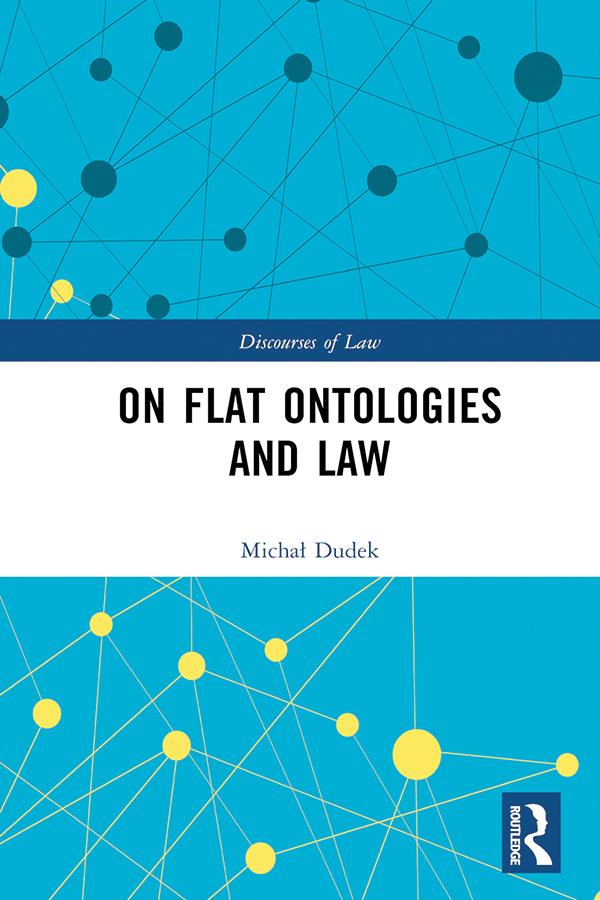
This book examines the importance of flat ontologies for law and sociolegal theory. Associated with the emergence of new materialism in the humanities and social sciences, the elaboration of flat ontologies challenges the binarism that has maintained the separation of culture from nature, and the human from the nonhuman. Although most work in legal theory and sociolegal studies continues to adopt a non-flat, anthropocentric and immaterial take on law, the critique of this perspective is becoming more and more influential. Engaging the increasing legal interest in flat ontologies, this book offers an account of the main theoretical perspectives, and their importance for law. Covering the work of the five major theorists in the area – Gabriel Tarde, Bruno Latour, Manuel DeLanda, Karen Barad and Graham Harman – the book aims to encourage this interest, as well as to explicate the important problems of and differences between these perspectives. Flat ontologies, the book demonstrates, can offer a valuable new perspective for understanding and thinking about law.
This book will appeal mainly to scholars and students in legal theory and sociolegal studies; as well as others with interests in the posthumanist turn in philosophy and social theory.
Betaal eenvoudig met kaart, Klarna, Apple Pay of Google Pay. Niet tevreden? Je hebt altijd 14 dagen bedenktijd. Lees meer in onze voorwaarden. Heb je vragen, mail ons dan via hello@memmo.org.
Memmo maakt studeren makkelijker – waar je ook bent ter wereld. Wij brengen je cursusboeken en slimme studietools samen op één plek: samenvattingen, quizzen, podcasts en flashcards. En Ted, je studievriend die antwoord geeft op alles wat je je afvraagt. Meer dan 50.000 studenten studeren hier al – gebouwd om je sneller te laten leren en minder stress te geven.