
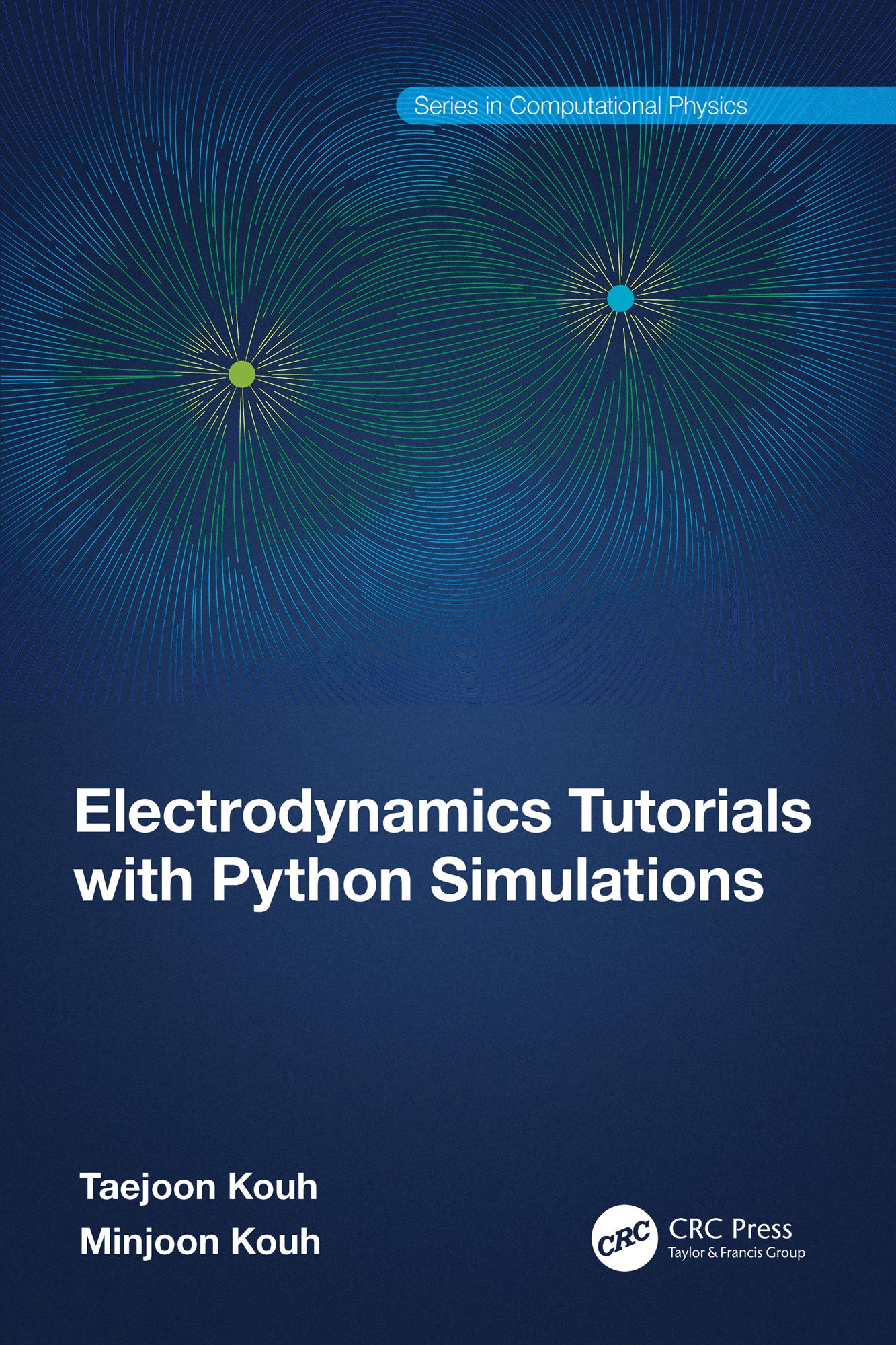
This book provides an accessible introduction to intermediate-level electrodynamics with computa- tional approaches to complement a traditional mathematical treatment of the subject. It covers key topics in electrodynamics, such as electromagnetic fields, forces, potentials, and waves as well as Special Theory of Relativity.
Through intuition-building examples and visualizations in the Python programming language, it helps readers to develop technical computing skills in numerical and symbolic calculations, modeling and simulations, and visualizations. Python is a highly readable and practical programming language, making this book appropriate for students without extensive programming experience.
This book can serve as an electrodynamics textbook for undergraduate physics and engineering students in their second or third years, who are studying intermediate- or advanced-level electrodynamics and who want to learn techniques for scientific computing at the same time. This book will also appeal to computer science students who want to see how their computer programming skills may be applied to science, particularly to physics, without needing too much background physics knowledge.
Key features
- Major concepts in classical electrodynamics are introduced cohesively through computational and mathematical treatments
- Computational examples in Python programming language guide students on how to simulate and visualize electrodynamic principles and phenomena for themselves
Betaal eenvoudig met kaart, Klarna, Apple Pay of Google Pay. Niet tevreden? Je hebt altijd 14 dagen bedenktijd. Lees meer in onze voorwaarden. Heb je vragen, mail ons dan via hello@memmo.org.
Memmo maakt studeren makkelijker – waar je ook bent ter wereld. Wij brengen je cursusboeken en slimme studietools samen op één plek: samenvattingen, quizzen, podcasts en flashcards. En Ted, je studievriend die antwoord geeft op alles wat je je afvraagt. Meer dan 50.000 studenten studeren hier al – gebouwd om je sneller te laten leren en minder stress te geven.