
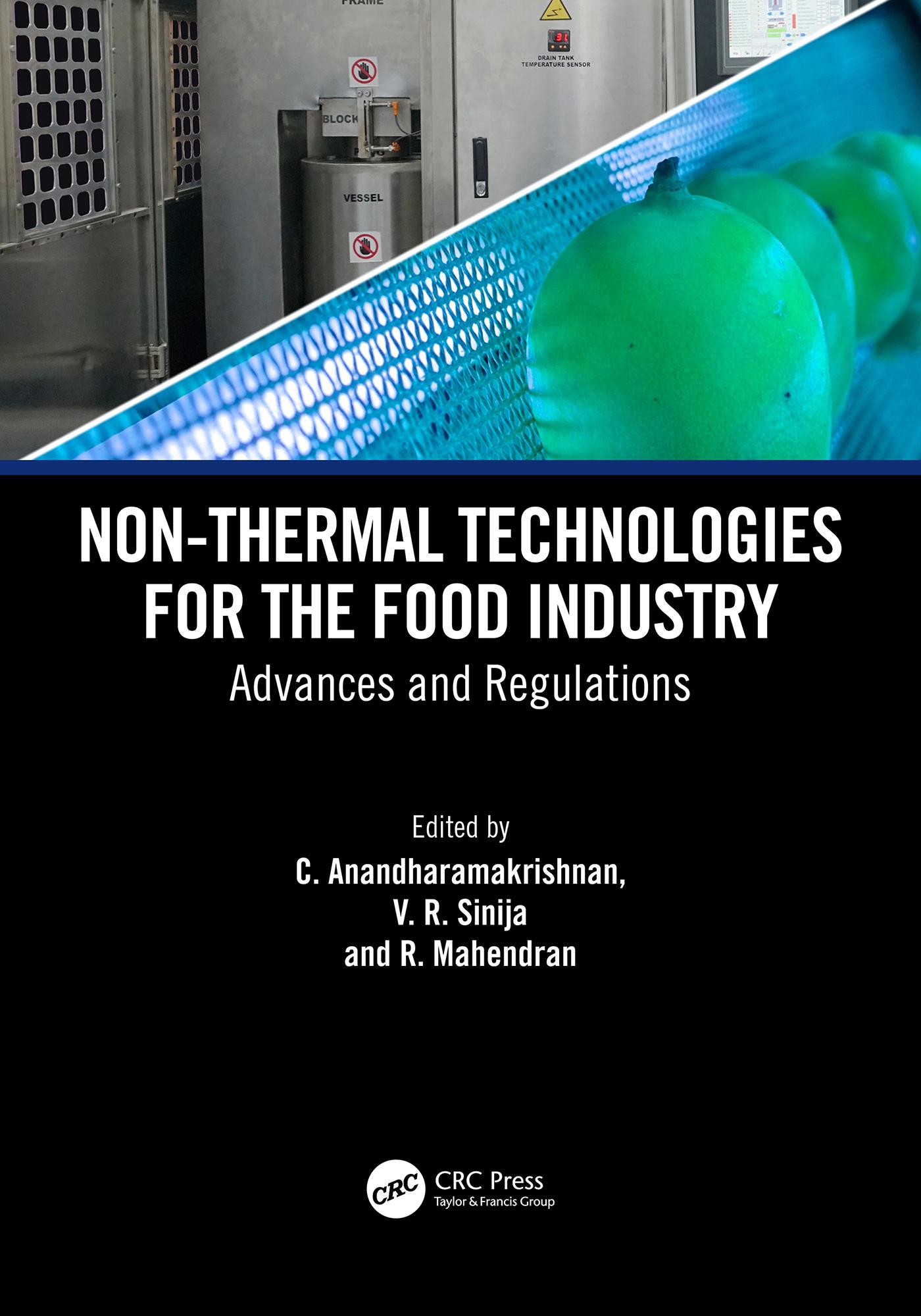
Depending on the mechanisms involved in non-thermal technologies (such as ozonization, irradiation, ultrasound processing, plasma processing, and advanced oxidative processes), interaction with food molecules differs, which might lead to desirable reactions. Non-Thermal Technologies for the Food Industry: Advances and Regulations explores the possibility of using non-thermal technologies for various purposes such as shelf-life extension, reduced energy consumption, adhesion, and safety improvement. Further, it reviews the present status of these technologies, international regulations, and sustainability aspects in food processing including global case studies.
Features:
- Provides a comprehensive overview of all the non-thermal processing technologies that have potential for use within food manufacturing
- Covers novel disinfectant technologies and packaging methods for non-thermal processing
- Includes electro-spraying and electrospinning; low-temperature drying techniques, cold plasma techniques, hydrodynamic cavitation, oscillating magnetic field processing, and so forth
- Focus on topics such as the valorization of agri-food wastes and by-products and sustainability
- Reviews ClO2 in combined/hybrid technologies for food processing
This book is aimed at researchers and graduate students in food and food process engineering.
Betaal eenvoudig met kaart, Klarna, Apple Pay of Google Pay. Niet tevreden? Je hebt altijd 14 dagen bedenktijd. Lees meer in onze voorwaarden. Heb je vragen, mail ons dan via hello@memmo.org.
Memmo maakt studeren makkelijker – waar je ook bent ter wereld. Wij brengen je cursusboeken en slimme studietools samen op één plek: samenvattingen, quizzen, podcasts en flashcards. En Ted, je studievriend die antwoord geeft op alles wat je je afvraagt. Meer dan 50.000 studenten studeren hier al – gebouwd om je sneller te laten leren en minder stress te geven.