
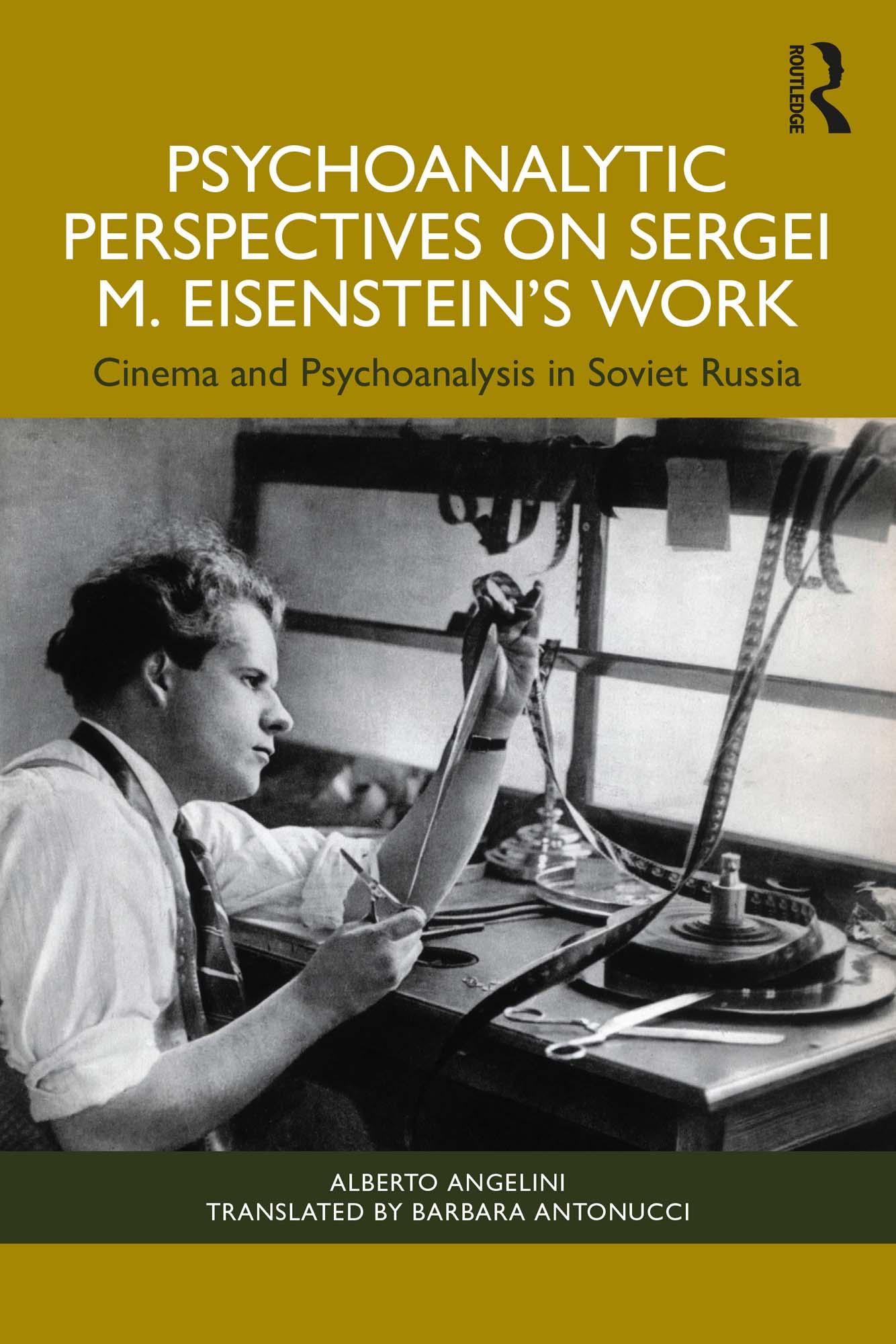
In this insightful book, Alberto Angelini shows the influence of psychoanalysis and psychology on Sergei M. Eisenstein, one of the most celebrated Russian directors, and his cinematic output.
Angelini situates Eisenstein’s life and oeuvre in the history and culture of twentieth-century Russia, drawing clear parallels between his networking with key figures such as Lev Vygotsky and Aleksandr Luria. He utilises the tools of psychology with the insight of psychoanalysis to illuminate the ways in which Eisenstein understood art as an anthropological enterprise while maintaining the same dialectical philosophy as the director in highlighting the many disciplines and figures that he drew inspiration from. Angelini also looks in depth at the influence psychoanalytic theories of regression had on Eisenstein’s approach to art, while examining the impact Stalinism had directly on both Eisenstein and psychoanalysis at large from the 1930s onwards.
This book is an essential resource for psychoanalysts, students, and scholars of film studies, as well as those interested in the intersection between psychoanalytic theory, cinema, and the arts.
Betaal eenvoudig met kaart, Klarna, Apple Pay of Google Pay. Niet tevreden? Je hebt altijd 14 dagen bedenktijd. Lees meer in onze voorwaarden. Heb je vragen, mail ons dan via hello@memmo.org.
Memmo maakt studeren makkelijker – waar je ook bent ter wereld. Wij brengen je cursusboeken en slimme studietools samen op één plek: samenvattingen, quizzen, podcasts en flashcards. En Ted, je studievriend die antwoord geeft op alles wat je je afvraagt. Meer dan 50.000 studenten studeren hier al – gebouwd om je sneller te laten leren en minder stress te geven.