
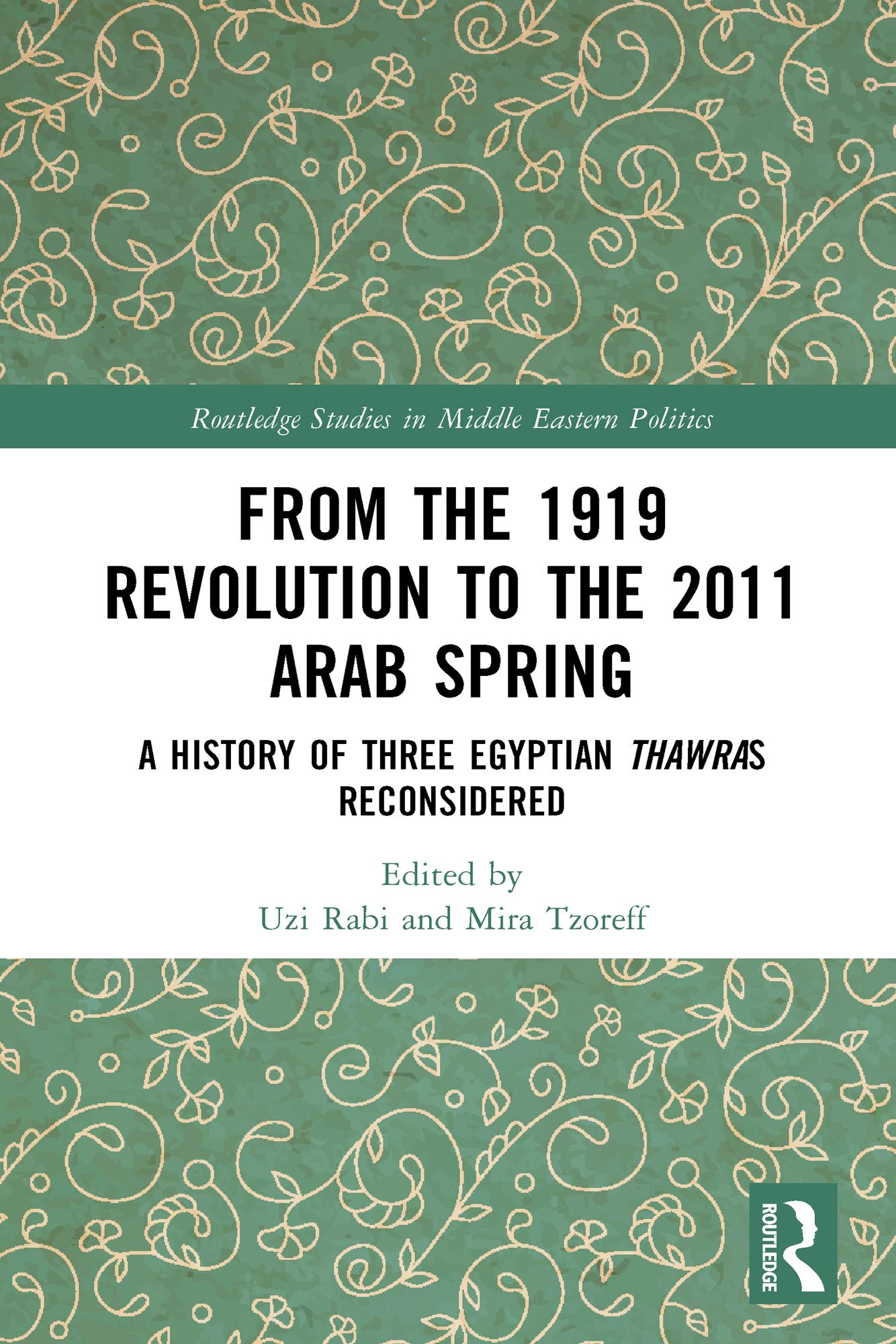
Focused on three Egyptian revolutions—in 1919, 1952, and 2011—this edited book argues that each of these revolutions is a milestone which represents a meaningful turning point in modern Egyptian history.
Revolutions are typically characterized by a fundamental change in political and social infrastructures as well as in the establishment of new values and norms. However, it should be noted that this may not be entirely applicable when examining the context of the three Egyptian revolutions: the 1919 revolution failed to liberate Egypt from British colonial hegemony; the 1952 revolution failed to rework the country’s social and economic systems and unify the Arab world; and the "Arab Spring" revolution of 2011 culminated in a chaotic economic and social catastrophe, thus failing to solve the young generation’s crisis. Nevertheless, by revisiting and re-defining these revolutions through diverse theoretical frameworks, the book proposes that each of them played a significant role in shaping Egypt’s political, social, and cultural identity.
This book is specifically of interest for students, historians, and social scientists with a keen interest in Egyptian history and the Middle East, offering fresh perspectives and insights into these transformative moments in Egypt’s history.
Betaal eenvoudig met kaart, Klarna, Apple Pay of Google Pay. Niet tevreden? Je hebt altijd 14 dagen bedenktijd. Lees meer in onze voorwaarden. Heb je vragen, mail ons dan via hello@memmo.org.
Memmo maakt studeren makkelijker – waar je ook bent ter wereld. Wij brengen je cursusboeken en slimme studietools samen op één plek: samenvattingen, quizzen, podcasts en flashcards. En Ted, je studievriend die antwoord geeft op alles wat je je afvraagt. Meer dan 50.000 studenten studeren hier al – gebouwd om je sneller te laten leren en minder stress te geven.