
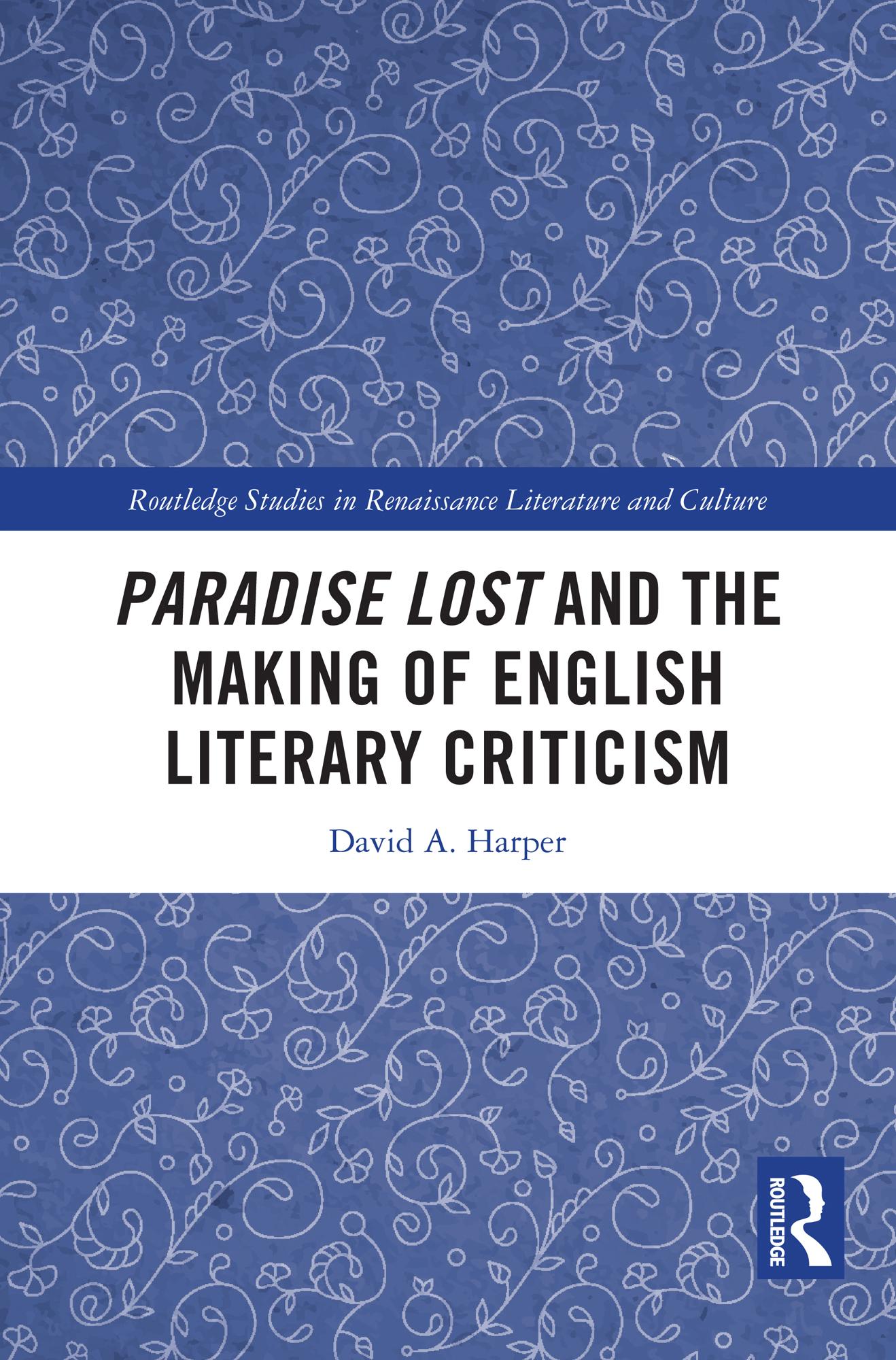
Paradise Lost and the Making of English Literary Criticism identifies the early reception of Paradise Lost as a site of contest over the place of literature in political and religious controversy. Milton’s earliest readers and critics (Dryden, Addison, Dennis, Hume, and Bentley) confronted a poem and author at odds with the prevailing culture and the revanchist conservatism of the restored monarchy. Grappling with the epic required navigating Milton’s reputation as a “fanatick” who had called in print for Charles I’s execution, inveighed openly against monarchy on the eve of Charles II’s return, and held heretical views on the trinity, baptism, and divorce. Harper argues that foundational figures in English literary criticism rose to this challenge by innovating new ways of reading: producing creative (and subversive) rewritings of Paradise Lost, articulating new theories of the sublime, explaining the poem in the first substantial body of annotations for an English vernacular text, and by pioneering early forms of textual criticism and editing.
Betaal eenvoudig met kaart, Klarna, Apple Pay of Google Pay. Niet tevreden? Je hebt altijd 14 dagen bedenktijd. Lees meer in onze voorwaarden. Heb je vragen, mail ons dan via hello@memmo.org.
Memmo maakt studeren makkelijker – waar je ook bent ter wereld. Wij brengen je cursusboeken en slimme studietools samen op één plek: samenvattingen, quizzen, podcasts en flashcards. En Ted, je studievriend die antwoord geeft op alles wat je je afvraagt. Meer dan 50.000 studenten studeren hier al – gebouwd om je sneller te laten leren en minder stress te geven.