
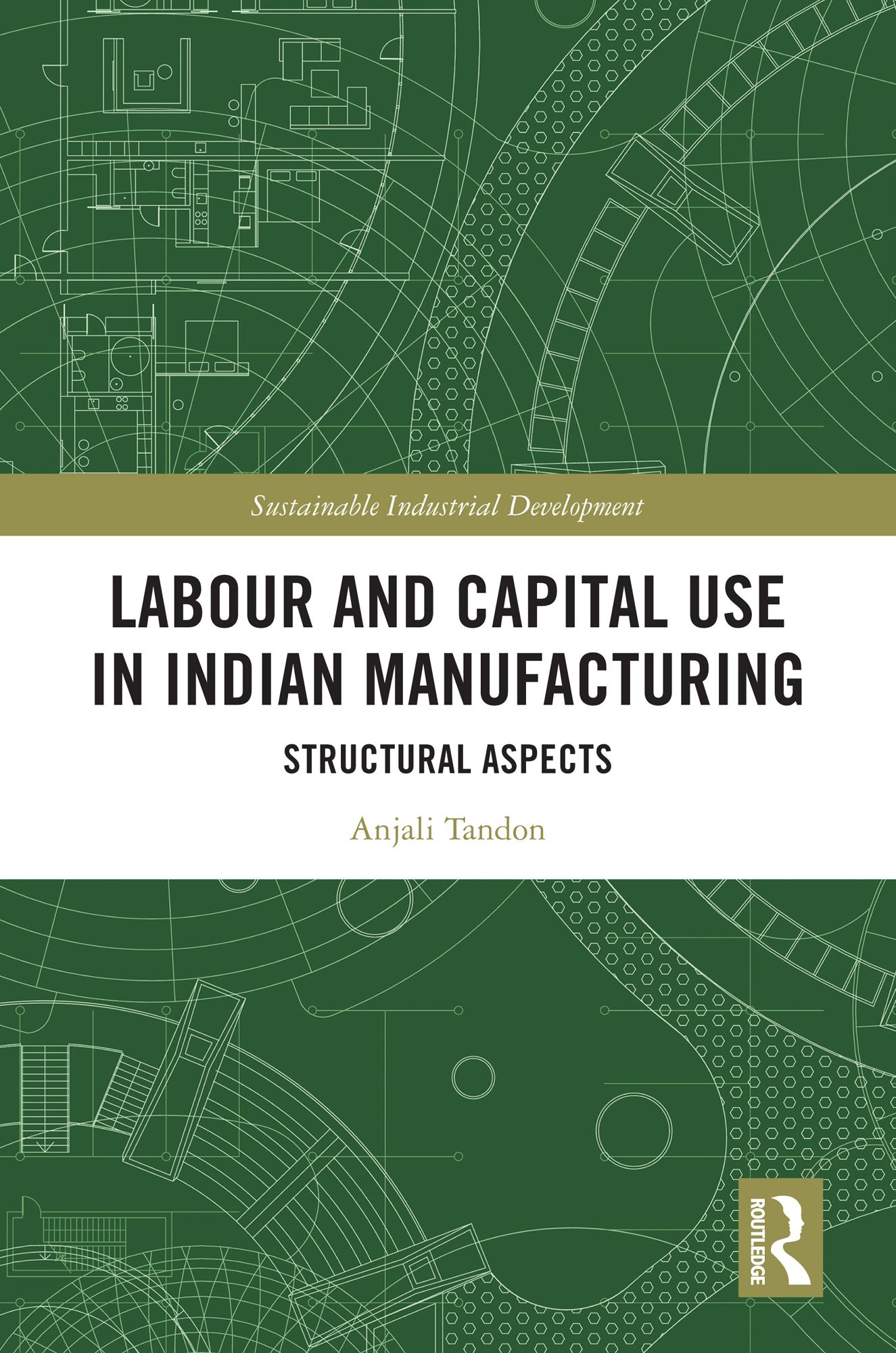
This book strengthens our understanding of Indian manufacturing. It argues that structural transformation should be guided by the given factor endowments. The book undertakes detailed empirical scrutiny to provide inputs for guiding the future industrial policy in India.
The book recognises the differential structure of organised and unorganised manufacturing with their distinguished response to the use of labour and capital. The analytical framework consists of an economy-wide approach and structural relationships at the industry level. The underlying sectoral interdependence highlights the job creation potential of domestic manufacturing, which spreads into the non-manufacturing sectors through the essential accounting of the embodied effects. The impact of import utilisations underscores the leakages in the domestic economy in terms of the employment forgone and capital use, thereby highlighting the need to strengthen domestic production. The book clearly identifies the labour- and capital-intensive categories of manufacturing for empirical investigations.
A comprehensive read on labour and capital use in Indian manufacturing, this book in the series Sustainable Industrial Development will appeal to scholars and researchers of economics, applied industrial economics, Indian economy, and business studies. It will also be of interest to professionals and practitioners in policy circles and research think tanks.
Betaal eenvoudig met kaart, Klarna, Apple Pay of Google Pay. Niet tevreden? Je hebt altijd 14 dagen bedenktijd. Lees meer in onze voorwaarden. Heb je vragen, mail ons dan via hello@memmo.org.
Memmo maakt studeren makkelijker – waar je ook bent ter wereld. Wij brengen je cursusboeken en slimme studietools samen op één plek: samenvattingen, quizzen, podcasts en flashcards. En Ted, je studievriend die antwoord geeft op alles wat je je afvraagt. Meer dan 50.000 studenten studeren hier al – gebouwd om je sneller te laten leren en minder stress te geven.