
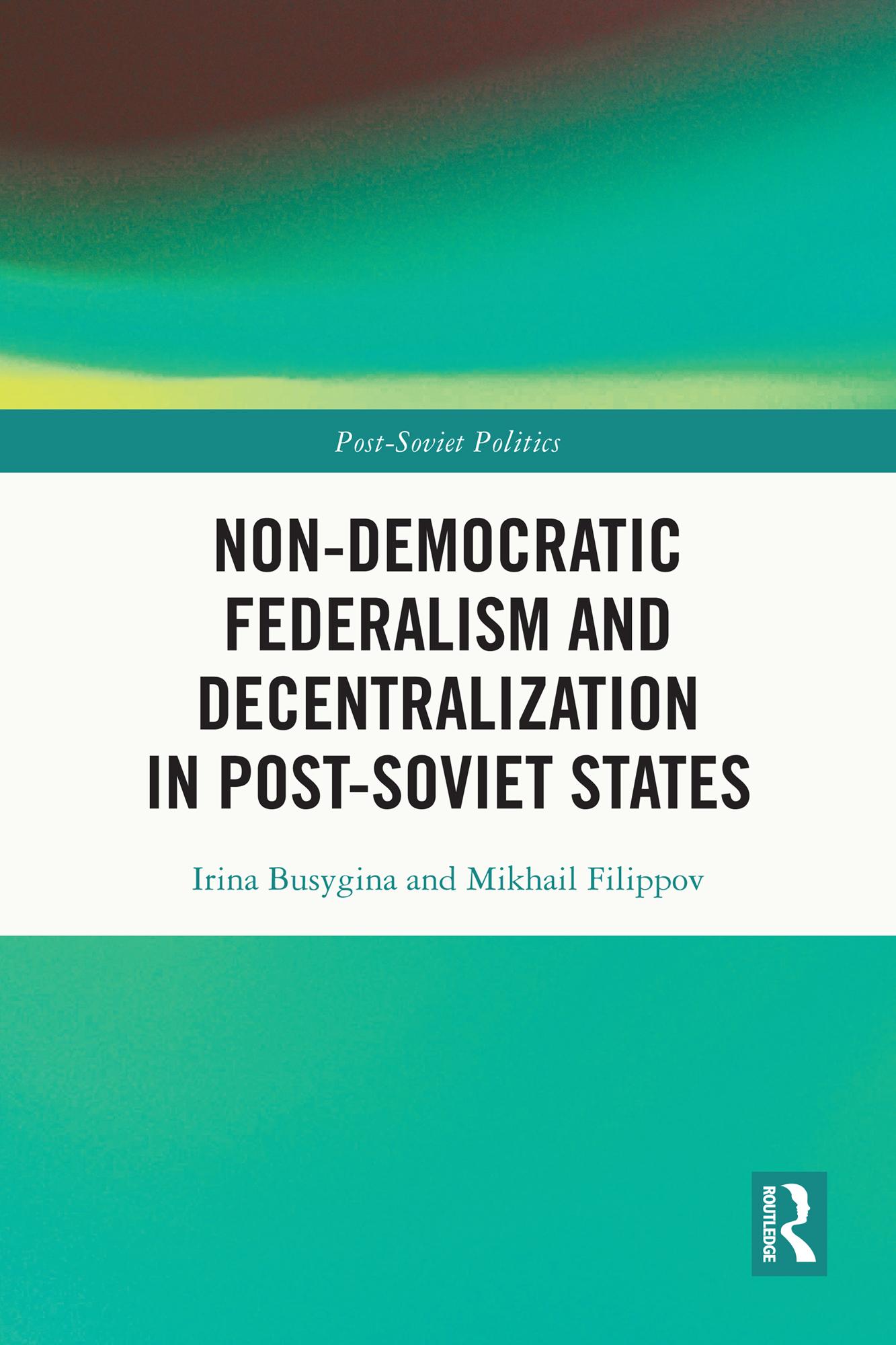
This book challenges the common perception of authoritarian regimes as incompatible with federalism and decentralization. It examines how the leaders of Russia, Ukraine, and Kazakhstan have managed to exploit federalism and decentralization as useful instruments to help them preserve control, avoid political instability, and to shift blame to the regional authorities in times of crises and policy failures. The authors explain how post-Soviet authoritarian regimes balance the advantages and risks and emphasize the contradictory role of external influences and threats to the institutional design of federalism and decentralization. Advancing our understanding of how the institutions of federalism and decentralization are skillfully constrained, but at the same time used by authoritarian incumbents, they show that federalism and decentralization matter in non-democracies, though the nondemocratic character of the political systems greatly modifies their effects. The authors show the implication of the COVID-19 crisis and current Russian war against Ukraine for the center-regional relations in Russia, Ukraine, and Kazakhstan. This book will be of interest to scholars and students of post-Soviet politics, decentralization, federalism, and modern authoritarianism.
Betaal eenvoudig met kaart, Klarna, Apple Pay of Google Pay. Niet tevreden? Je hebt altijd 14 dagen bedenktijd. Lees meer in onze voorwaarden. Heb je vragen, mail ons dan via hello@memmo.org.
Memmo maakt studeren makkelijker – waar je ook bent ter wereld. Wij brengen je cursusboeken en slimme studietools samen op één plek: samenvattingen, quizzen, podcasts en flashcards. En Ted, je studievriend die antwoord geeft op alles wat je je afvraagt. Meer dan 50.000 studenten studeren hier al – gebouwd om je sneller te laten leren en minder stress te geven.