
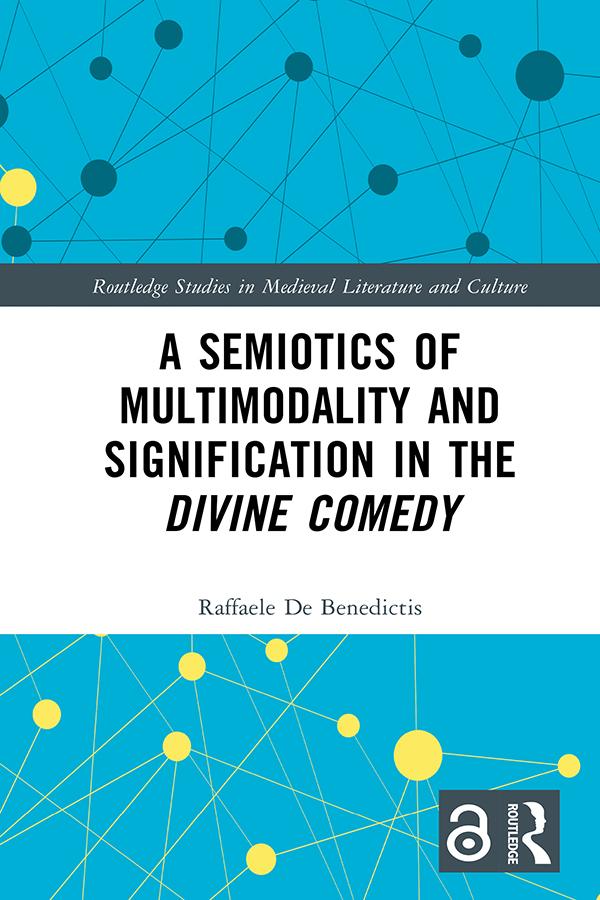
A new critical method for the Divine Comedy which focuses not only on language-as-writing but also and equally on other discursive modes that the Divine Comedy authorizes. Multimodality was already present in Dante’s time, and the reception of the Divine Comedy took place multimodally. Thus, a theoretical study of multimodality carried out under the semiotic lens sheds light on how and why a mode is more effective than another and/or how they may combine in producing signification and new ontologies warranted by Dante’s text. Also, we do not yet have a critical theory that allows us to understand the function of multimodality for the creation of new forms of signification and of clarifying the ontological boundaries set forth by different modalities. It is a new and original study which contributes to the advancement of Dante Studies, Literary Criticism (with a focus on literary semiotics), Multimedia/Multiliteracy, philosophy of language, communication, and education.
Chapters 1, 2, and 5 of this book are freely available as a downloadable Open Access PDF at http://www.taylorfrancis.com under a Creative Commons Attribution-Non Commercial-No Derivatives (CC-BY-NC-ND) 4.0 license. .
Betaal eenvoudig met kaart, Klarna, Apple Pay of Google Pay. Niet tevreden? Je hebt altijd 14 dagen bedenktijd. Lees meer in onze voorwaarden. Heb je vragen, mail ons dan via hello@memmo.org.
Memmo maakt studeren makkelijker – waar je ook bent ter wereld. Wij brengen je cursusboeken en slimme studietools samen op één plek: samenvattingen, quizzen, podcasts en flashcards. En Ted, je studievriend die antwoord geeft op alles wat je je afvraagt. Meer dan 50.000 studenten studeren hier al – gebouwd om je sneller te laten leren en minder stress te geven.