
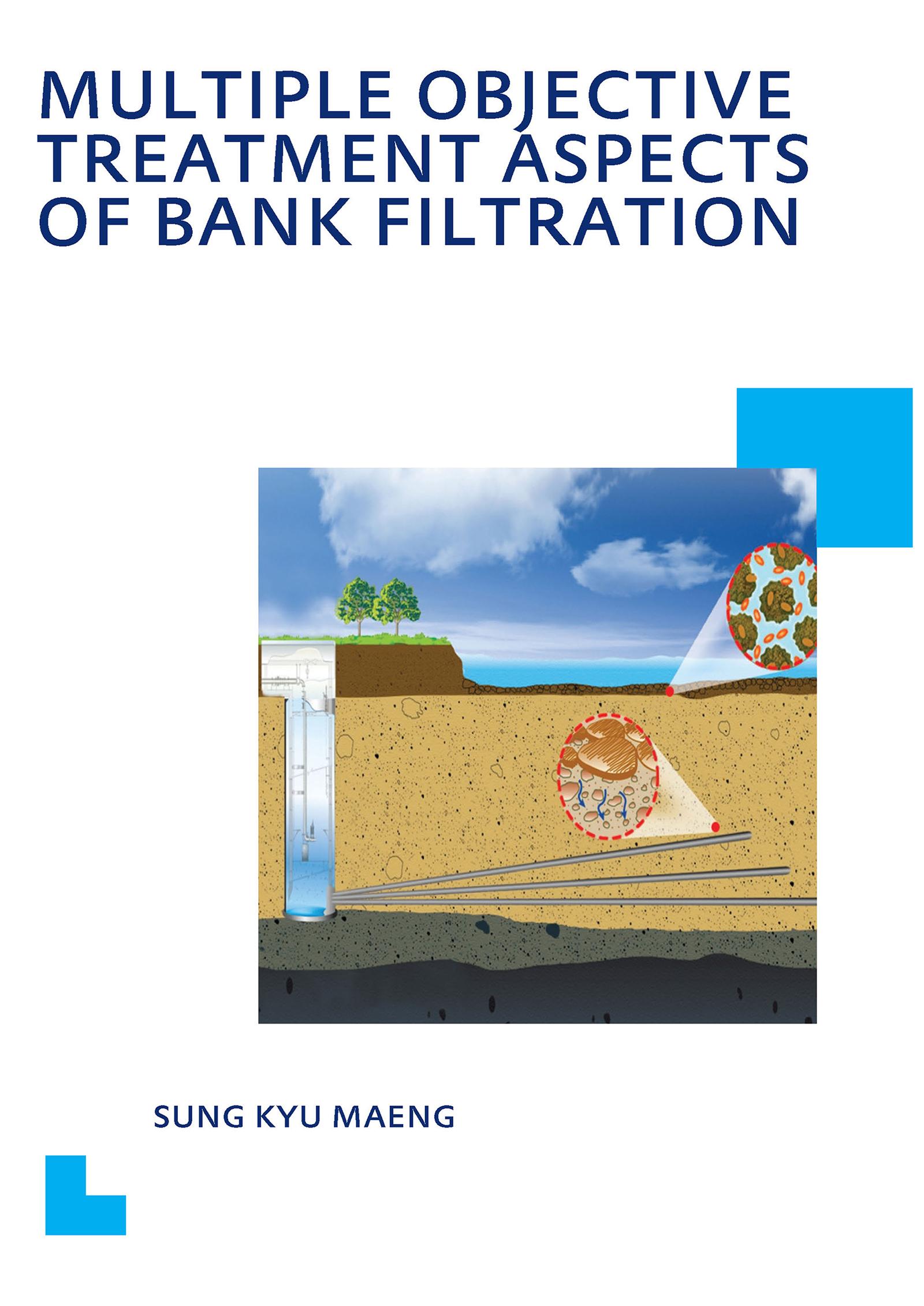
Bank filtration (BF) is a natural water treatment process which induces surface water to flow in response to a hydraulic gradient through soil/sediment and into a vertical or horizontal well. It is a relatively cost-effective, robust and sustainable technology. From a historical perspective, BF is first mentioned in the bible, and the process has been recognized as a proven method for drinking water treatment in Europe for more than 100 years. However, the mechanisms of removal of different contaminants during BF are not fully understood. This study showed that BF is an effective multiple objective barrier for removal of different contaminants present in surface water sources including bulk organic matter and organic micropollutants (OMPs) like pharmaceutically active compounds and endocrine disrupting compounds. It was found that biodegradation and adsorption play primary and secondary roles, respectively, in the removal of OMPs during soil passage. Furthermore, using field data from BF sites and chemical properties of OMPs, models were developed to estimate the removal of OMPs during soil passage. It can be concluded that the removal efficiencies of BF for these contaminants can be maximised by proper design and operation of recovery wells taking into consideration source water quality characteristics and local hydrogeological conditions.
Betaal eenvoudig met kaart, Klarna, Apple Pay of Google Pay. Niet tevreden? Je hebt altijd 14 dagen bedenktijd. Lees meer in onze voorwaarden. Heb je vragen, mail ons dan via hello@memmo.org.
Memmo maakt studeren makkelijker – waar je ook bent ter wereld. Wij brengen je cursusboeken en slimme studietools samen op één plek: samenvattingen, quizzen, podcasts en flashcards. En Ted, je studievriend die antwoord geeft op alles wat je je afvraagt. Meer dan 50.000 studenten studeren hier al – gebouwd om je sneller te laten leren en minder stress te geven.