
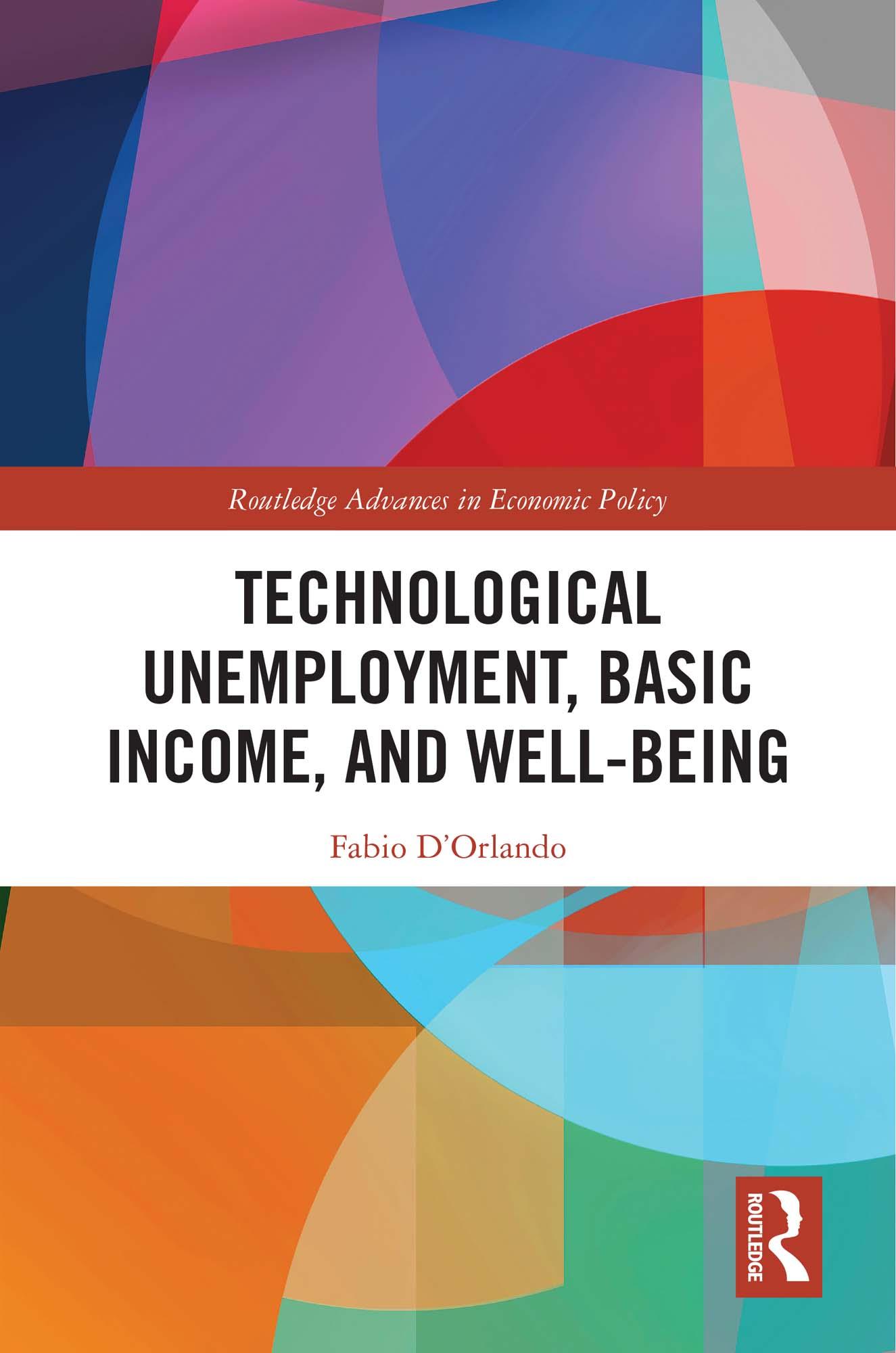
The main novelty of the Fourth Industrial Revolution is the entry of robots and Artificial Intelligence into the production process. This phenomenon could potentially generate high levels of unemployment, or even full unemployment, and therefore calls for innovative public policies.
This book adopts an agnostic position on the size of the future impact of technological progress on employment but proposes a thought experiment built on a full unemployment scenario, which focuses on the consequences that these policies might have for people’s well-being, with particular reference to the provision of a universal Basic Income (UBI). Relying on some of the principles and models of Behavioral and Happiness Economics, it is argued that implementing a UBI that does not change over time may increase well-being inequality. A policy mix that combines a rising basic income with other measures is therefore recommended.
This book marks a significant contribution to the literature on economic policy, labor economics, the economics of well-being and happiness, and behavioral economics.
Betaal eenvoudig met kaart, Klarna, Apple Pay of Google Pay. Niet tevreden? Je hebt altijd 14 dagen bedenktijd. Lees meer in onze voorwaarden. Heb je vragen, mail ons dan via hello@memmo.org.
Memmo maakt studeren makkelijker – waar je ook bent ter wereld. Wij brengen je cursusboeken en slimme studietools samen op één plek: samenvattingen, quizzen, podcasts en flashcards. En Ted, je studievriend die antwoord geeft op alles wat je je afvraagt. Meer dan 50.000 studenten studeren hier al – gebouwd om je sneller te laten leren en minder stress te geven.