
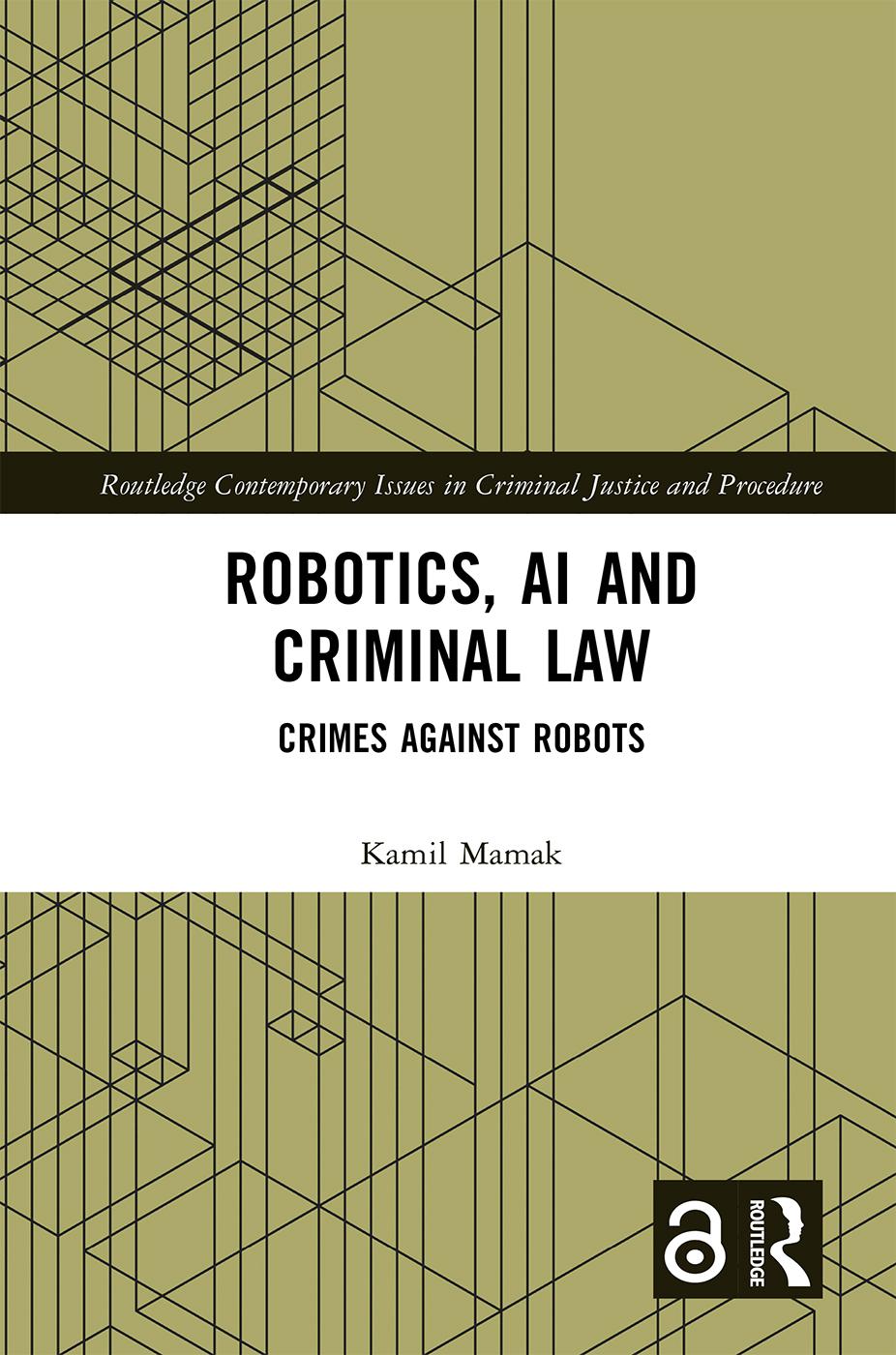
This book offers a phenomenological perspective on the criminal law debate on robots. Today, robots are protected in some form by criminal law. A robot is a person’s property and is protected as property. This book presents the different rationale for protecting robots beyond the property justification based on the phenomenology of human-robot interactions. By focusing on robots that have bodies and act in the physical world in social contexts, the work provides an assessment of the issues that emerge from human interaction with robots, going beyond perspectives focused solely on artificial intelligence (AI). Here, a phenomenological approach does not replace ontological concerns, but complements them. The book addresses the following key areas: Regulation of robots and AI; Ethics of AI and robotics; and philosophy of criminal law.
It will be of interest to researchers and academics working in the areas of Criminal Law, Technology and Law and Legal Philosophy.
Betaal eenvoudig met kaart, Klarna, Apple Pay of Google Pay. Niet tevreden? Je hebt altijd 14 dagen bedenktijd. Lees meer in onze voorwaarden. Heb je vragen, mail ons dan via hello@memmo.org.
Memmo maakt studeren makkelijker – waar je ook bent ter wereld. Wij brengen je cursusboeken en slimme studietools samen op één plek: samenvattingen, quizzen, podcasts en flashcards. En Ted, je studievriend die antwoord geeft op alles wat je je afvraagt. Meer dan 50.000 studenten studeren hier al – gebouwd om je sneller te laten leren en minder stress te geven.