
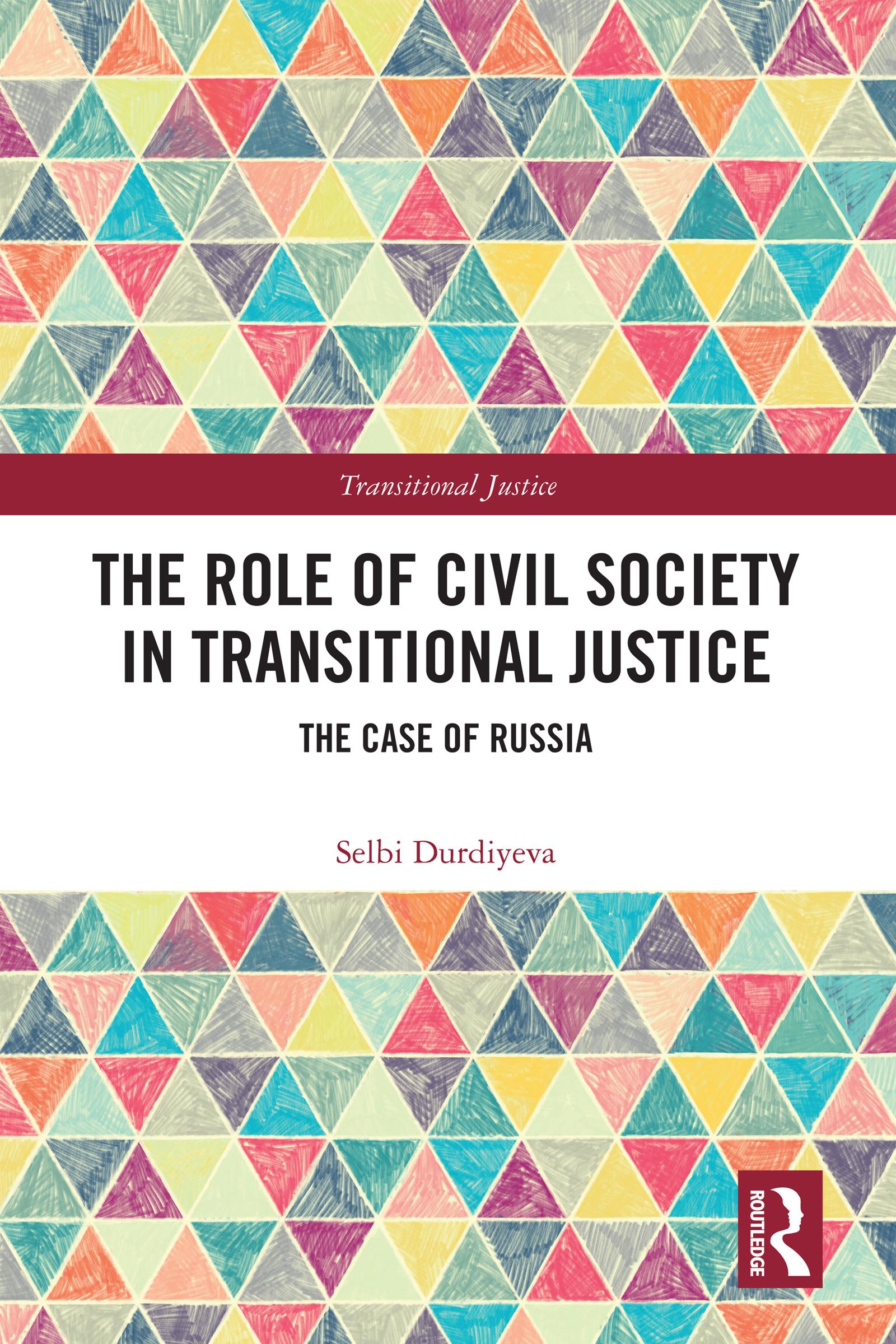
This book examines how civil society engages with transitional justice in Russia, demonstrating a broad range of roles civil society can undertake while operating in a restrictive political context.
Based on sociolegal research, the study focuses on three types of civil society groups dealing with the legacies of the Soviet repression in Russia – a prominent organisation that works on recovering historical truth, the International Memorial; a parish of the Orthodox Church of Russia operating at a former mass execution and mass burial site, the Church at Butovo; and contentious groups that could hinder attempts at reckoning and promote state narratives built on the Stalinist and WWII victory myths. This book explores an often-overlooked case of Russia’s transitional justice ‘from below.’ It provides insights into how even in authoritarian contexts, civil society can adopt imaginative, piecemeal, and at times unconventional ways of seeking justice outside and in the absence of official and institutionalised transitional justice measures.
This book will appeal to scholars of transitional justice, memory studies, human rights, and democratic and civil society theory, as well as policymakers and practitioners in these fields, and others with interests in Russian and post-Soviet studies.
Betaal eenvoudig met kaart, Klarna, Apple Pay of Google Pay. Niet tevreden? Je hebt altijd 14 dagen bedenktijd. Lees meer in onze voorwaarden. Heb je vragen, mail ons dan via hello@memmo.org.
Memmo maakt studeren makkelijker – waar je ook bent ter wereld. Wij brengen je cursusboeken en slimme studietools samen op één plek: samenvattingen, quizzen, podcasts en flashcards. En Ted, je studievriend die antwoord geeft op alles wat je je afvraagt. Meer dan 50.000 studenten studeren hier al – gebouwd om je sneller te laten leren en minder stress te geven.