
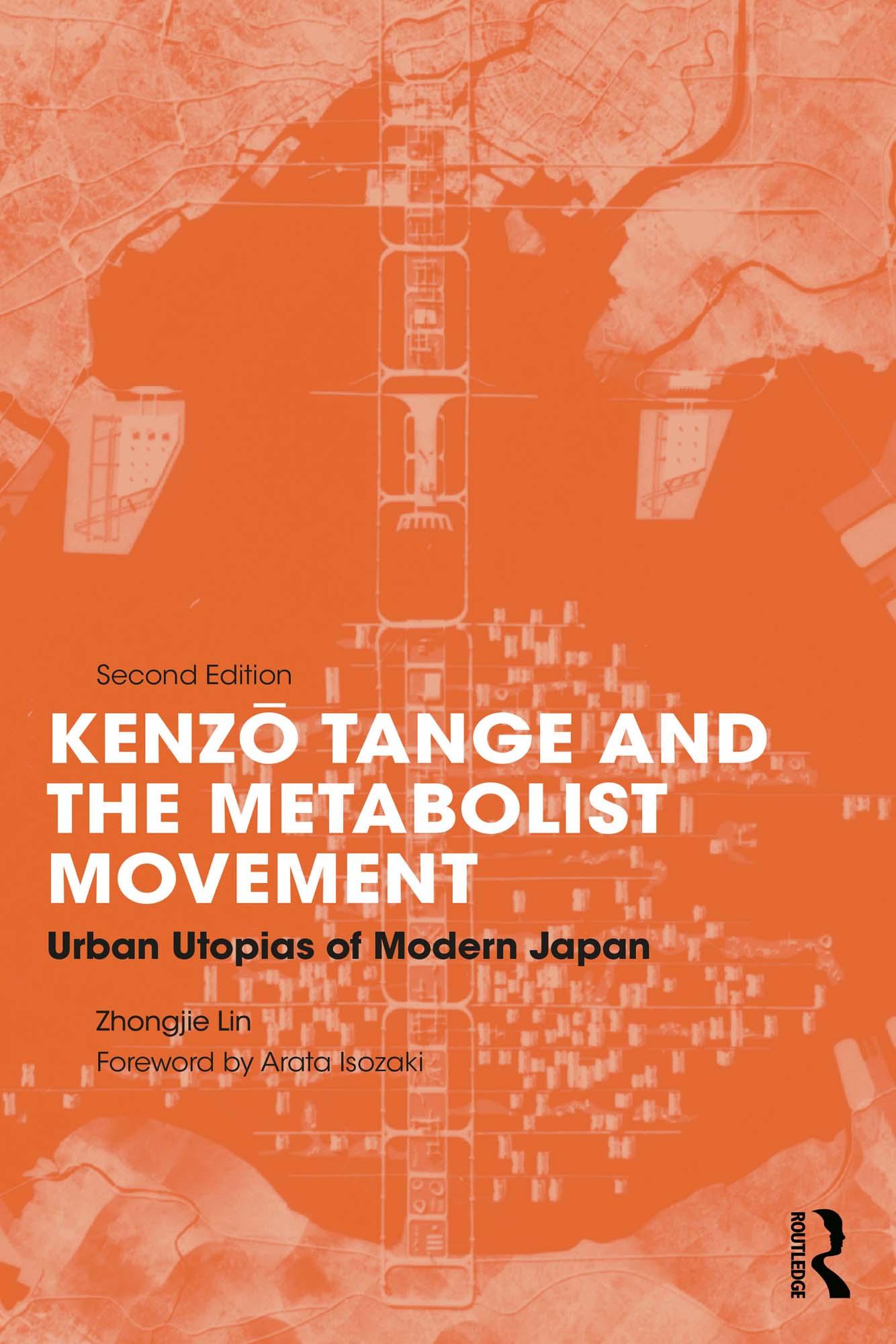
Amid Japan’s political turbulence in 1960, seven architects and designers founded Metabolism to propagate radical ideas of urbanism. Kenzō Tange’s Plan for Tokyo 1960 further celebrated urban expansion as organic processes and pushed city design to an unprecedented scale. Metabolists’ visionary schemes of the city gave birth to revolutionary design paradigms, which reinvented the discourse of modern Japanese architecture and propelled it through the years of Economic Miracle to a global prominence. Their utopian concepts, which often envisaged the sea and the sky as human habitats of the future, reflected fundamental issues of cultural transformation and addressed environmental crises of the postindustrial society.
This new edition expands Zhongjie Lin’s pathbreaking account on Tange and Metabolism centered at the intersection of urbanism and utopianism. The thorough historical survey, from Metabolism’s inauguration at the 1960 World Design Conference to the apex of the movement at Expo ’70 and further to the recent demolition of Nakagin Capsule Tower, leads to a definition of three Metabolist urban paradigms – megastructure, group form, and ruins – which continue to inspire experiments in architecture, city design, and conservation.
Kenzō Tange and the Metabolist Movement is a key book for architectural and urban historians, architects, and all those interested in avant-garde design, Japanese architecture, and contemporary urbanism.
Betaal eenvoudig met kaart, Klarna, Apple Pay of Google Pay. Niet tevreden? Je hebt altijd 14 dagen bedenktijd. Lees meer in onze voorwaarden. Heb je vragen, mail ons dan via hello@memmo.org.
Memmo maakt studeren makkelijker – waar je ook bent ter wereld. Wij brengen je cursusboeken en slimme studietools samen op één plek: samenvattingen, quizzen, podcasts en flashcards. En Ted, je studievriend die antwoord geeft op alles wat je je afvraagt. Meer dan 50.000 studenten studeren hier al – gebouwd om je sneller te laten leren en minder stress te geven.