
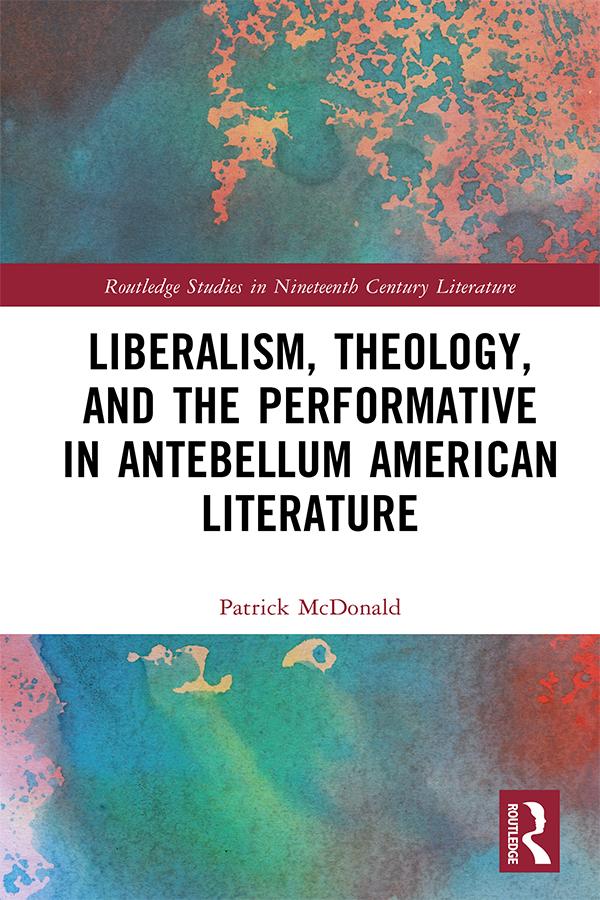
The 1850s United States witnessed a far-reaching political, social, and economic crisis. Symptomatic of this, a wide range of narrative fiction from sentimental novels to sensational drama identifies a foundational link between liberal institutions and performative utterances. Auctions, trials, marriages, and contracts, this fiction contends, all depend on the self-constituting authority of words and performances which anybody and everybody can appropriate and are always subject to misfiring. Rather than viewing this as a liberatory and egalitarian political force, however, writers from Herman Melville and James Fenimore Cooper to Captain Mayne Reid and E.D.E.N. Southworth insist that such naked authority must be supplemented. A broad swath of 1850s literature insists that this supplement ought to come from Christianity. Anticipating thinkers like Carl Schmitt and Giorgio Agamben, these works suggest that legitimate political authority depends upon its ability to represent Christian transcendence and account for revealed truth, something firmly outside of speech acts’ and performance’s purview. In so doing, this diverse body of fiction registers a desire to reconstitute political authority on transcendent and representable ground, augmenting institutional reliance on mere words and assuaging the contemporary crises of confidence and authority.
Betaal eenvoudig met kaart, Klarna, Apple Pay of Google Pay. Niet tevreden? Je hebt altijd 14 dagen bedenktijd. Lees meer in onze voorwaarden. Heb je vragen, mail ons dan via hello@memmo.org.
Memmo maakt studeren makkelijker – waar je ook bent ter wereld. Wij brengen je cursusboeken en slimme studietools samen op één plek: samenvattingen, quizzen, podcasts en flashcards. En Ted, je studievriend die antwoord geeft op alles wat je je afvraagt. Meer dan 50.000 studenten studeren hier al – gebouwd om je sneller te laten leren en minder stress te geven.