
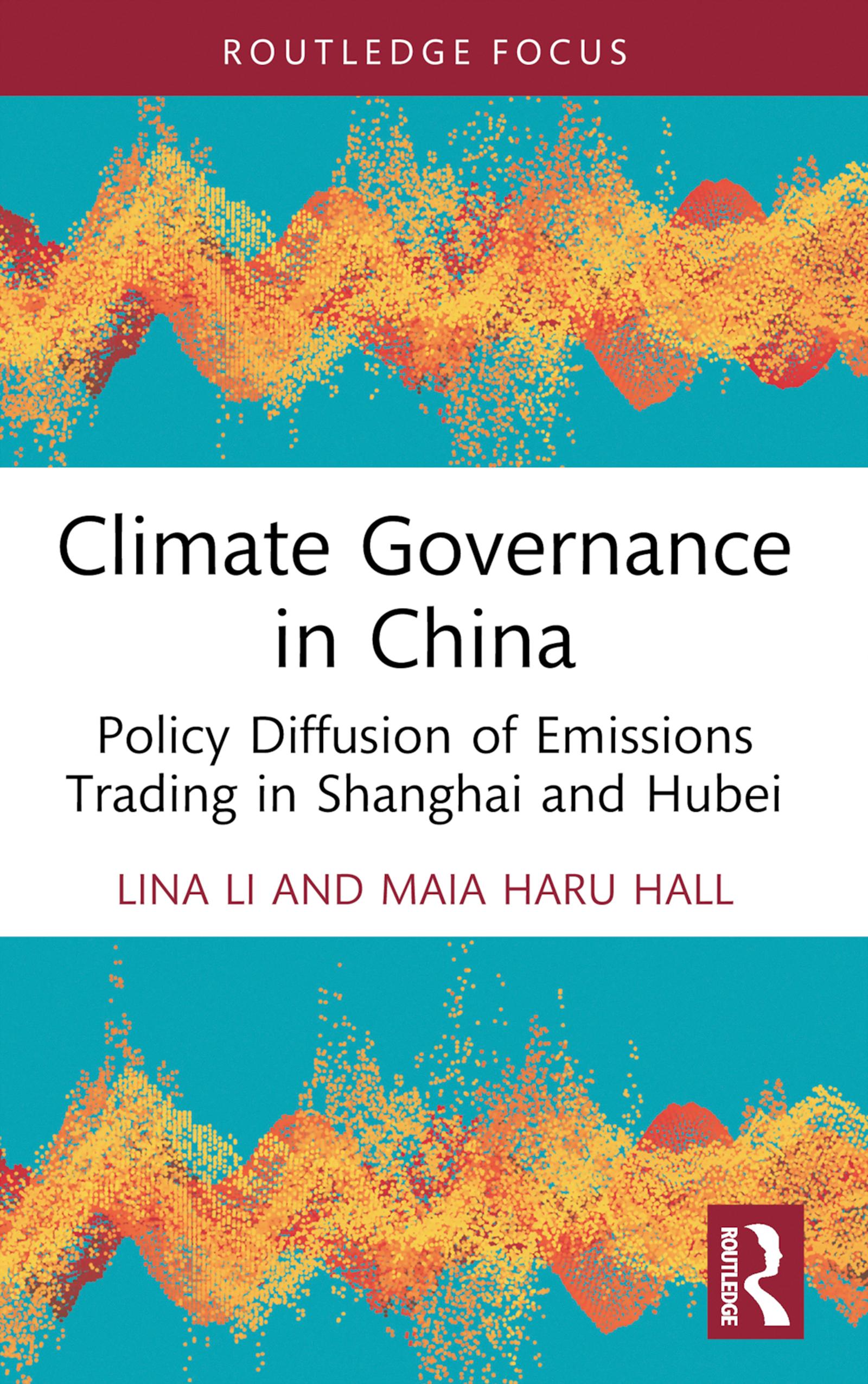
This book explores how and why innovative climate policies spread across subnational regions and between governance levels in China.
Despite the significance of emerging economies in a pathway to a zero-carbon future, research to date on China’s transformation governance remains limited. Drawing on a theoretical framework for policy diffusion and based on extensive data from expert interviews with Chinese decisionmakers and policy practitioners, Lina Li and Maia Haru Hall focus on the policy of emissions trading systems (ETS) and two key case studies: Shanghai and Hubei. The authors examine the role of the national government and how much freedom the subnational regions have in developing ETS policy, as well as pinpointing key actors and the role of policy and knowledge diffusion mechanisms. Overall, this book sheds light on the competition between China and the West in the transition to climate-friendly societies and economies, highlighting opportunities for cooperation between them.
This book will be of great interest to students and scholars of environmental politics and policy, climate change, urban studies, and Chinese studies more broadly.
Betaal eenvoudig met kaart, Klarna, Apple Pay of Google Pay. Niet tevreden? Je hebt altijd 14 dagen bedenktijd. Lees meer in onze voorwaarden. Heb je vragen, mail ons dan via hello@memmo.org.
Memmo maakt studeren makkelijker – waar je ook bent ter wereld. Wij brengen je cursusboeken en slimme studietools samen op één plek: samenvattingen, quizzen, podcasts en flashcards. En Ted, je studievriend die antwoord geeft op alles wat je je afvraagt. Meer dan 50.000 studenten studeren hier al – gebouwd om je sneller te laten leren en minder stress te geven.