
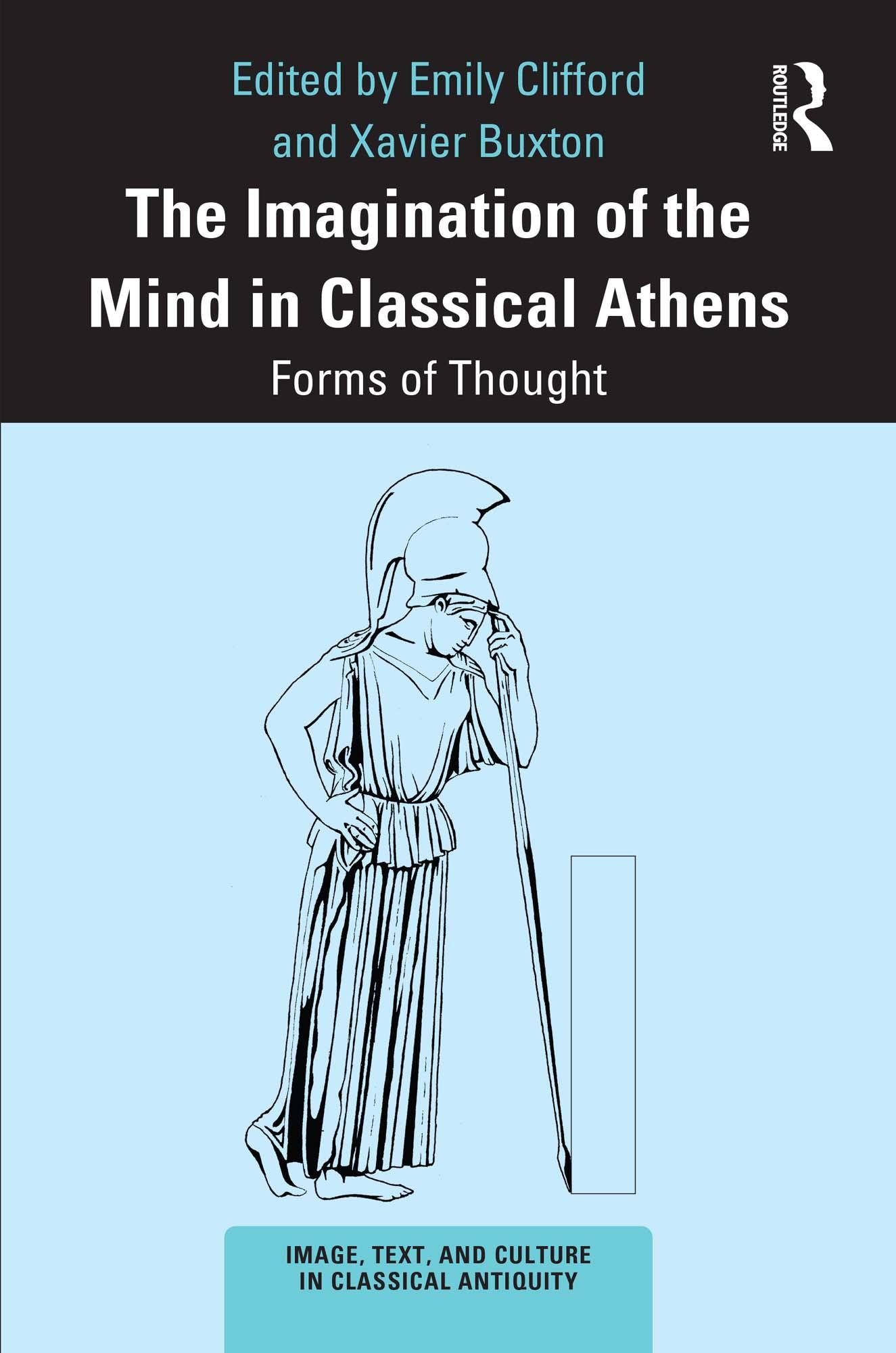
This book explores the imaginative processes at work in the artefacts of Classical Athens. When ancient Athenians strove to grasp ‘justice’ or ‘war’ or ‘death’, when they dreamt or deliberated, how did they do it? Did they think about what they were doing? Did they imagine an imagining mind?
European histories of the imagination have often begun with thinkers like Plato and Aristotle. By contrast, this volume is premised upon the idea that imaginative activity, and especially efforts to articulate it, can take place in the absence of technical terminology. In exploring an ancient culture of imagination mediated by art and literature, the book scopes out the roots of later, more explicit, theoretical enquiry. Chapters hone in on a range of visual and verbal artefacts from the Classical period. Approaching the topic from different angles – philosophical, historical, philological, literary, and art historical – they also investigate how these artefacts stimulate affective, sensory, meditative – in short, ‘imaginative’ – encounters between imagining bodies and their world.
The Imagination of the Mind in Classical Athens offers a ground-breaking reassessment of ‘imagination’ in ancient Greek culture and thought: it will be essential reading for those interested in not only philosophies of mind, but also ancient Greek image, text, and culture more broadly.
Betaal eenvoudig met kaart, Klarna, Apple Pay of Google Pay. Niet tevreden? Je hebt altijd 14 dagen bedenktijd. Lees meer in onze voorwaarden. Heb je vragen, mail ons dan via hello@memmo.org.
Memmo maakt studeren makkelijker – waar je ook bent ter wereld. Wij brengen je cursusboeken en slimme studietools samen op één plek: samenvattingen, quizzen, podcasts en flashcards. En Ted, je studievriend die antwoord geeft op alles wat je je afvraagt. Meer dan 50.000 studenten studeren hier al – gebouwd om je sneller te laten leren en minder stress te geven.