
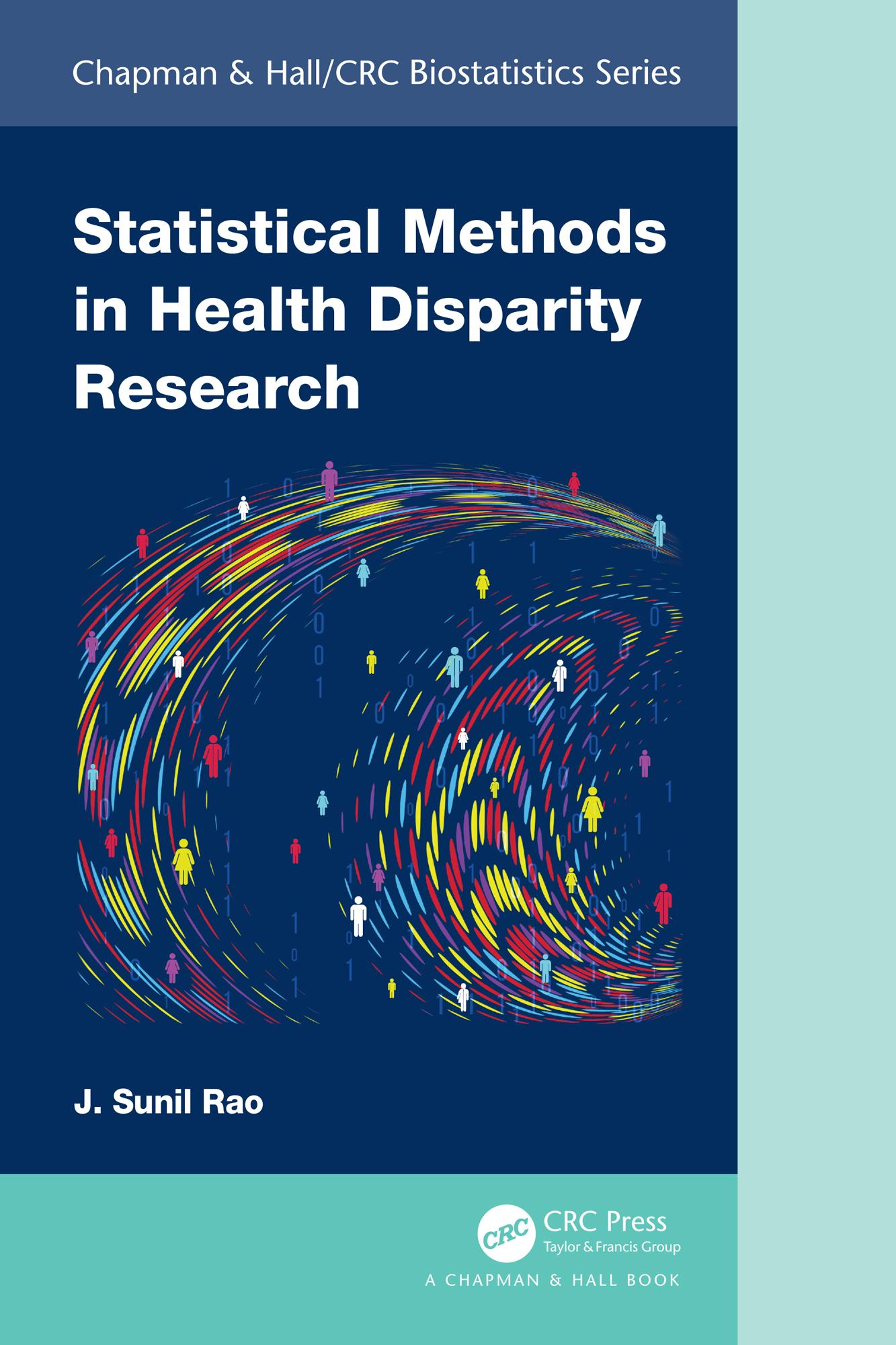
A health disparity refers to a higher burden of illness, injury, disability, or mortality experienced by one group relative to others attributable to multiple factors including socioeconomic status, environmental factors, insufficient access to health care, individual risk factors, and behaviors and inequalities in education. These disparities may be due to many factors including age, income, and race. Statistical Methods in Health Disparity Research will focus on their estimation, ranging from classical approaches including the quantification of a disparity, to more formal modeling, to modern approaches involving more flexible computational approaches.
Features:
- Presents an overview of methods and applications of health disparity estimation
- First book to synthesize research in this field in a unified statistical framework
- Covers classical approaches, and builds to more modern computational techniques
- Includes many worked examples and case studies using real data
- Discusses available software for estimation
The book is designed primarily for researchers and graduate students in biostatistics, data science, and computer science. It will also be useful to many quantitative modelers in genetics, biology, sociology, and epidemiology.
Betaal eenvoudig met kaart, Klarna, Apple Pay of Google Pay. Niet tevreden? Je hebt altijd 14 dagen bedenktijd. Lees meer in onze voorwaarden. Heb je vragen, mail ons dan via hello@memmo.org.
Memmo maakt studeren makkelijker – waar je ook bent ter wereld. Wij brengen je cursusboeken en slimme studietools samen op één plek: samenvattingen, quizzen, podcasts en flashcards. En Ted, je studievriend die antwoord geeft op alles wat je je afvraagt. Meer dan 50.000 studenten studeren hier al – gebouwd om je sneller te laten leren en minder stress te geven.