
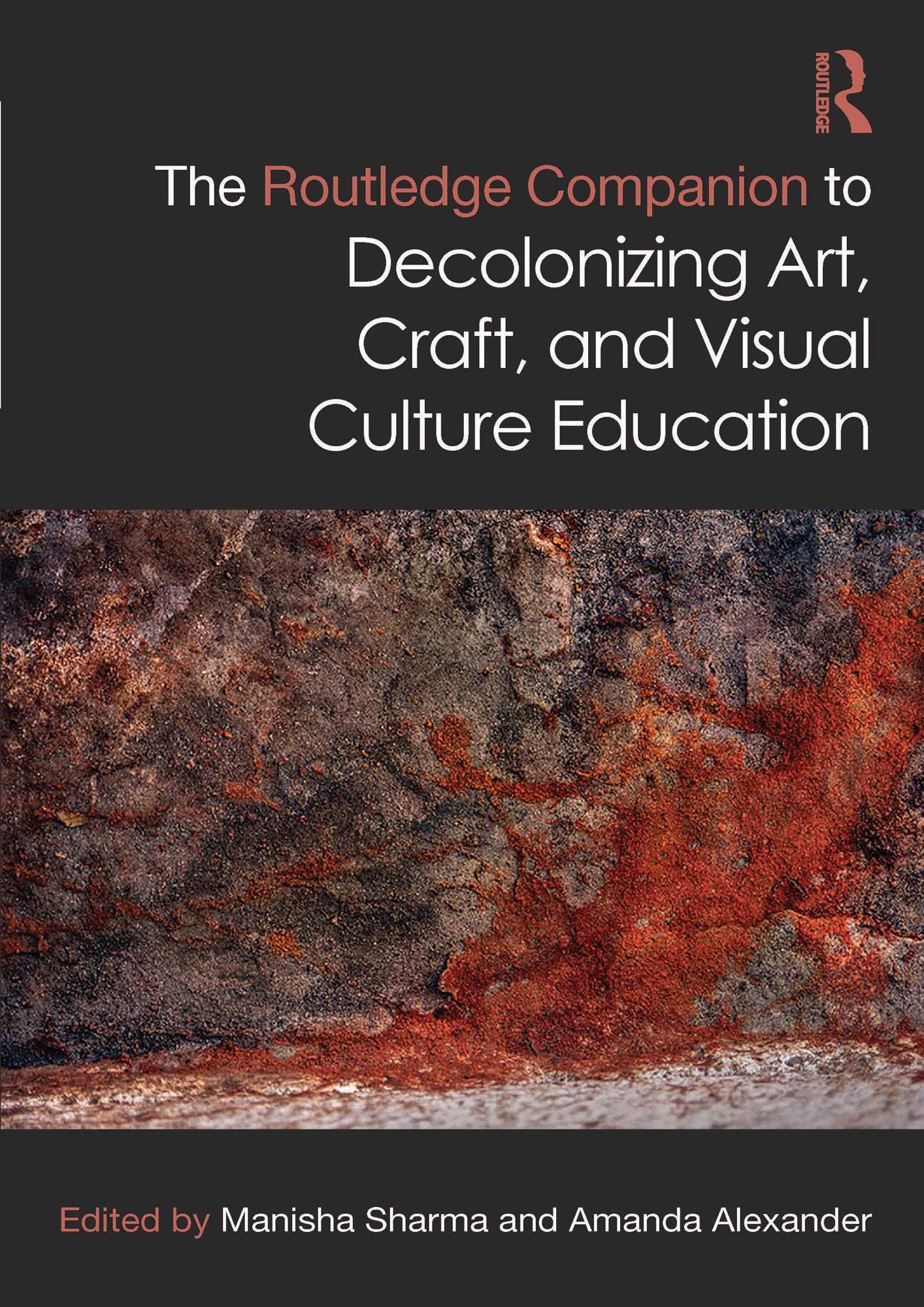
This companion demonstrates how art, craft, and visual culture education activate social imagination and action that is equity- and justice-driven. Specifically, this book provides arts-engaged, intersectional understandings of decolonization in the contemporary art world that cross disciplinary lines.
Visual and traditional essays in this book combine current scholarship with pragmatic strategies and insights grounded in the reality of socio-cultural, political, and economic communities across the globe. Across three sections (creative shorts, enacted encounters, and ruminative research), a diverse group of authors address themes of histories, space and land, mind and body, and the digital realm. Chapters highlight and illustrate how artists, educators, and researchers grapple with decolonial methods, theories, and strategies—in research, artmaking, and pedagogical practice. Each chapter includes discursive questions and resources for further engagement with the topics at hand.
The book is targeted towards scholars and practitioners of art education, studio art, and art history, K-12 art teachers, as well as artist educators and teaching artists in museums and communities.
Betaal eenvoudig met kaart, Klarna, Apple Pay of Google Pay. Niet tevreden? Je hebt altijd 14 dagen bedenktijd. Lees meer in onze voorwaarden. Heb je vragen, mail ons dan via hello@memmo.org.
Memmo maakt studeren makkelijker – waar je ook bent ter wereld. Wij brengen je cursusboeken en slimme studietools samen op één plek: samenvattingen, quizzen, podcasts en flashcards. En Ted, je studievriend die antwoord geeft op alles wat je je afvraagt. Meer dan 50.000 studenten studeren hier al – gebouwd om je sneller te laten leren en minder stress te geven.