
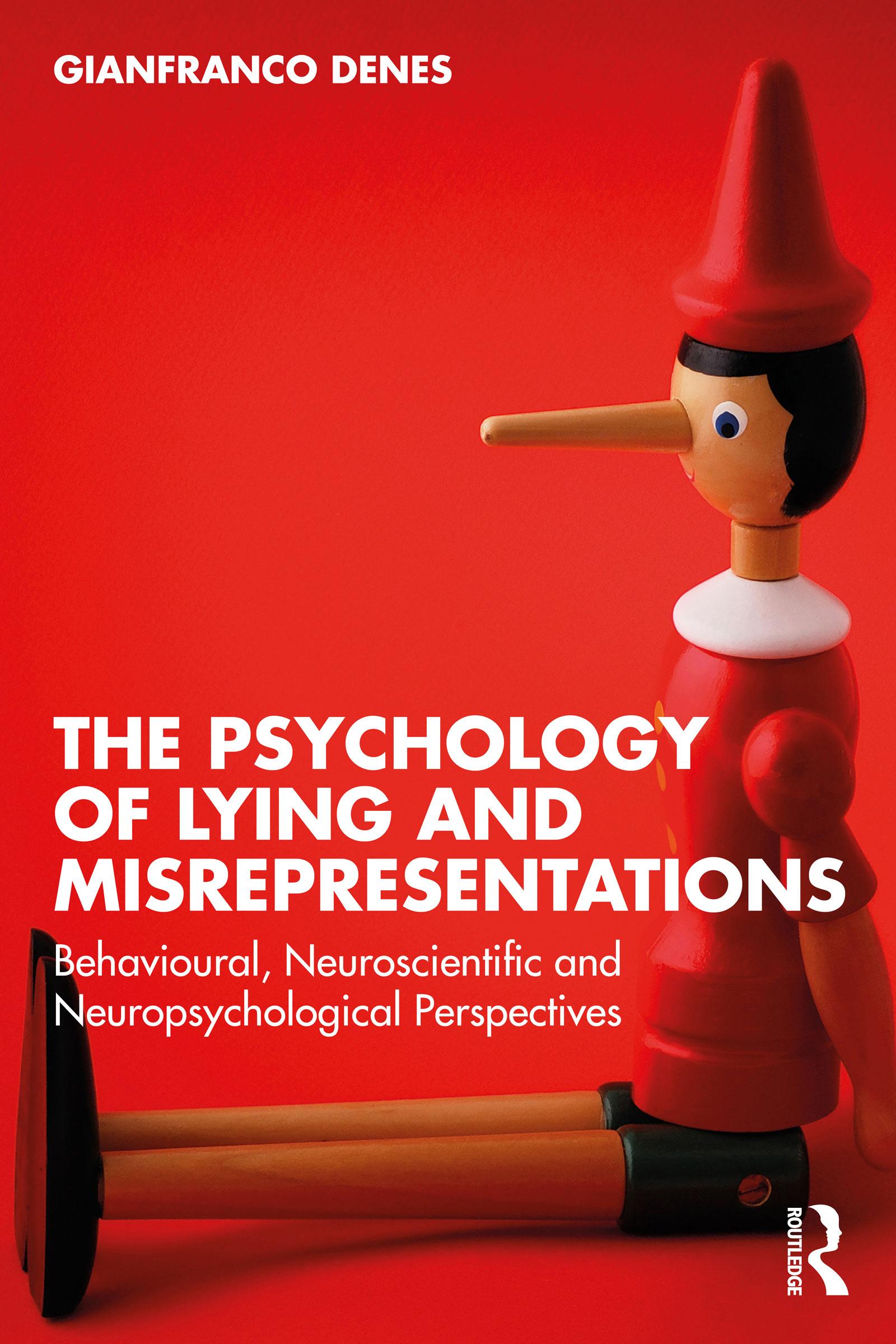
This accessible yet scholarly book focuses on the study of the psychology of lying and misrepresentation, exploring the analysis of the cognitive and neural mechanisms that allow the construction of a false response, both consciously and as a consequence of a brain injury. Drawing on perspectives from experimental, neuropsychological and developmental psychology as well as philosophy, the book examines the mechanisms that allow us all to learn to lie and use lies for different ends and in everyday life.
The Psychology of Lying and Misrepresentations opens with an introductory chapter on lies and the processes underlying their production. It goes on to examine our innate desire to believe, and the clinical and technical methods used to determine whether someone is lying or telling the truth. The book takes a closer look at false memories and self-deception and the reasons behind their establishment and success in an individual’s life. It then moves on from focusing on the individual to discuss the lies directed towards the collective and puts forth the questions around false news and its sustenance over time. The concluding chapters focus on memory disorders resulting from brain damage and false beliefs resulting from an expression of functional damage to specific neural systems.
This book will be of value to researchers in a range of disciplines interested in all aspects of lying, deception, and misrepresentation, as well as experts in forensic study.
Betaal eenvoudig met kaart, Klarna, Apple Pay of Google Pay. Niet tevreden? Je hebt altijd 14 dagen bedenktijd. Lees meer in onze voorwaarden. Heb je vragen, mail ons dan via hello@memmo.org.
Memmo maakt studeren makkelijker – waar je ook bent ter wereld. Wij brengen je cursusboeken en slimme studietools samen op één plek: samenvattingen, quizzen, podcasts en flashcards. En Ted, je studievriend die antwoord geeft op alles wat je je afvraagt. Meer dan 50.000 studenten studeren hier al – gebouwd om je sneller te laten leren en minder stress te geven.