
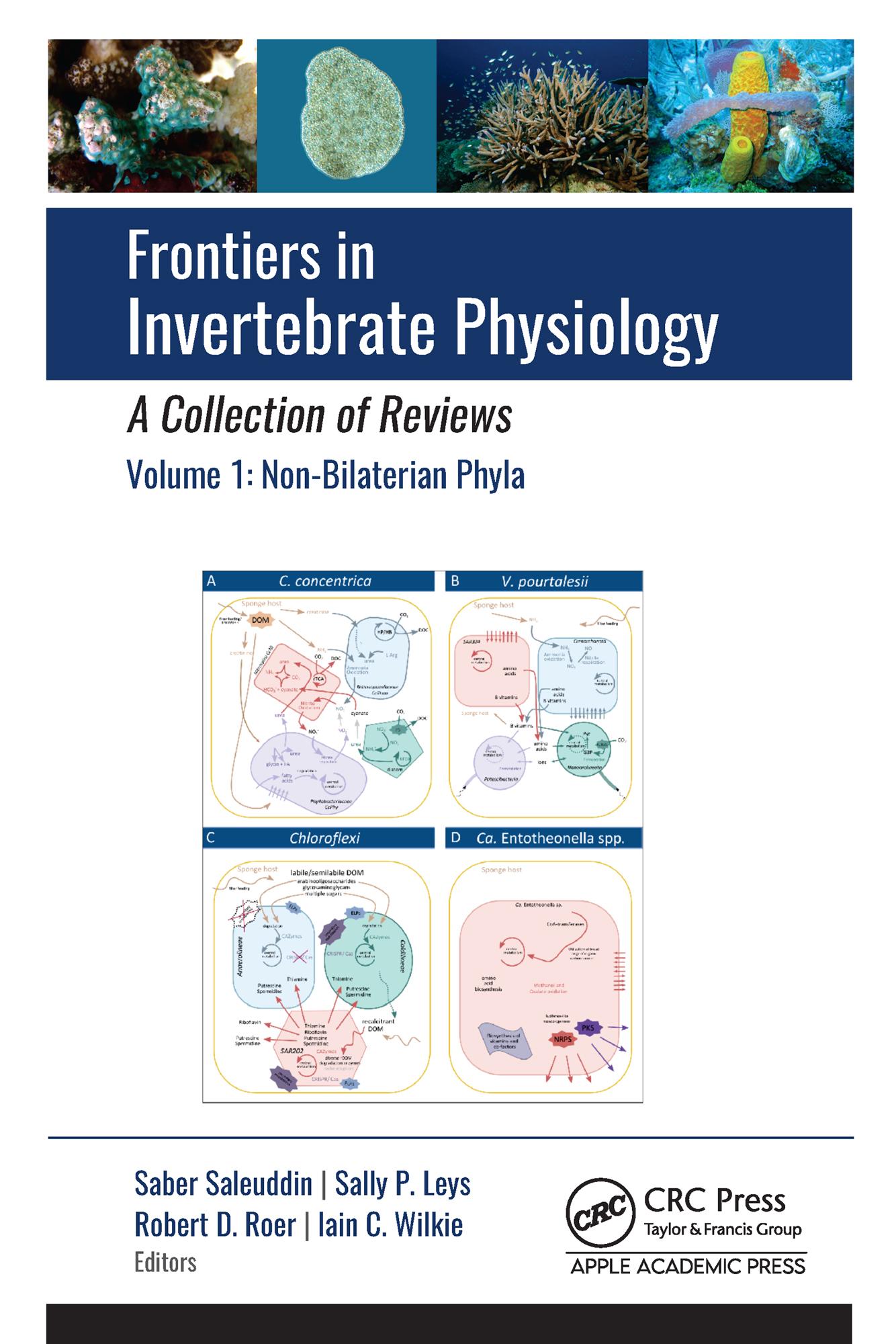
This new 3-volume set provides informative reviews on the physiology of sponges, cnidarians, round and flat worms, annelids, echinoderms, and crustaceans, advancing our knowledge of the physiology of these major invertebrate groups (Phyla). Invertebrates exhibit the largest number of species and occupy virtually every conceivable ecological niche. They are economically important in food chains, they recycle organic waste, and they are crucial pollinators of plants and sources of food. They are also medically relevant as parasites that cause major diseases in both humans and livestock.
Volume 1 looks at non-Bilaterians (sponges, cnidarians, placozoans). The focus on sponge biology has recently been on symbiosis, nutrient uptake, and sensory biology. The section on cnidarians covers biomineralization, the nervous system, and development. The biology of placozoans is described in depth, including the role of neuropeptides in feeding.
Volume 2 and covers crustacean physiology and diverse physiological topics, ranging from molting, respiration, water balance, biomineralization, bioreceptors, and temperature regulation to the land adaptation of terrestrial crustaceans. Echinoderms and annelids are covered in Volume 3.
Betaal eenvoudig met kaart, Klarna, Apple Pay of Google Pay. Niet tevreden? Je hebt altijd 14 dagen bedenktijd. Lees meer in onze voorwaarden. Heb je vragen, mail ons dan via hello@memmo.org.
Memmo maakt studeren makkelijker – waar je ook bent ter wereld. Wij brengen je cursusboeken en slimme studietools samen op één plek: samenvattingen, quizzen, podcasts en flashcards. En Ted, je studievriend die antwoord geeft op alles wat je je afvraagt. Meer dan 50.000 studenten studeren hier al – gebouwd om je sneller te laten leren en minder stress te geven.